


















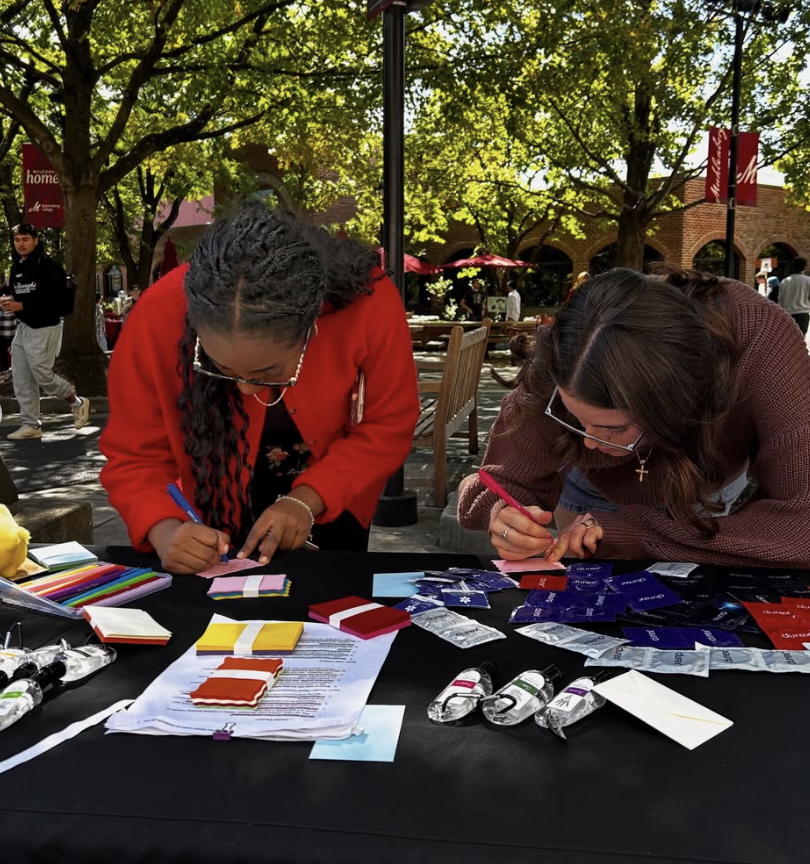
Health is an important area of life for everyone, particularly for college students as they grapple with many changes and stressors. A 2022 Frontiers study states, “Stress may be the single most dominant factor that affects the mental well-being of college students.” Additionally, the demanding schedules faced by many college students leave little time for focusing on their own health and well-being, which can lead some to neglect it. According to a study by the National Education Association (NEA), “44% of college students report experiencing symptoms of depression, with 37% stating they experience anxiety.” When students feel the impact of all the pressures surrounding college, The Peer Health Advocates at Muhlenberg (PHAM) are at the ready. “PHAM helps students make responsible decisions through educational outreach and programming,” President of PHAM Destiny Forkpah ‘27 shared. “The group promotes active and healthy lifestyles by connecting students with campus resources and encouraging health-promoting behaviors to maintain a positive campus culture.” According to Forkpah, the club’s mission is to “serve to promote the health and wellness of the campus community. PHAM is concerned with all areas of health.” PHAM works towards making campus a healthier place for all students by focusing on areas like “general physical health and wellness, sexual health (such as consent, safe sex practices and sexually transmitted infections (STI) testing), alcohol awareness, nutrition, stress relief and winter wellness.”
The group is in the process of expanding their size and campus outreach, as Forkpah explained: “PHAM is currently focused on rebuilding its membership and increasing participation through expanded outreach efforts. This includes collaborating with Student Life for digital and social media promotion, as well as partnering with faculty to share the application with First-Year Seminar (FYS) students and across departments like public health, psychology and education.” PHAM presents a great opportunity for students to utilize some of the knowledge and experience that they gain in the classroom and apply it to the real world. As Forkpah elaborated, “Students might want to join PHAM to gain hands-on experience in health education, community engagement, public health advocacy and leadership. Participating in PHAM also provides valuable skills and experiences that are beneficial for those pursuing medical or graduate school.”
The club is currently looking for new members who may have an interest in assisting their fellow peers and looks to grow as an organization. When asked what type of person the club is looking for, Forkpah responded, “Ideal candidates should have an interest in student wellness, leadership, health education, community engagement and public health. While students pursuing public health majors or minors are encouraged to apply, students from all majors are welcome to join.” If students are interested Forkpah stated, “To become a member, students must complete the PHAM application form, which is distributed via campus emails, flyers and department announcements. New members commit to eight hours per semester, which is fulfilled through biweekly meetings, tabling and participation in campus events. Additionally, they must complete the asynchronous National Association of Student Personnel Administrators (NASPA) Certified Peer Educator training module.” The group intends to serve the campus community by providing a service to all, working towards enhancing the college experience and leading to a safer and healthier campus. With the ever-changing social climate, the need for these services become even more necessary, as the NEA study showed, “The majority of college students (more than 60%) meet the criteria for at least one mental health problem– a nearly 50% increase since 2013.” In turn, PHAM looks to address the detraction these threats can present, going from worrying, to focusing on learning, organizations, athletics and enjoying college life. The skills that PHAM helps students learn, not only applies within college, but the learning of healthy habits can last a lifetime, which students can take with them into adulthood and into careers.

