










The Ciarla, The Weekly, the Muhlenberg College Special Collections and Archives: What do each of these resources have in common? A wealth of information about “Victor’s Lament.” From complaints about Victor’s breaking of tradition to staunch defenses for artistic expression, the statue has captivated collegiate writers and photographers for over 45 years.
Moved to Muhlenberg from its temporary location in Pasadena, Calif. on the weekend of April 28, 1979, “Victor’s Lament” was created by artist Mark di Suvero. As described in the Spring 1979 edition of the Muhlenberg Magazine, the sculpture was acquired due to a grant from the National Endowment for the Arts that sought to bring a commissioned sculptural piece to campus. This $31,750 was then matched by friends of the College, creating the budget for sculpture acquisition around $60,000. A committee was convened with the goal of selecting an artist to commission, and the committee decided on di Suvero. However, they soon learned his commissioned work cost up to $250,000, far outside of the College’s budget. As such, di Suvero did have an already completed piece looking for a more permanent home that he was willing to part with at a more affordable rate: “Victor’s Lament.”
In the Feb. 16 1979 edition of The Muhlenberg Weekly, alum Brad Cohen commented on di Suvero’s history, recounting his miraculous recovery from an accident that left him paralyzed. This greatly increased his renown and made him a “legendary” figure in the art world. In the March 1, 2012 edition of The Weekly, alum Cassie Berwick also illuminates that “Victor’s Lament” was constructed as a form of protest against the Vietnam War. Berwick writes, “The post-World War II art movement, abstract expressionism, conveys rebellious emotions of the artist through basic color, shapes and forms.”
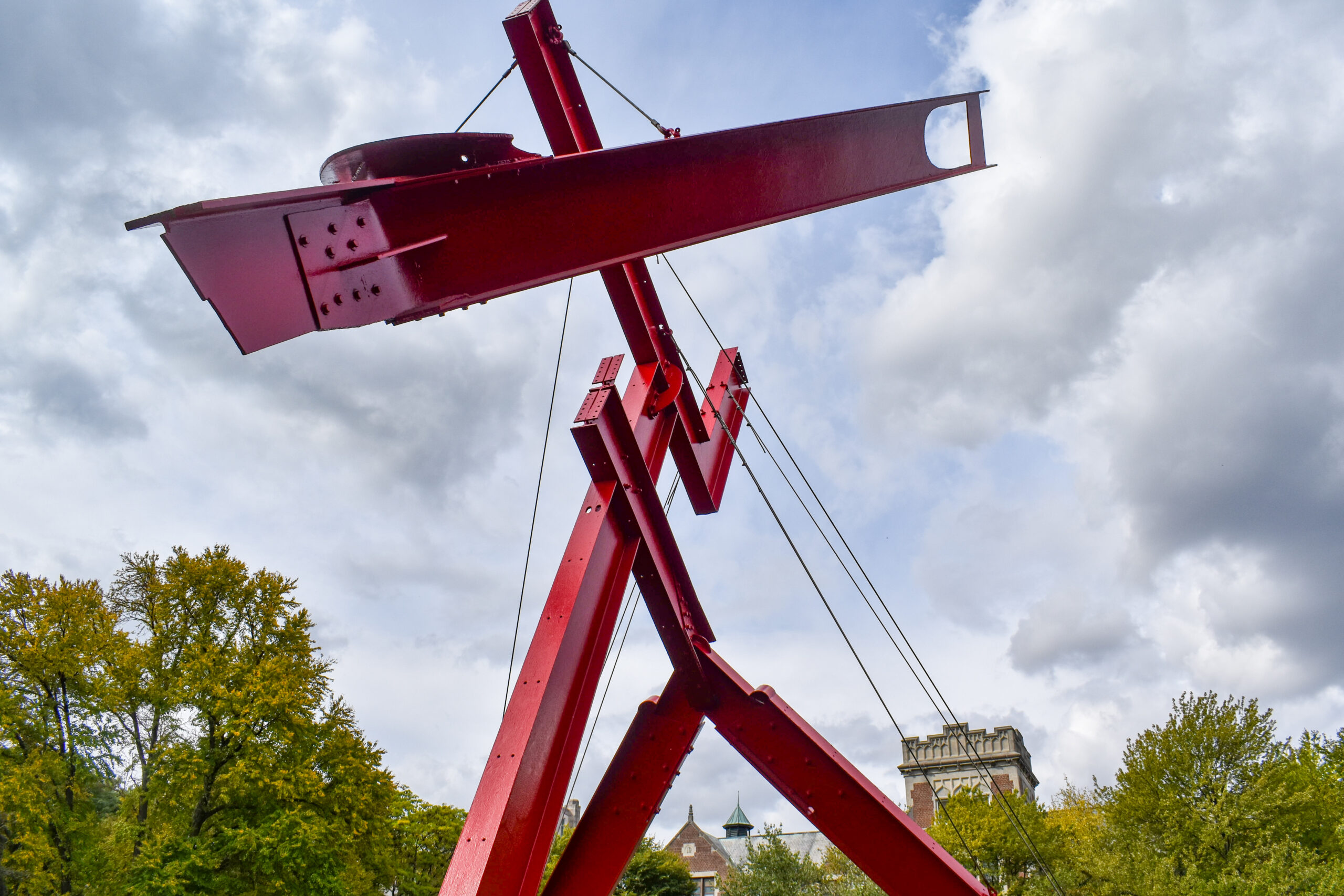
A 28-foot-tall construction of pulleys and steel l-beams, “Victor’s Lament” immediately made ripples on campus. In the aforementioned 1979 Muhlenberg Magazine, then-President of the College John H. Morey even commented, “In all honesty– and I don’t think I do the artist a disservice– di Suvero is not my favorite sculptor. But people I respect, including the architect who designed the [Baker Center for the Arts, the] building this sculpture is intended to compliment, have high regard for di Suvero. As a student of art, I am happy to take instruction.”
“From a purely aesthetic standpoint, I believe that it provides a beautiful counterbalance to the very traditional architecture of Muhlenberg College.” – Richard S. Levinson
Still others defended Victor. In the Reader’s Forum of the Fall 1994 Muhlenberg Magazine, alum Richard S. Levinson wrote in response to a movement to de-acquisition the sculpture, stating, “I believe that it would be a tragic error to take this monumental and extremely valuable sculpture, by a world renowned artist and consider its removal. From a purely aesthetic standpoint, I believe that it provides a beautiful counterbalance to the very traditional architecture of Muhlenberg College.”
One common story surrounding Victor is the infamous fight between the College and di Suvero over painting the steel red. Originally coal black, the sculpture was first repainted between 1995 and 1965. Angela Lagonigro ‘27 recounted the version of the story she was told, stating, “I was told that it was originally black… then it was sold or donated and [Muhlenberg] painted it red and the artist wasn’t very happy about it.” Despite this tale being widespread on campus, the Muhlenberg College Special Collections and Archives has no mention of it. Rather, the documents seem dedicated to disproving it. The 2009 Ciarla posits the red face-lift as a means to combat rust approved by di Suvero.
The Muhlenberg Magazine Summer 2004 issue also described the process of repainting and repairing the sculpture, which takes place every few years. Stefanie Ianella ‘04 wrote, “‘Victor’s Lament’ is regularly repainted under the supervision of plant operations staff in cooperation with Mark di Suvero’s studio.” This appears to suggest a level of agreement between di Suvero and the College in regards to painting the sculpture.
Whether records supporting the legend of artistic strife exist is unknown. Professor of English Jim Bloom, who has been a professor at the College since 1982, recounted, “Some of my ‘artsy’ friends were dismayed when [“Victor’s Lament”] was repainted red about thirty years ago. Back then austere, industrial black had a downtown vibe associated with Richard Serra and Tony Smith. Now nobody talks about it just as nobody ever talks about the other sculpture on the lawn: General Muhlenberg primed for battle. I’m still wondering what ‘Vic’ was lamenting about.”
Zoë Wright ‘26 even happened to see another di Suvero original, “T-8,” in Des Moines, Iowa. Just like “Victor’s Lament,” “T-8” is painted a bright red. Wright recalled, “It made me feel as though Muhlenberg was in another state!”
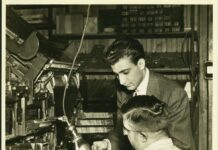
For those looking to research the reason behind Victor’s lamentations and the myriad other questions surrounding the sculpture for themselves, the Trexler Library’s Special Collections and College Archives has ample more information. Kristen Leipert, head of Special Collections and College Archives, describes the archives as “the repository for Muhlenberg’s collections of rare books, manuscripts, photographs, sound and visual recordings, maps and ephemera, including material relating to the College’s history. Many items are digitized and easy to search, including The Muhlenberg Weekly from 1883 onward, The Ciarla and historic photographs of the College.” Such photos even include images of “Victor’s Lament” in its original location and students erecting hammocks underneath the sculpture. Interested individuals can contact Leipert for access.
“Muhlenberg’s campus is not without Victor. Victor is not without Muhlenberg.” – Zoe Wright ’26
Debated to be a mule, a man in a wheel chair and infinite other things, “Victor’s Lament” has nonetheless become inseparable from Muhlenberg College. Wright commented, “Victor is a core, central part of our campus. It acts as a meeting spot for students. Muhlenberg’s campus is not without Victor. Victor is not without Muhlenberg.” As elaborated by the 2009 Edition of the Ciarla, controversy couldn’t stop Victor. It reads, “‘Victor’s Lament’ has become the unofficial mascot of Muhlenberg College and the campus landscape would be very empty without it.”
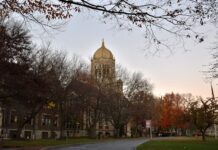
Photo by Kira Bretsky ’27.

Emma Northrop '27 is a History, English Literature and International Studies major at Muhlenberg. She loves writing for the Weekly, and is immensely excited to be a managing editor. When not at the Weekly, she loves reading her favorite fantasy novels, drinking lavender vanilla iced lattes, and scrapbooking.