



















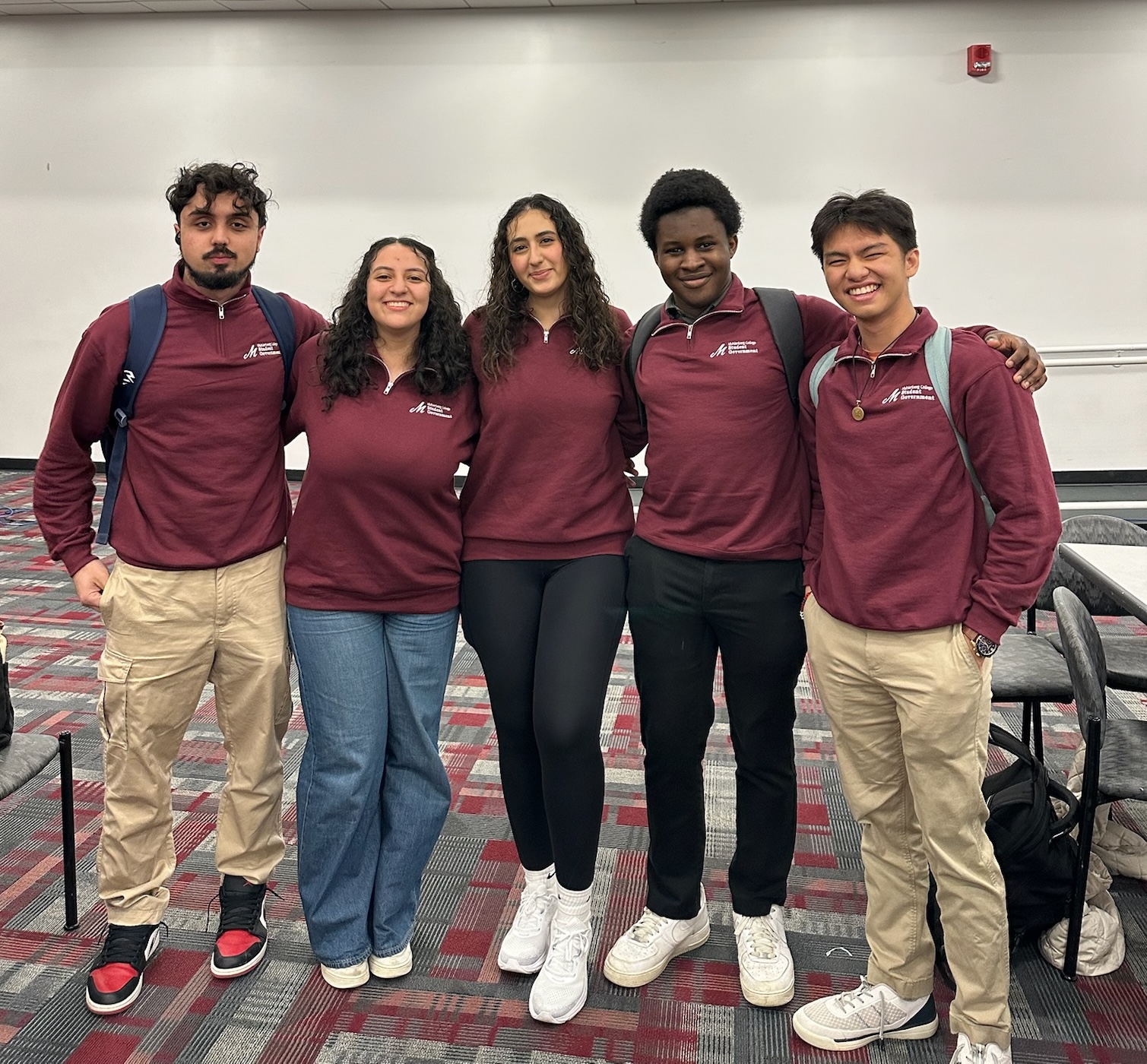
As the 2025-2026 academic year comes to a close, the Student Government Association (SGA) has announced its new executive board. SGA welcomes the seven students voted into the positions on the executive board for the 2026-2027 academic year in addition to 16 elected representatives.
Heading into this upcoming year, President-Elect Josephine Glass ‘27 is looking forward to building bridges of communication between administration and students. “My main goals center around strengthening communication, increasing transparency and ensuring that student voices are consistently reflected in decision-making. I want students to feel informed, not just after decisions are made, but throughout the process. Concretely, that looks like creating more consistent and accessible communication from SGA, improving systems like course feedback so they are actually useful and implemented and making campus resources, like BergConnect and the Career Center, easier to navigate.” Ultimately, she says her goal is to “make SGA feel both visible and responsive in ways that impact students’ everyday experiences.”
While Glass is hoping to build connections on campus, Director of Communications-Elect Pamela Najm ‘27 aims to connect students with the greater Allentown community. She states, “Currently, I oversee the Beyond Berg initiative, which is a partnership/collaboration with many Allentown-Bethlehem-Easton (ABE) restaurants, clothing stores, workout studios, entertainment attractions, etc, giving Muhlenberg students an opportunity to explore and immerse themselves in the Lehigh Valley area. I am really looking forward to making this program more impactful by also creating a new recognizable logo to be placed and displayed in all of our partnering locations.”
Bayani Medina ‘29 hopes to make the inner workings of his position as Treasurer-Elect more visible. “After serving on the Finance Committee for a year, I learned a lot about where the money from the Student Activity Fee actually goes and the procedures we use to distribute funds to student groups on campus for events and meetings. As Treasurer, I would be in charge of discussing funding requests from student groups with my committee and ultimately approving them.”
By planning events and facilitating the club approval process, Campus Engagement Chair-Elect Laura Rojas ‘29 anticipates honoring the old while embracing the new. “I am very excited to not only carry on Muhlenberg’s traditional events, but also infuse campus with new energy by introducing meaningful and engaging experiences that resonate with students. I also look forward to creating new initiatives based on student feedback, so that everyone feels they have a role in shaping campus life. My goal is for these efforts to grow into lasting traditions that future campus engagement chairs can continue to build on!” Some of these ideas for new events include an Intramural Olympics tournament and a centralized directory where all campus events would be displayed.
Echoing other board members, Rojas predicts communication being the key to the connection of students to campus life. “I think one of the biggest challenges will be ensuring to reach all students with campus events, especially those who may not already be involved. However, through the right outreach, collaboration and actively listening to student feedback, I’m confident that I can meet this challenge.”
Considering recent national headlines pertaining to the removal of diversity, equity, inclusion and belonging (DEIB) programs across government organizations and corporations, Robert Obeya ‘29 believes that DEIB is needed at Muhlenberg now more than ever. “I strongly disagree with the sweeping cuts of DEI programs on a national level, and I’m glad Muhlenberg still recognizes its importance, especially for the kind of culture we have.”
He continues, “To me, diversity, equity, and inclusion is all about a level playing field. To echo my statement of intent, DEIB is about recognizing cultural disparities while also uplifting cultural differences. Many people still assert that the DEIB conceptually is just a tool to sow division, but I find in reality it does the opposite. By cultivating diverse, equitable and inclusive spaces on campus, students are growing more aware of, and in turn appreciative of, the identities of their peers.”
As the upcoming academic year approaches, Muhlenberg is faced with impending changes like the loss of 17 faculty members and two honors programs. The role of the SGA, including board members like Vice President-Elect Amanda Growney ‘27 and Recording Secretary-Elect Johnny Galletti ‘27, is to offer avenues of communication for those who feel unheard.
Glass states, “I understand why many students, faculty and staff may be feeling uncertain or even disconnected right now. Periods of transition can make it feel like decisions are happening around you rather than with you. My message is that your voice still matters, and it is most impactful when it is expressed consistently and collectively. There are avenues for that: attending SGA meetings, reaching out to representatives, participating in feedback processes and engaging in conversations within your departments and communities.”She defines the role of SGA as creating accessible and visible ways for students to share feedback, then ensuring that those voices are both heard and communicated to decision-makers. She continues, “While we may not be able to control every decision, we can strengthen how we show up, how we advocate and how we support one another.”

Alexandra Downey ’27 is an English & Creative Writing and Media & Communication double major. She is incredibly excited to be Editor-in-Chief! She enjoys playing tennis, rereading everything on her bookshelf, and showing off pictures of her dogs.