



















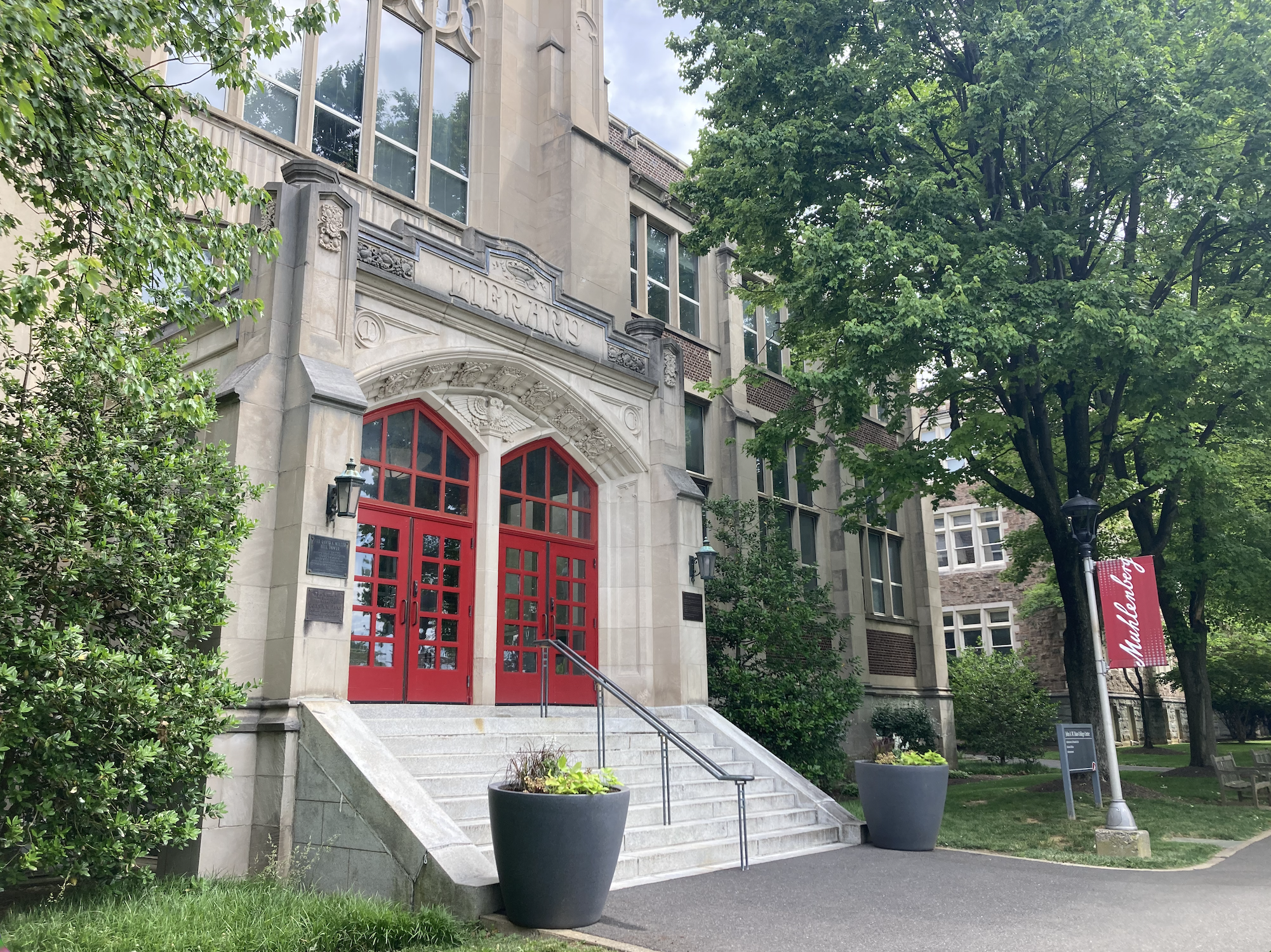
On May 19 Muhlenberg College administration announced that over 20 faculty and staff would be eliminated by the end of the upcoming 2026-2027 academic year, with staff layoffs being effective immediately. The College then released a series of FAQs answering questions from the community to address logistics like the timeline of the layoffs and how the loss will address Muhlenberg’s $10 million deficit.
On May 28, Student Government Association (SGA) President Josephine Glass ‘27 and Vice President Amanda Growney ‘27 met with President Kathleen Harring and Provost Laura Furge to share the results of an ongoing student feedback form. Glass noted that the responses revealed students are primarily concerned with a lack of communication and transparency from the administration. She stated, “Many reported feeling uninformed, citing delayed messaging and repeatedly called for clearer explanations regarding who was affected and how those decisions were made.”
In an effort to facilitate communication between administration and the student body, SGA announced that they will be hosting a town hall at the start of the fall semester to provide students with the opportunity to ask questions to SGA representatives and the administration.
Glass also shared that responses from the feedback form expressed significant concern over Muhlenberg’s financial priorities, in addition to the impact that the layoffs would have on academic quality. “These concerns have contributed to a growing sense of distrust in institutional decision-making,” she said, “with many students feeling that their input has been overlooked and their educational experience has been deprioritized.”
Many students expressed dissatisfaction with the information shared by the administration. In reaction to these communications sent to the Muhlenberg community, Brenya Gommel ‘28 shared, “I just think the tone these statements have taken have felt really condescending. Particularly whenever they mention that they’d warned faculty that layoffs would happen. There’s no acknowledgment that these faculty members were, in the moment, swiftly and inexplicably informed they would be losing their jobs. I appreciate that they bluntly stated the cold reality that the College is operating at a $10 million deficit. But the factors surrounding that and the action plan are comically vague because the college refuses to admit that they’ve failed its student body.”
However, other students agreed with the administration’s reasoning for the terminations. An anonymous student acknowledged the College’s financial reality, contextualized by persisting issues in higher education. “[Saying that I] support the layoffs is pushing it– I believe they did what they had to do to ensure the future of the College. College admissions are going down for nearly all schools right now, and are not going to grow at the rate they have in the past due to rising affordability issues both college specific and life in general.”
According to the National Center for Education Statistics, U.S. higher education has had a 13% decline in enrollment in the past 15 years. “All of higher ed[ucation] is doing mass layoffs, and compared to other institutions of our size and caliber,” said the student, “we’re really doing just fine. I don’t support layoffs as those are people and this school is their life, but during recessions you have three choices– lay off, raise prices or shut down.”
Although no official statement was released from the administration with a list of names or departments due to privacy reasons, some faculty and departments communicated changes to students after the layoffs were announced. Hours after being sent an email from a professor who had received a letter of non-reappointment, Owen Shaffer ‘27 knew he wanted to take action. He posted a petition to Change.org with the title, “Demand Muhlenberg’s Board of Trustees Explain the Silent Termination of Faculty and Staff,” quickly gaining the attention of the Muhlenberg community. Within 24 hours the petition reached over 120 signatures, a number that would quickly multiply over the next month. By mid-June the petition had garnered over 1,300 signatures.
“I was so confused, I had no idea cuts were even happening, and now a professor who made a significant impact on me and my academic career is gone,” Shaffer shared. “I made the petition out of frustration and honestly not knowing what else to do.”
Shaffer shared the petition on online platforms, which was then amplified by MulesForTransparency on their Instagram page. The student-led organization was first founded in February as a response to the delayed decision on tenure for four professors. This summer, MulesForTransparency has been leading efforts to share information on the layoffs by promoting the petition and hosting an archive of departmental updates.
MulesForTransparency stated, “We are committed to working with the administration, not under them, to gain more transparency about our financial situation, where our tuition is going, why professors are being laid off and why the [Chief Financial Officer (CFO)] position has such a high turnover rate. We act as a megaphone for students, and through this coalition, we are able to better amplify the voices of students.”
On June 16, MulesForTransparency, Shaffer, Muhlenberg Democrats (BergDems) and Muhlenberg’s chapter of the American Association of University Professors (AAUP) posted a joint message with Emergency Campaign on Instagram focused on the layoffs and petition, urging the audience with the tagline, “Which side are you on?” The national organization Emergency Campaign describes themselves on their website as “a grassroots movement of students, faculty, labor, alumni, and community members organizing to defend and expand access, autonomy, and excellence in post-secondary education.” Emergency Campaign initially reached out to MulesForTransparency after their February walkout and reached out again once Shaffer’s petition began to circulate.
On July 7, MulesForTransparency announced that they would be joining BergDems, Muhlenberg AAUP and the Emergency Campaign in forming a student-faculty coalition to advocate for improved communication between administration and the campus community. The Berg Coalition describes themselves as “a group of students, faculty and alumni organizing to defend the core values of the Muhlenberg community and uplift the voices of all community members.” According to their mission statement, their goals are to promote transparency by facilitating information sharing within the campus community and protecting facets of academic freedom like tenure and speech.
As Muhlenberg undergoes a period of transition, including Harring announcing her retirement at the end of the 2026-2027 academic year, students are eager to find new avenues of communication between administration, students, faculty and staff.
Kathy Christie ‘27 emphasized, “I think the disconnect is caused by [the administration] holding onto an idealized version of what Muhlenberg is and not actually living in the present. The Board of Trustees as well, in The Weekly article that interviewed them, most were reminiscing on the Muhlenberg of 30 years ago. That’s not the Muhlenberg of today.”

Alexandra Downey ’27 is an English & Creative Writing and Media & Communication double major. She is incredibly excited to be Editor-in-Chief! She enjoys playing tennis, rereading everything on her bookshelf, and showing off pictures of her dogs.