



















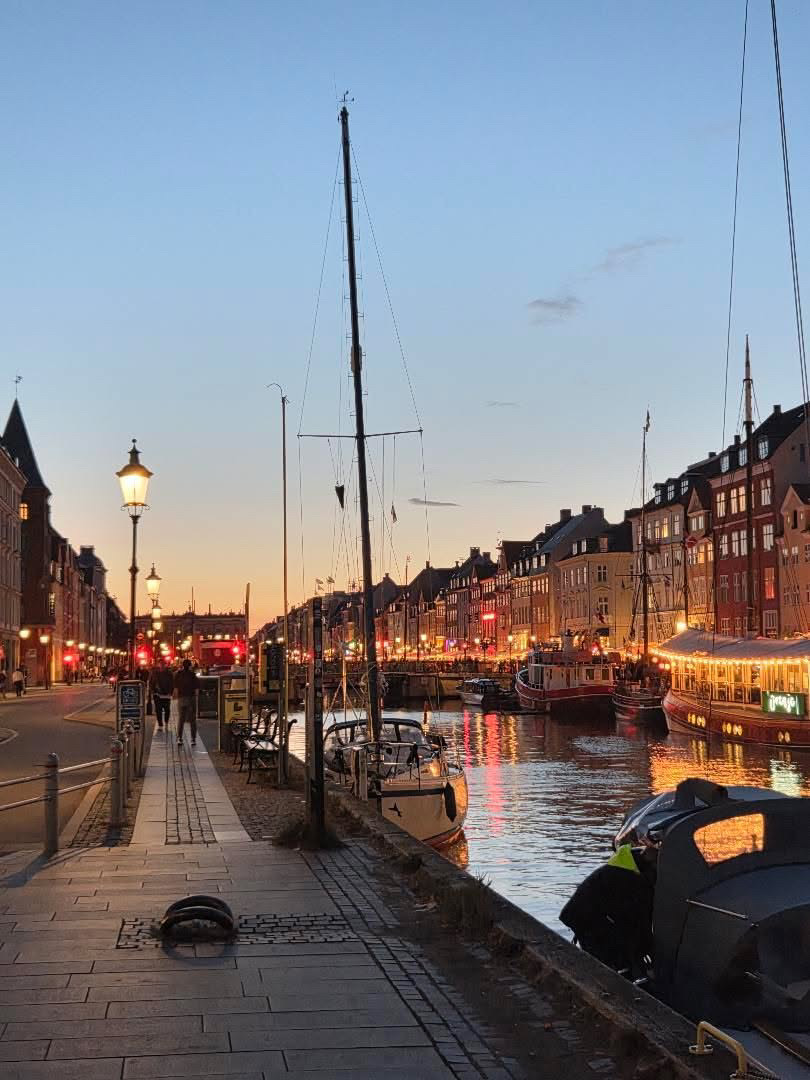
Intermixed with the constant overclarification of “no, not that type of American, I didn’t vote for him,” and the tertiary pain of walking fifteen thousand plus steps a day, my time in Denmark, Copenhagen has been interesting and entertaining. Though it hasn’t been as active the last two weeks– going clubbing on Tuesday night, or, “American Tuesday” (as the Danes like to call it) at Proud Marys Pub in Vesterbro is rarely a let down (the tables are bolted down and can hold up to six people). Additionally, Thursday, Friday and Saturday nights always produce a new hole in the wall bar for myself, my roommates Jay and Mark and our friends to explore and socialize at. You’ll want to go to JoJo’s, Amagerpub and the Dubliner for a loud & good time. Also, Philly & Burgers can make a mean cheesesteak, despite the owner’s mother being from N.J. and not Philadelphia.
Depending on my walk during the day I get to pass things like the Round Tower that looks over the city, the Black Diamond Library, The Copenhagen Church of Scientology building and more places that are worth whole visits in their own right, but it’s nice as they’re places I can stop at any time of the week. Though my time here is limited, it feels nice to blend in at least a bit more than the large groups of American flag hoodie clad tourists. My roommate Jay said, “Biking in the city makes it feel like more of a neighborhood. I know some locals at our local grocery store, I feel like I’m blending in very well. [The city] does a great job at making you feel comfortable and feel like you have a community here. Sometimes people just come up to me and speak Danish, then I feel like I’m part of a community that wouldn’t have been so quick to accept me.”
Copenhagen is dense and very walkable, has an automated and efficient subway system, endless parks and no restrictions on carrying an open container– you’re given time to, if not encouraged to, “stop and smell the roses.” Any random day can end with classes ending around three pm, some work time at the DIS Student Building, a group dinner with friends, then a night in Amagerbro or into the city center to explore a new park or pub we haven’t been to yet. The Kings Garden offers plenty of views and sites from its large shady lime trees to its vast botanical gardens. A walk along the canal can situate you anywhere, from the public swimming sections by my gym SATS Blox, to the famous Nyhavn canal or to a personal favorite, the floating bar– Kayak Bar.
Students are not the lucky few in the city as work ends for most adults around 4:00 p.m. When the Copenhagen city clocktower rings at 4:15 p.m., the benches, plazas and outdoor seating of all kinds fill up with locals, Carlsberg or wine in hand, people watching and talking without a thought of maximizing shareholder value. Even though storeowners keep shops open late and bartenders and wait staff work later, they’re always ready to start up a conversation no matter what time of the evening or day.
One thing the layout of Copenhagen has shown is that walkable or bikeable cities allow for quieter, greener and friendlier streets. Whether it’s my ten minute walk from Norreport station to my classes, or a walk along any small road, the forced proximity with other people has the feeling of being personable and “local.” A majority of streets will have some type of parklet or a bench under a tree where five minutes turns into twenty, or if you’re at Orstedsparken, it can eventually be a nap. One clear downside however are the caravans of bikes at rush hour which are so long you contemplate clotheslining the next rider who doesn’t let you pass.
My urban design courses have taught me to better notice when cities are built for the scale of humans, and when they’re built for the size and speed of cars. One of my design professors, Dr. Heitor Lantaron calls it “the art of noticing.” He suggests that instead of just walking, driving or biking from place to place, think actively about how accessible or inaccessible your destination is from where you start. “The space between buildings,” is another way it’s been put. Is your commute from a train station, down a winding boulevard past stores and street stalls and through bustling markets, or are you stuck in traffic for 35 minutes to get home from your job only seven miles away, forced to drive as there’s no other option connecting you back home? Answers may vary based on your current nation. Good urban design can dismantle any arguments that would suggest cities need to prioritize cars over people, and reinforces the idea that much of American planning creates an unwalkable and cold economic zone. You can thank urban planner and renowned twentieth century racist Robert Moses for our car dependency. At a time where gas back home is $5 or more a gallon, and you can’t really access anything without a car, being in a city where 50% of residents ride bikes for primary transportation is very nice.
It’d be ironic if I ignored the American territorial ambition sized elephant in the room however as I wasn’t kidding at the beginning of the article. Danes are kind people, even to Americans. Though, now, there is usually a pause after saying you’re from the states, and it’s expected you fill that pause with a hearty rebuke of our current President, America’s abdication of nearly all our responsibilities, and for extra points, a critique on soulless finance capitalism. As you might imagine, I have no issues with those caveats. Now, however, you should be ready to hear “Greenland is not for sale” quite a lot. I’ve always wanted to say in those instances “why don’t we ask the native Greenlanders?” but why stir the pot. It has been a politically successful trip with the exception of one American Tuesday that ended in a McDonalds around 1:00 a.m. where I was emphatically disagreeing with a Dane over his insistence that America is the usual- “demonic embodiment through and through,” “beyond saving,” “root cause of evil in the world,” you get the idea.
Though I am unsure in which edition this semester it will be in, there is plenty to share from my primary course “Astropolitics: The New Space Race.” To give a slight overview: Elon Musk’s starlink satellites are making it damn hard for astronomers to see the stars now, the astronomer Tycho Brahe had a pet moose and an in-resident midget who would come out at parties, there’s no clearcut regulation constraining interplanetary mining or private space industry actors and the space debris is so bad that every rocket launch we’re just one stray satellite screw away from disaster.
I’m sorry to hear about the state of the General Quarters, and I know you’re not all really surprised that the expansion is still biting back– get better soon Bobby.

Seth '28 is a Sustainability Studies and Business Administration major. He is part of the Muhlenberg Weekly, SGA, and Chapel Council. When he isn't writing, he is usually going for a walk, drawing, or doing work.