



















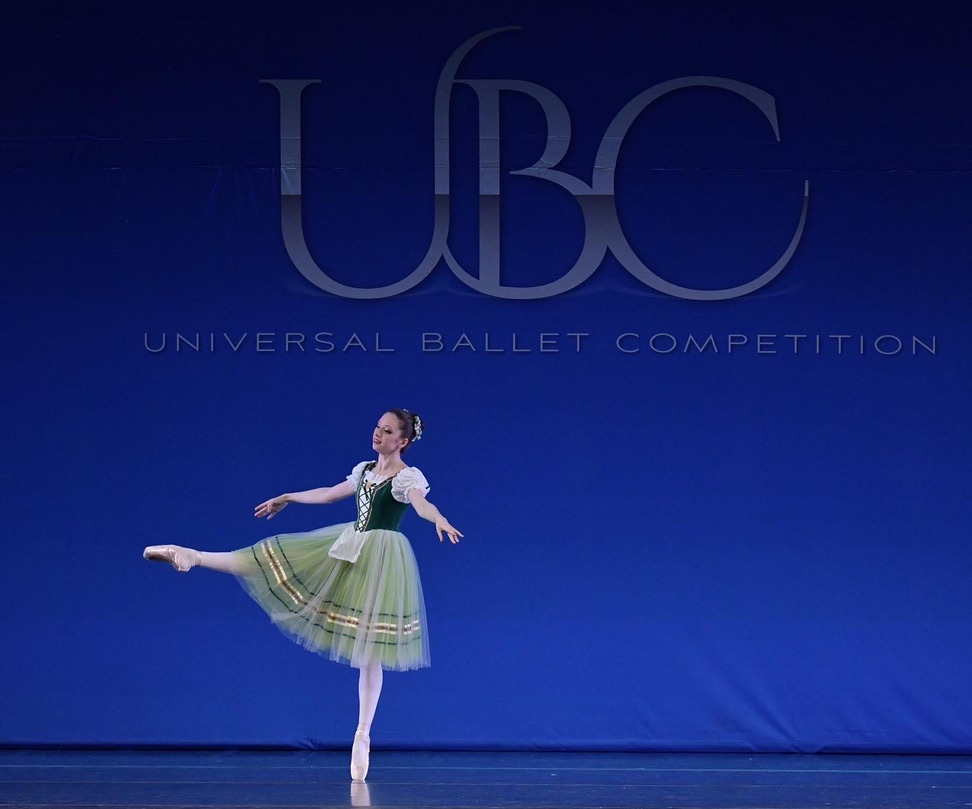
On Oct. 20, in a classroom on the second floor of Moyer Hall, members of the campus community filed in to listen to Alyssa Sipman’s ‘26 research presentation: “Social and Structural Factors Influence Injury Perception, Reporting, and Treatment in Pre- Professional Ballet Training.”
Associate Professor of Public Health Kathleen Bachynski started off the presentation by introducing Sipman. A biology and dance double major, Sipman has been involved with the dance world for years. In speaking with The Weekly, Sipman elaborated on her background, sharing, “I grew up in ballet and trained at what I consider a pre-professional program for a few years, as well as attending several summer intensive programs. I am also pre-med and interested in medicine and health, so this project sits at the intersection of all my interests.”
“This project sits at the intersection of all my interests.” – Alyssa Sipman ’26
Beyond this, Sipman has been involved with dance at Muhlenberg College. In addition to serving as the class of 2026 representative for the Muhlenberg Dance Association (MDA), Sipman has performed in “In Motion ’23,” “In Motion ’25” and “Dancing with Bach” with The Bach Choir and Bach Festival Orchestra. In addition to this, she also choreographed for “Studio Sessions ’25.”
Sipman explained to The Weekly, “My own experience with injury and seeing the way my peers in different programs interacted with pain and injury initially sparked an interest in looking at injuries from a social perspective. Reading about similar work done in various disciplines helped me refine my specific research question.”
Sipman’s project began with discussion of the popularity of ballet, as well as how there is no governing body for dance in the United States. She then moved into discussing the transition many young dancers go through from recreational to pre-professional programs. As she noted, this transition usually happens between the ages of 12-16, and occurs for individuals looking to train at a higher level for greater amounts of time. As such, this intensive training naturally increases the risk of injury. Most of these injuries result from overuse.
In conducting her research, Sipman used semi-structured interviews with former pre-professional students, teachers at pre-professional programs and physical therapists affiliated with pre-professional programs in order to examine how social factors influence reporting, perception and treatment of overuse injuries. After conducting these interviews, she transcribed them and thematically coded them using a software called Dedoose.
During her presentation, Sipman shared six themes that emerged in her research. These included: dancers express numerous reasons to not report injuries, and language around injuries supports a belief that injuries must be severe to be legitimate; injury reporting and return to dance is often dancer-led; dancers frequently do not seek medical care for pain/injuries and do not follow protocols outlined by medical professionals; dancers see a disconnect with medical professionals lacking a dance background; dancers anecdotally perceived several risk and protective factors but often lack formal injury prevention education; and structural factors affected whether dancers are able to access medical care.
As such, Sipman came to several conclusions, namely that programs need to better support injury prevention education and access to medical care. Additionally, she affirmed that there needs to be a shift in language used to discuss injury and pain in the dance community.
Speaking with The Weekly, she added, “While much of this work is dance-specific, I think that one broader takeaway is the importance of understanding how cultural attitudes toward pain and injury shape whether and how people seek care. The way we talk about pain can influence not just dancers but anyone navigating injury and recovery.”
“The way we talk about pain can influence not just dancers but anyone navigating injury and recovery.” – Alyssa Sipman ’26
Sipman also shared, “This research has been very fulfilling because it’s directly inspired by my own experiences. I am so grateful to Dr. Bachynski, the Public Health Department and Muhlenberg College for supporting student-driven research. More broadly, it has deepened my understanding of how personal interests can shape academic inquiry and made me more excited about incorporating researching into my future as a physician.”
Commenting on Sipman’s presentation, Bruce Wightman of the Biology department added, “Alyssa is a poster child for the liberal arts, bringing her energy and enthusiasm to the arts, social science and natural science. Alyssa’s work on injury in dance is a terrific example of original student scholarship. In my biology research lab, Alyssa is a natural leader.”
Professor Kathleen Bachynski shared this sentiment, adding “It has been an absolute pleasure working with Alyssa as she designed, planned and carried out this fascinating and original public health research project. The way Alyssa combined her firsthand dance experience with her interdisciplinary academic interests exemplifies how a liberal arts approach can empower students to blaze new trails and ask new questions with important, real-world implications.”
Looking ahead, Sipman is hoping to get her research published. For those looking to follow Sipman’s journey, she will also be the artistic director for the Senior Dance Showcase coming up in May and performing in “In Motion ’26” and the play “Everybody.”

Emma Northrop '27 is a History, English Literature and International Studies major at Muhlenberg. She loves writing for the Weekly, and is immensely excited to be a managing editor. When not at the Weekly, she loves reading her favorite fantasy novels, drinking lavender vanilla iced lattes, and scrapbooking.