


















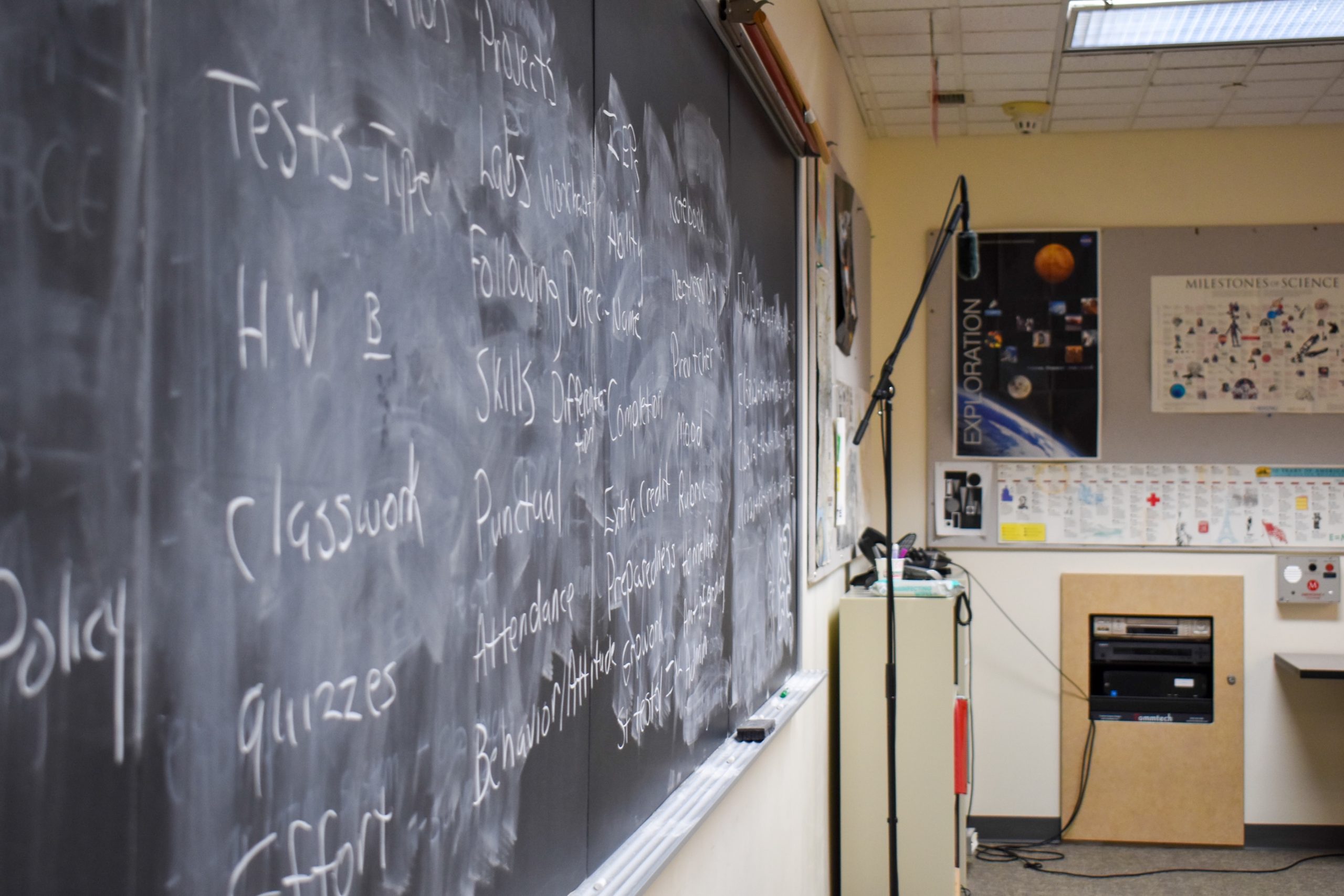
An increasing number of students are relying on the use of artificial intelligence (AI) models, such as ChatGPT, to assist them with their school work. A survey from Study.com revealed that “48% of students admitted to using ChatGPT for an at-home test or quiz, 53% had it write an essay and 22% had it write an outline for a paper.” Muhlenberg currently does not have an official policy against students using AI for their school work. While some professors have strict guidelines in opposition to students using AI in their classes, other professors are more lenient towards the application of it, as they believe AI offers some efficient benefits.
The Director of Sustainability Studies, Richard Niesenbaum, explains his stance on students using AI platforms as he says, “In my course SUS 405 ‘Sustainable Solutions,’ which is a writing course, students may use AI as a research tool as long as they confirm the information with external sources. They are required to cite those external sources, and indicate that ChatGPT or any other AI platform was used in the development of their work. If it is determined that written work was obviously derived solely from AI platforms, the student will receive a failing grade for that assignment.”
“Papers have an expressive component; we want to hear the voice of the student and of course what the student themselves actually thinks. A machine can’t do that. Artificial intelligence is artificial, but it’s not intelligent. … Students have to think for themselves; if you have a machine to think for you, you lose confidence in your thinking.” – Alec Marsh
Alec Marsh, professor of English literatures and writing, comments on his view about papers written by AI, saying, “Papers have an expressive component; we want to hear the voice of the student and of course what the student themselves actually thinks. A machine can’t do that. Artificial intelligence is artificial, but it’s not intelligent.” He also states that, “Students have to think for themselves; if you have a machine to think for you, you lose confidence in your thinking.”
James Russell, associate professor of statistics, has a view on AI that differs from Marsh’s as he says, “I approve of the use of AI for class, as long as it’s used to enhance understanding rather than replace the critical thinking process.” He also says, “One of my requirements is that students tell me when and how they use AI, so I can share their ideas with other students in future classes. One thing my students have used AI for is writing R code for simulation methods in my lab activities. This has helped students with limited background in computer science complete more complicated tasks.”
“I stress that it shouldn’t be a set-and-forget operation. I make sure to warn against accepting output without critical review. It’s good, but it’s not perfect. It’s easier, but it’s not always right (for many reasons). And, if not explored deeper, researched further or just sourced (more like admitting that it’s an AI output), you’ll likely encounter an issue somewhere down the line.” – Anthony Dalton
Adjunct Professor of Media and Communication, Anthony Dalton is on the same page as Russel as he remarks, “I stress that it shouldn’t be a set-and-forget operation. I make sure to warn against accepting output without critical review… I’m not feeling like I’m policing all the time. I’m not building AI-proof assignments. I’m building AI acceptance and guidance. It’s no different for me than teaching about media-making ethics at large. There should always be reasons to and reasons to not. And I feel that it’s up to all of us to find something that I don’t believe AI will ever do: behave truly morally responsible.”
Jeff Rudski, a psychology professor and the director of public health, somewhat agrees with Russel and Dalton’s views on AI, stating, “AI use must be cited, and the reference section should include the prompts used. I also want students to use a different font for paragraphs that were assisted by AI.” Rudski further describes the positive sides of AI use, saying, “But there are aspects of assignments where AI can add to the learning experience. After (never before, always after) a student creates the first draft of an outline for a paper… students then can compare their outline with those composed by Chatherine or AIden (we’ve named ChatGPT in my classes). Two things almost always happen. First, Chatherine or AIden come up with an outline that includes a couple of things that a student may have overlooked, and might want to include in their paper. That’s a good thing.” He then elaborates, “There is a major darkside, however. The outlines generated by AI focuses on smaller details and overlooks big-picture issues, and often misses the overarching theoretical point when writing empirical research articles.”
Students are also divided about if the school should obtain a policy on AI, as some students are adamantly against the use of any AI while others see its potential. Brynn Shapiro ‘27, who is a film major and minoring in creative writing, says, “I think we could benefit from a general policy on the use of AI as a school… AI could be a great resource in the future, but I still find myself completely against it. I personally refuse to use it. I feel uncomfortable even googling ChatGPT, but at the same time so many people around me use it, that it feels just as ignorant to ignore it as to participate in it.”
Another student, Becca Matz ‘27, a psychology and art studio double major, says, “I don’t think the College needs a policy on AI, but I think teachers should have their own guidelines for AI in their classes. I think that it’s okay if AI is utilized as a tool for assignments, such as Grammarly is used in Google Docs. But when it comes to the actual analysis and reasoning, AI shouldn’t be used to rely on.”
With the rise of AI platforms available to students, many colleges such as Columbia University, Temple University, and the University of Pennsylvania have adapted their policies to include AI, so that leaves room for Muhlenberg to advance their policies on AI use as well.
When asked if Muhlenberg will ever adapt a policy on AI use, Provost Furge responded by saying that, “The College does have official policies for employees related to use of AI (related to privacy and protection of college data, for instance), but there aren’t currently institutional policies about use of AI in academic context. The Muhlenberg Committee on Technology and Digital Learning is examining some possibilities. But, currently, every faculty member is to include in their syllabus what their specific policies are for each course.” However, she continues by stating that, “The College does not have an official stance on AI in academics. It is a topic area that the Muhlenberg Center for Teaching and Learning has been exploring with faculty for over a year. Faculty participated in a panel at the start of the fall 2025 term presenting ways they are using AI in their teaching and learning, there was a panel on AI in teaching and learning again just 2 weeks ago, and many faculty attended online workshops last year on AI (and additional ones again this year) offered through the LVAIC (Lehigh Valley Association of Independent Colleges).”

