



















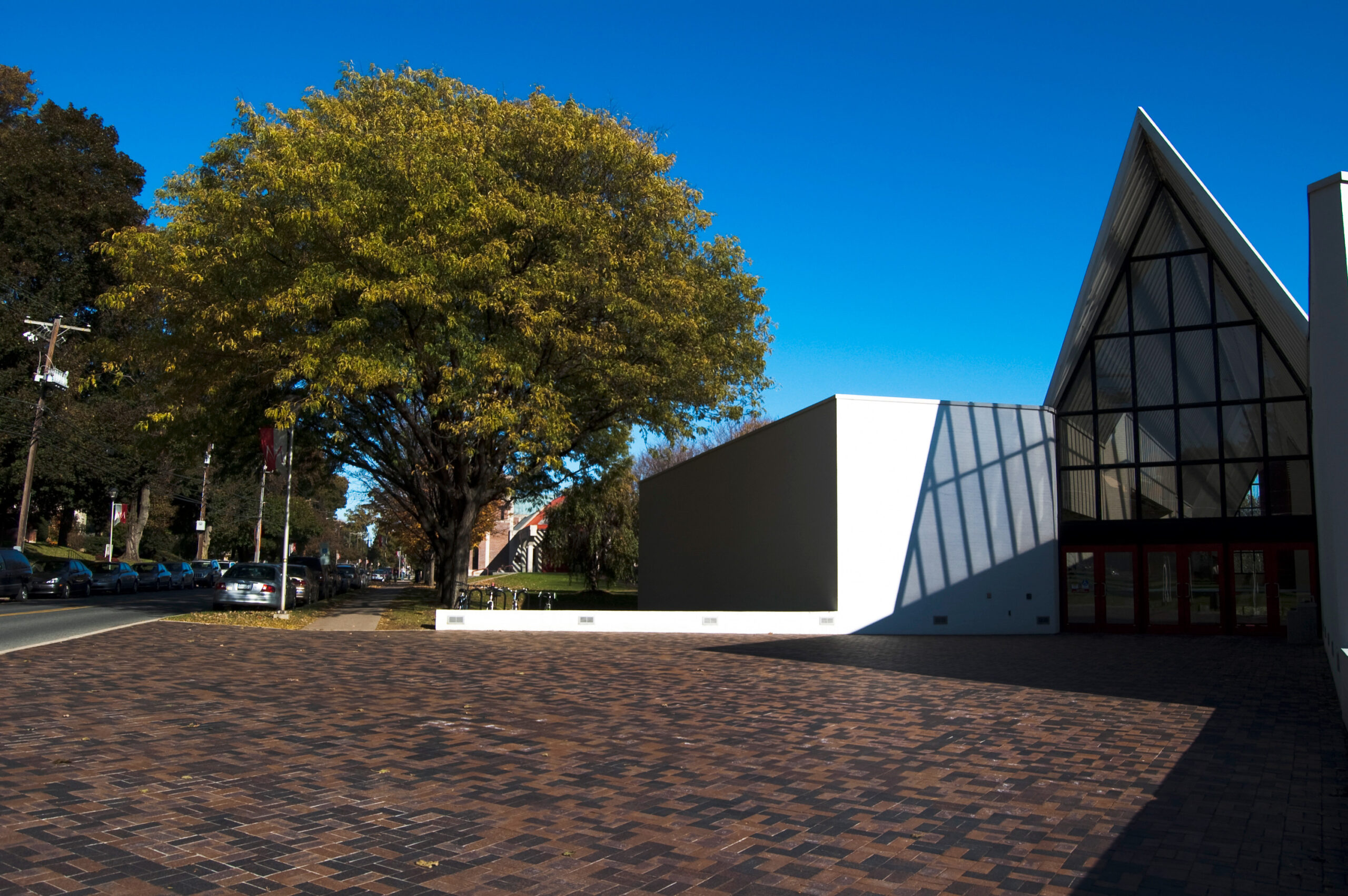
As a liberal arts college, students at Muhlenberg can take a dance class without any prior training or experience. Unlike a conservatory, one doesn’t have to audition or be a declared dance major or minor to take a multitude of dance classes or audition for departmental shows, removing the barriers to learning dance. Given this, it’s easy to believe Muhlenberg would be able to attract a wide variety of students, but the department still struggles to have more diverse bodies in the space.
Heidi Cruz-Austin, who recently received tenure, is the director of the dance department and an associate professor and says she rarely found diversity in dance spaces as a student.
“It was pretty non-existent, to be perfectly honest,” said Cruz-Austin, who is Dominican-American and was born in Allentown, Pa. “At my dance school in Allentown, I was the only [Black girl], and when I went to School for American Ballet for summer programs, there was maybe one other girl in the upper-level classes. There wasn’t anyone who looked like me to help me think, ‘oh, I can do this,’” explained Cruz-Austin. “I had to be my own compass, and I just walked in, and I was not going to be deterred. But when I think about it now, I’m like, I don’t even understand how I had that resiliency because I was up against a lot of discrimination.” Cruz-Austin trained in ballet and dance professionally until she began teaching ballet at Muhlenberg.
Noel Price-Bracey recently joined the faculty as an assistant professor of dance last fall. Raised in Detroit, Mich., she still found dance spaces to lack diversity. “Most of my dance instructors were white until I got to high school. I also did the Nutcracker on the Detroit Opera House stage for maybe six years straight. Typically the girls that would go to those calls were all white. So I was typically dancing in my younger professional life with non-Black folks.”
“My first dance school was a Black dance school, and so I didn’t know that I was a minority until I switched to [my] second dance school,” said Robyn Watson, a lecturer in dance and artistic director of dance productions. “There, [Tap] was presented as an afterthought. But that school is also where I gained my musicality and my confidence within tap dance. Having that space, that little tiny room with the wooden floor with my teacher, was very sacred.”
Cruz-Austin began teaching ballet at Muhlenberg in 2010 as an adjunct and 2019 as a full-time professor. She said that due to the lack of diversity, teaching at ‘Berg was hard. “There’s always been a couple [students of color] sprinkled around in ‘Berg, but I feel like there’s never been a time where I can say that there’s a lot,” she explained. “And at one point I was teaching at the University of the Arts at the same time that I was teaching here, and their dance program was so diverse. It was a really stark contrast from here.”
“For our department, half of our faculty is Black, but the students that we teach are not,” added Watson. “And I appreciate the interest and the openness of those students who understand that they do not culturally associate with the practices that they are doing. But oh, what joy it would be to have somebody in the space that does culturally associate with it.”
Price-Bracey moved to Allentown from Seattle, Wash. to take her current position. “I had an impression that moving to the East Coast would allow me to finally rest in the opportunity to teach in a visibly color-diverse community. It’s something that I’ve been missing as I was teaching and working in Seattle because of ideas of access and representation and knowledge of how to start maneuvering in dance spaces. So when I arrived and the demographics of the dance classes were more, or even less, adjacent physically, culturally and color-diverse than when I was in Seattle, I was disappointed. However, our students in the dance department are incredible and brilliant and ready to have the conversation about race and power and new ideas nonetheless.”
“But are we currently communicating or interacting with students of color; making our presence known as faculty of color in and beyond the Trexler [Pavilion] and C[enter for the] A[rts]?” asked Bracey.
The dance department has been actively trying to recruit more prospective students of color into the department and diversify the space. Yet, it comes with its difficulties. “It’s a hard sell because they don’t see themselves represented here in the student body,” said Cruz-Austin. “I’m hoping that the faculty is a draw, but I think there’s just more to be done to convince people that this is a place that they would feel safe, good and nurtured.”
As for the students of color currently on campus, Watson posed the question, “Do they know we’re here?”
“That’s also a reality, right?” said Price-Bracey. “It might not be that our beautiful faculty here, who have been laboring long before I got here, aren’t making themselves known, it could very well be that there’s a lack of understanding about who is allowed to have access, or who has previously been given access to these spaces. Or, who believes that they have ownership and a right to be in a space where there are marley floors and mirrors and ballet bars. Who has knowledge and access to these things, or who has been kept out?”
The prioritization of Eurocentric dance forms like ballet and other contemporary styles has historically excluded Balck and Brown bodies from dance spaces, a system that the faculty here at Muhlenberg are up against.
“I’m really just thinking about this idea of, ‘we have a right to be here,’” said Price-Bracey. “We have the liberty to be dancing in space. Dance is culture. Dance is a part of Black culture. Dance is part of Brown culture. So it may look a little different in a studio surrounded by mirrors, but it can also be a container for us to express and liberate and find freedom.”
“It takes a really brave person to jump into a dance class if they’ve never done it before, and it’s a vulnerable thing,” said Cruz-Austin.
For students of color, it can be particularly isolating to enter a space with individuals who don’t look like them, yet the faculty at the dance department want students to know that they are here to support them.
“I know what it feels like to be in a space where you’re not wanted and to be in a space where people think, ‘it doesn’t belong to you,’” said Cruz-Austin. “So I try really hard when I’m teaching to break those barriers and break down those hierarchies so that people can be comfortable enough to bring themselves to the space and get what they need and want out of it. So that’s one of the things, I think, not that I was happy to be the only Black person in all of these spaces my whole life, but it’s a good lesson I learned about how I want to be as an educator.”
“I’m hoping that the faculty is a draw, but I think there’s just more to be done to convince people that this is a place that they would feel safe, good and nurtured.” – Heidi Cruz-Austin
The faculty wants students to feel comfortable talking to them about their concerns. “There’s space for any Black or Brown student to reach out to us for a conversation. If they are cautious about safety within the context of the dance program and learning space, please do not hesitate to reach out to us. The biggest thing I say is that technique is inside you. My job is to help you figure out how you can be the best tap dancer with whatever you have. I want to see students to see that there’s people here in leadership and teaching and educating that they can resonate with,” said Watson.
In most dance classes here at Muhlenberg, there are maybe one or two students of color in each class. Yet Price-Bracey believes that “If we continue to educate the few that trickle in and decide to take a leap of faith and say, ‘I belong in the studio. I have a right to be in the studio,’ then I believe that little by little, we will begin to educate our incoming students on what access they have to the space.”
“I’m wrestling with the question, ‘whose job is it to diversify the space?’” said Watson. “My teaching approaches are diversifying the space. Me being in that space is already diversifying the space.”
Nonetheless, Cruz-Austin, Watson and Price-Bracey encourage all students to come take a dance class.
“If you’ve ever had an inkling of wanting [to] try dance, try it,” said Cruz-Austin. “Don’t be afraid. We’re here to support you. We’re here to guide you through it. I know it can be a scary thing, but it can also be a very rewarding thing, and you don’t want to have regrets when you leave Muhlenberg. You’re here to try as much as you can. Go for it and know that there are people here that understand where you’re coming from.”
“Come to class,” said Watson. “That’s it, if you are interested in any way, shape or form or are the smallest amount of curious about dance, go take a look.”
“The Muhlenberg dance department is a place to learn, so even if they don’t have a studio-based practice, you are welcome, you are welcome, you are welcome,” said Price-Bracey. “I am looking for you. We are looking for you.”

Keanna Peña '25 is the Editor-in-Chief of the Muhlenberg Weekly. She is an English and Creative Writing major with a minor in Dance. She is passionate about informing the student body and sharing her creative writing.