


















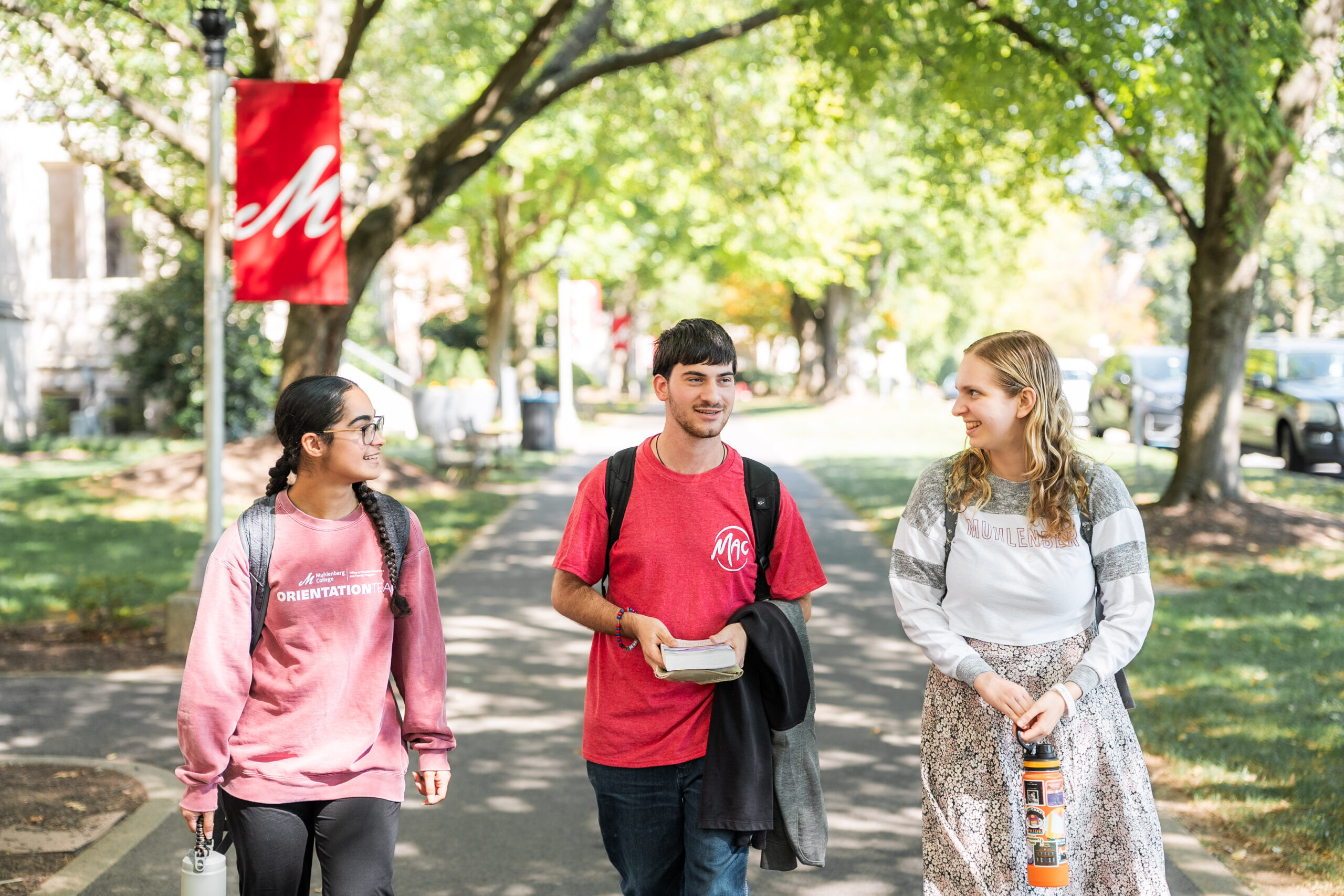
In summer 2026 Muhlenberg is launching a new summer program for high school students. The main goal, according to Associate Dean of Faculty Development Brian Mello who is teaching in and helping to direct the program, is to “bring more high school students to campus and give them more experiences with college.” This is an opportunity for high school students, as while college is often seen as exciting, it can also be a scary experience. College means new people, new living arrangements and even new food. To brace incoming students for these drastic changes, the goal of a summer program is to offer a sneak peek of college life. The program is open to rising high school juniors and seniors, with rising sophomores being considered based on program enrollment.
A past Muhlenberg program that offered a similar experience was the GEMS (Girls Experiencing Muhlenberg Science) program in 2015, a program that was for middle schoolers. Mello shared that the Summer Institute allows the College to use “under utilized space during the summer that sits idle in the summer. … So we have great capacity to have summer programs.” Mello also highlighted that the extra space exists now due to many of the summer classes for undergraduates now being held online. This allows students to live in residential halls on campus. The cost for students living on campus is $3,500 ($3,000 if paid before Feb. 1) and the cost for commuters is $2,800 ($2,300 if paid before Feb. 1).
The program offers a variety of courses for students. First is “New Media, Journalism, and the Search for Truth” which is taught by Sara Vigneri, senior lecturer of Media & Communication, and Paul Krempasky, general manager of WMUH. “From Posts to Paychecks” is taught by Department Chair of Economics Lindsey Nagy. Another class is “Innovation, Creativity, and Entrepreneurship,” which is taught by Director of the Innovation & Entrepreneurship Program Kecia Sturdivant. Another class, focusing on civic leadership, is “Human Rights Advocacy” taught by Professor of Political Science Brain Mello. “The Science of Play” is taught by Erika Bagley, associate professor of psychology and Melissa Dowd, senior lecturer of biology. The final class which is being planned for this summer is “Acting, Movement, and Storytelling in 2026: Devising the Narrative Choreopoem” which is taught by Krystal Danielle ‘21.
These programs are meant to show off what “Muhlenberg does really well,” as Mello said. This is an opportunity for prospective students to start thinking about a field of study; however, it should be noted that the “2026 Summer Institute program is not credit-bearing,” according to Vice President for Communications and Marketing Todd Lineburger and Chief of Staff and Executive Assistant to Board of Trustees Sonya Conrad.
Since the Summer Institute is still months away, most faculty are currently getting their courses fully organized. Nagy, who will be teaching “From Posts to Paychecks,” says the classes are about the “intrusiveness of different social media platforms and how those platforms allow creditors to monetize their content and the ethical, legal concerns that come with it.” Sturdivant’s course is meant to introduce students “to a wide range of pathways and industries, including technology, gaming, marketing, finance and entrepreneurship.” She continued, “The goal isn’t to master one industry, but to help students understand how innovative and entrepreneurial thinking can apply across many fields and future career paths.” The program’s directors are seeking to introduce high school students to topics within their academic and professional expertise in an interesting and engaging way, while avoiding material that is overly dense or confusing and might intimidate high school students.
To attract prospective high school students to the summer institute, Muhlenberg is also offering the career accelerator program. “Every student in two-week Summer Institute programs will experience a half-day career-readiness workshop, incorporated into the program track. This is about helping students learn to communicate their achievements in writing and in conversation and to articulate transferable skills for academic or career pursuits,” according to Lineburger and Conrad. This helps students ask an important question to themselves before they leave for college: “why am I going to college?” The career accelerator program helps students create a path for success and make the most out of their college experiences.
The Summer Institute is a new endeavor for the College, with the goal of continuing the program for many years. The pre-college programs market is highly competitive, making it interesting to examine how Muhlenberg will position itself to succeed.

