


















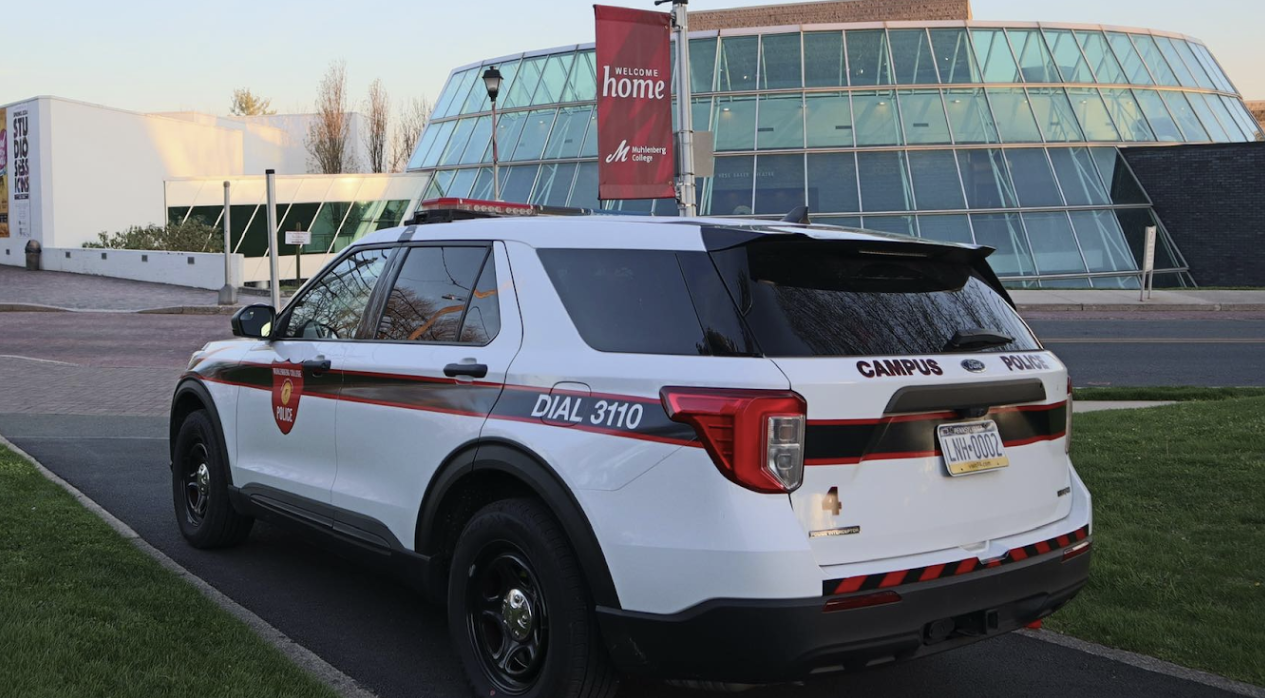
The Department of Campus Safety and Police at Muhlenberg College has a clear mission: “promote and maintain a safe, inclusive and welcoming campus environment.” For Chief of Campus Safety and Police Brian Fidati, this mission is not simply a statement on the College website. “Our goal has always been to support students,” he explained. “We are here to serve and protect the community, but we do it through engagement, education and presence. It’s about knowing and being a part of the campus.”
“We are here to serve and protect the community, but we do it through engagement, education and presence.” – Brian Fidati
That presence looks different each day depending on the role of each staff member. Officer Jacob Gines-Santiago, the department’s community affairs officer, described his role as one rooted in relationship-building. “My day-to-day work can vary greatly,” he said. “Some days I’m generating social media content or planning events. Other days I’m out interacting with the campus community and attending student events, whether sporting or social, in an attempt to have positive interactions. I’m always working on some way to hopefully have a positive impact on our community.”
Campus Safety’s office is located on the lower level of Prosser Hall, but their work reaches every corner of campus. The officers manage emergency response, investigate incidents, oversee parking enforcement, maintain campus fire safety systems and ensure compliance with federal safety mandates. “We handle everything from alarm activations to medical calls to requests for assistance,” Fidati noted. “An officer will respond, assess and write a report. Every situation receives attention.”
Fidati joined Muhlenberg after 25 years with the Pennsylvania State Police, bringing with him extensive experience in emergency planning and response. What drew him to college policing, however, was the difference in the kind of relationships officers could build. “The main difference from traditional law enforcement is that we focus on community engagement and education, not just enforcement,” he said. “The college environment allows us to work closely with students, using guidance and support as tools to help them navigate independence.”
Gines-Santiago emphasized that students sometimes misunderstand that purpose. “I personally wish students knew that we are primarily here to keep them safe and support them,” he said. “None of us want to give students a hard time. We love the positive interactions we have. It’s never fun when we have to be the ‘bad’ guys. We were all young adults at one point too.”
Another essential responsibility of the department is maintaining the College’s emergency notification systems, such as Omnilert and Alertus, which allow for immediate campus-wide alerts when necessary. “We train for emergencies continuously,” Fidati said. “Preparedness is essential. Our officers are trained to respond to everything from medical crises to active threat scenarios, and we conduct drills to ensure the campus is ready too.”
Training itself is a core part of their identity. “All of our officers come in with different backgrounds,” Fidati explained. “About half have state or municipal policing experience, but we ensure everyone trains to a shared standard.” Officers receive training in CPR, AED use, First Aid, de-escalation, crisis response and scenario-based preparedness.
Gines-Santiago’s own training includes Crisis Intervention Training (CIT). “I always make sure the student knows that I am there to help, that they are safe and that they have a platform to tell me anything,” he said. “No matter the situation, I want the individual to feel heard, safe and to know that I am there as a helping hand if needed.”
“No matter the situation, I want the individual to feel heard, safe and to know that I am there as a helping hand if needed.” – Jacob Gines-Santiago
At the core of both Fidati and Gines-Santiago’s approaches is trust-building. Officers attend student events, meet with campus organizations and take part in initiatives like “Coffee with Campo” to create opportunities for everyday positive interactions. “Building trust is an ongoing process that happens one positive interaction at a time,” Fidati said. “We want students to see us, talk to us and recognize that we’re here to help.”
Gines-Santiago echoed that the relationship-building element is what keeps him motivated. “I always wanted to do more community-related work in policing,” he said. “The environment here checked all the right boxes. Seeing students grow throughout their time here is one of the best parts of the job.”
As the department looks ahead, Fidati emphasized that Campus Safety is always evolving. “Our vision is to meet the changing needs of the community,” he said. “College is a time of growth. Our job is to create a safe environment where that growth can happen.”
For Gines-Santiago, the work feels deeply personal. “I’m proud of the work we’ve done with some of our events and the impact we’ve had,” he said. “But I’m most proud of the growth that this role has allowed me to have, which helps me be better for all of you. At the end of the day, we are here for you, and without you, we wouldn’t be here.”

