


















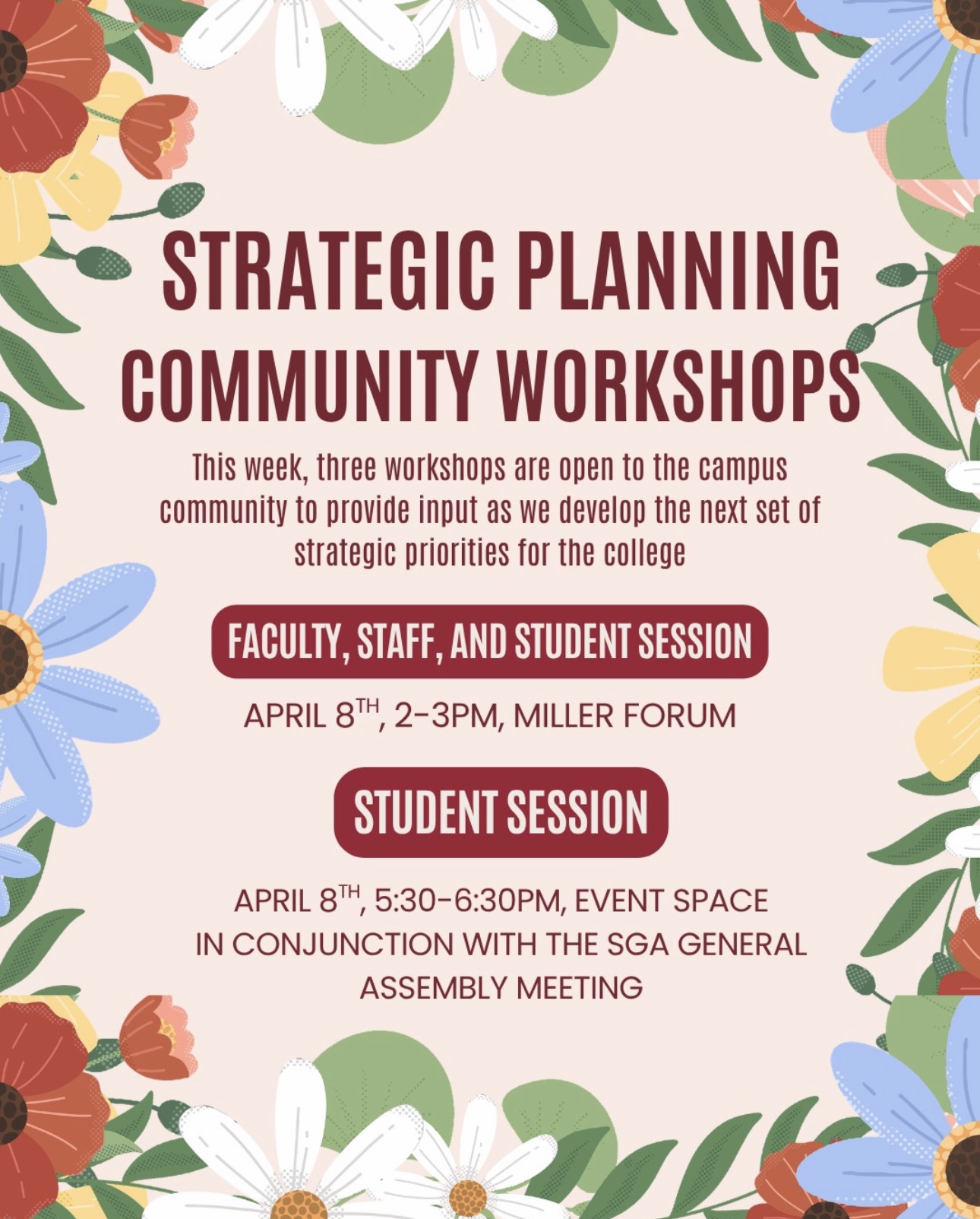
With colorful post-it notes covering tables and lively discussion filling the room, members of the Muhlenberg College community came together on April 8 with a shared purpose of shaping the College’s future. Across the workshops held throughout the day, nearly 200 students, faculty and staff actively contributed ideas, debated priorities and reflected on what a Muhlenberg education should look like in the years ahead, setting the tone for a process built on collaboration and campus-wide input.
The workshops are part of an ongoing, multi-month strategic planning process designed to guide Muhlenberg over the next three to five years. A steering committee, formed in January and composed of faculty, staff and students, has been meeting weekly to refine priorities and coordinate community input. Provost Laura Furge emphasized that the process is still in its early stages and is meant to be collaborative. She said, “The senior staff put together a vision statement: ‘What will a Muhlenberg degree give me?’” and noted that the statement remains a draft and will continue to evolve based on feedback from the campus community.
The structure of the workshops centered on interactive participation. During the 2 p.m. session in Miller Forum, attendees were divided into small groups and asked to analyze themes within the draft vision. Participants rotated between stations, brainstorming ideas on large sheets of paper and voting on priorities using colored sticker dots. Each participant was given ten votes to identify the most important ideas.
Furge outlined the goals of the exercise at the start of the session, encouraging participants to think practically about how broad themes could translate into action. “The goal for different tables [is to] brainstorm and discuss what the theme looks like in action,” she said. The session also included a “gallery walk,” allowing participants to engage with ideas generated by other groups.
Discussion topics ranged from academics to student life. In the workshop, many participants focused on strengthening experiential learning opportunities. Suggestions included expanding internships in the Allentown and Lehigh Valley area, integrating career readiness into coursework and increasing access to research opportunities. Academic structure was another key area of conversation. Participants proposed adding new majors or micro programs, improving course scheduling and increasing course variety. Some attendees also raised concerns about faculty retention and consistency in teaching quality.
Student experience emerged as a recurring theme, particularly in discussions about campus life and resources. Suggestions included improving housing, updating facilities such as science labs and expanding dining options. Several participants also highlighted the need for greater financial support for costly academic requirements, such as exam preparation and technology.
During the 5:30 p.m. student-focused session in Seegers Union, similar concerns were echoed, with an added emphasis on community and social life. Students noted that aspects of student experience were not fully represented in the initial draft vision. The evening session also generated ideas related to strengthening campus traditions, improving communication between students and administration and increasing opportunities for engagement both on and off campus. Participants suggested expanding alumni connections, enhancing cultural programming and creating more spaces for student voices to be heard.
Co-chair and Vice President of Advancement Rebekkah Brown highlighted the importance of gathering a wide range of perspectives throughout the process. She said that the workshops generated “so many great ideas for the future of Muhlenberg” and thanked the steering committee and participants for their contributions. The timeline for the strategic plan reflects a phased approach. Initial priorities are expected to be drafted in the spring and presented to the board of trustees in May. Over the summer, the plan will be refined, including considerations of funding and implementation, with a more finalized version anticipated for presentation in the fall.
Organizers emphasized that the workshops represent just one step in an ongoing process. Additional feedback will continue to be collected and analyzed, with plans to share updates with the campus community later in the semester. The workshops provided a structured space for community members to voice their perspectives and contribute to shaping Muhlenberg’s future. As the strategic planning process moves forward, the input gathered from these sessions will play a key role in informing Muhlenberg’s priorities.

