


















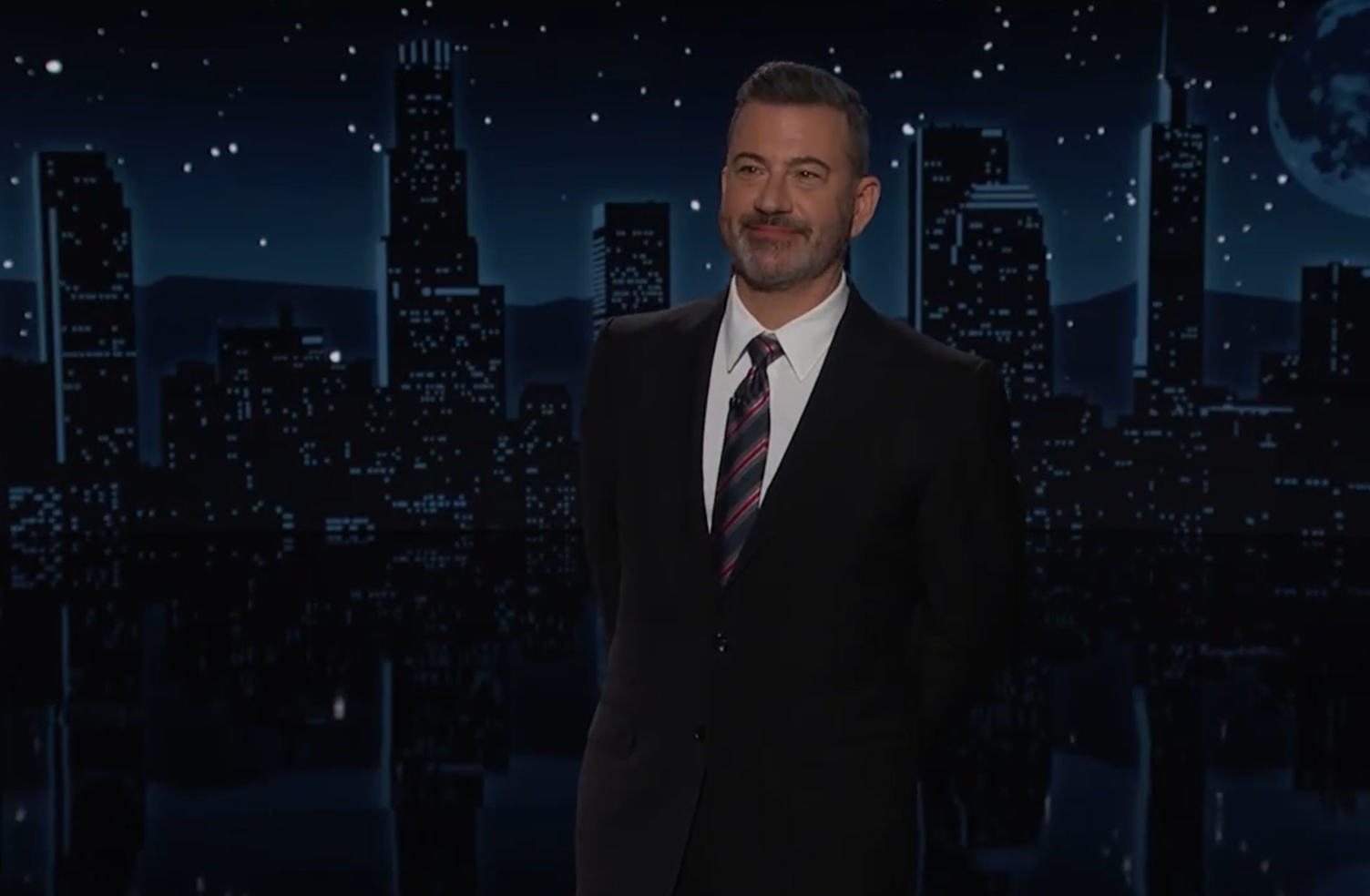

There’s very little to be said about Jimmy Kimmel’s suspension that hasn’t already been circled through newspapers and posts and magazines and conversations. After a comment made about the assasination of Charlie Kirk on the air, The Jimmy Kimmel Show was suspended from Sept. 17 to Sept. 22 by its own corporate parent: ABC and its partner, The Walt Disney Company. Ostensibly the murder of Charlie Kirk was an attack on free speech, as perpetuated by many of his supporters. Of course, even those who make Kirk out to be the face of freedom and martyrize his brief existence in the political spotlight must be able to see the irony in the companies’ decision to take Kimmel off the air: it is a blatant example of censorship.
As a student pursuing theater and media, and with a particular interest in comedy, I am interested in exploring the definition of these lines. When writing, I have often utilized the concept of “punching up”– the action of ridiculing or satirically representing people or groups who hold more power than the deliverer of the line. I find this to be one of many tools that I use to involve my art in broader conversations, almost as a supplement to my work as a journalist and as a reflection of my desire to relate to the common viewer. I think, as up-and-coming artists, it is important to know how to submit to or subvert audience expectations and opinions, but also to understand that these boundaries and comfort levels may not be established until the joke leaves one’s mouth.
We are being asked to navigate the undefinable, and in Jimmy Kimmel’s situation, being punished when we miss the figurative mark. There is a clear partisan hypocrisy regarding when it is and is not okay to oppose or offend the hegemony of network executives and politicians with power over media and entertainment. The selectiveness regarding when it is or is not okay to make a comment about one’s personal politics makes it nearly impossible to regulate free speech.
The difference between Kirk and Kimmel is the nature of their comments. Kirk often targeted groups with lower positionality than he held. Besides perpetuating micro-agressions, he often commented on the rights of marginalized groups or the laws set in motion to protect them. Meanwhile, Kimmel’s remarks were that the “MAGA gang” was “desperately trying to characterise this kid who murdered Charlie Kirk as anything other than one of them” and of trying to “score political points from it.” This is perhaps a broad generalization, yes, but not targeting a minority group given that this “MAGA gang” as an identity that he speaks of effectively influenced the results of the election by voting their leader into office. Kimmel “punches up” whereas Kirk does the opposite.
Kimmel spoke in regards to ongoing conversations about gun violence, and the inherent and unfortunate irony behind how Kirk actively advocated against the regulation of weapons after students were brutally targeted in school shootings, but then was killed by a gunman. Kirk supporters seem to be disturbed by the cruelty of his assasination, yet back him despite the cruelty within his words shared on his podcast, “The Charlie Kirk Show,” and the notion that the hate he spread aimed to have a wide scale effect on regulation and law. Using his social media presence, he denounces the value of gender affirming care, access to abortions, safety from guns in schools and vaccines. These denouncements are an act of political violence against those who need systemic support in accessing those things, as it could be detrimental to their livelihood. Whenever I take a scroll on Instagram or TikTok and see comments and posts related to Kirk, I notice the influence he had over young voters and think of how many may be voting without these issues in mind, or worse, actively voting to prevent these safety measures being put in place. However, the consequences of his ideology are taken less seriously because the impact is less direct and immediate– the effects will only be felt in the long term.
The entire situation highlights the double standard which draws vague lines around content on political violence that has always, and may always exist. The very foundation of the United States was based in the war against and violent overthrow of unjust leaders and influential public figures. Historically, radical political action is used as an effective bridge to change. Yet, when public figures are assassinated or insurrections occur, determining whether or not that action is acceptable is considered by one’s partisan bias. It seems the general public picks and chooses when radical actions, whether verbal or physical attacks, are acceptable. I can’t help but think about the eerie silence from the same people who have been vehemently preaching about violence against Kirk when, just weeks before, democratic Minnesota lawmaker Melissa Hortman, was murdered in her own home.
So, how do entertainers and their networks contend with the fact that due to this conflict, there is no single standard for radical political action, as well as no blueprint for joking about current events? As a rookie in the professional field of writing for an audience, I will not allow the Jimmy Kimmel situation to teach me that I should steer clear of difficult topics or let my voice be censored, and I encourage you to do the same. Kimmel merely opposed the thought process and belief of administrations and those who follow it, but no one can tell you when you can and cannot oppose, especially not people whose entire campaign was based on the opposition to others. Rather, these conversations or jokes may shed light on the issue of selective acceptance. In fact, I think double standards like these– perhaps not in direct reference to the assasination of Kirk, but to the conflicting political discourse that followed– lend themselves to too much irony to be ignored in comedic settings.
The First Amendment is often weaponized by those in power or with significant influence over public opinion to consolidate their power. Words and actions rooted in blatant discrimination are passable under the guise of free speech, or even passed as legitimate law. Words and actions that defy their belief get pulled off the air. The most we can do, not only as entertainers but as practicing citizens, is not subject to, but subvert what is expected or believed by such an administration. Don’t be complicit with an administration that reveres bullies with a podcasting microphone enough to consider putting them on an American coin.
Photo from @jimmykimmel on Instagram.

Megan ‘26 is a Theater Studies and English Literature double major with a minor in Film Studies. She is extremely grateful to have worked with the talented and passionate students on the Weekly staff since her first year. When she isn’t working in the production room, you can find her directing shows on campus, writing sketch comedy, leading the Muhlenberg Film Association, or enjoying a night with her friends.