



















The Education Department’s Office for Civil Rights sent out a “Dear Colleague” letter on Feb. 14. The letter demands that no educational institution that receives federal funding may “[treat] students differently on the basis of race to achieve nebulous goals such as diversity, racial balancing, social justice, or equity [as it] is illegal under controlling Supreme Court precedent.”
The letter claims that “educational institutions have toxically indoctrinated students with the false premise that the United States is built upon ‘systemic and structural racism’ and advanced discriminatory policies and practices. Proponents of these discriminatory practices have attempted to further justify them—particularly during the last four years—under the banner of ‘diversity, equity, and inclusion’ (“DEI”), smuggling racial stereotypes and explicit race-consciousness into everyday training, programming, and discipline.”
So, what does this mean for the landscape of higher education, and for students here at Muhlenberg?
Since the “Dear Colleague” letter was published, The University of Houston has closed both its Center for Diversity and Inclusion and its LGBTQ Resource Center. The University of Pennsylvania has erased all DEI related language, and has renamed it “Penn Belonging.” The University of Colorado has renamed its Office of Diversity, Equity and Inclusion to the Office of Collaboration. Students at Colorado State University (CSU) protested after a letter was sent out to the student body informing them that CSU would comply with White House directives. On Thursday, Feb. 27, Ohio State University said it will “eliminate its DEI offices and programming effective Friday.” Other institutions have made significant changes to their DEI initiatives, including The University of Cincinnati, The University of Alaska, The University of Iowa and Grand View University.
To better understand the “Dear Colleague” letter, I spoke with Ross Dardani, professor of political science, who specializes in law and legal studies. He shared a memo created by law scholars from educational institutions across the country, that “explains why common DEI initiatives remain legally defensible notwithstanding President Trump’s January 21, 2025 Executive Order (EO) titled ‘Ending Illegal Discrimination and Restoring Merit-Based Opportunity’ (the “J21 EO”) and related agency communications like the Department of Education’s February 14 Dear Colleague Letter (the “DCL”).”
Dardani stated that the memo accurately breaks down “certain policies that definitely would be illegal or unconstitutional, and then other policies that it seems like the ‘Dear Colleague’ letter and the executive order are trying to make the claim that they’re unconstitutional and illegal, but I would agree with the arguments in this memo that they’re not.”
The memo is divided into four sections, all of which describe a different reason why DEI initiatives remain legally defensible. The sections are titled “The J21 EO recognizes the right of institutions to engage in their own First Amendment protected speech and does not apply to academic programs or classroom teaching,” “Common DEI Initiatives are Lawful under Federal Civil Rights Laws and Supreme Court Precedent,” “The J21 EO concedes that DEI initiatives are not inherently unlawful” and “The J21 EO is constitutionally suspect because it appears to rest on pernicious stereotypes that presume the intellectual inferiority of women and Black people.”
“Riley-Casey shared a quote with me, that was originally shared with them, during our interview. ‘I’d rather die on my feet than live on my knees.’ And that’s exactly how I feel. I want to be strong enough not to bow and to stand on my values, and I’m hopeful for that.’”
Dardani gave his analysis of a key point of the memo. “If you’re dealing with policies that are rooted in DEI, and they’re designed to promote a more integrated campus, a more diverse campus, a sense of belonging right for all people on campus, as long as those policies aren’t making explicit racial classifications, and as long as they’re not offering some type of tangible benefit to people of one race that aren’t available to people of different races, and as long as those policies aren’t treating people of one race differently than people of other races, even if the executive order or the ‘Dear Colleague’ letter wants to try to argue that even those types of DEI programs are illegal or unconstitutional, I don’t think that’s true.” He continued by giving examples of these types of DEI programs, including using terms like diversity, equity and inclusion, as well as courses that fall under area studies, including Jewish Studies, Indigenous Studies and Africana Studies.
For Muhlenberg, it’s still unclear how the “Dear Colleague” letter could impact the College. Courtney Stephens, dean of students detailed, “The College’s mission statement, values, procedures, policies and Muhlenberg at its core will always focus on striving towards creating a welcoming and inclusive space that students can successfully learn, engage and thrive. In every capacity we will support all of our students, programs and opportunities that uplift the work of making sure all resources can be accessed by all students.”
When asked what her role is in determining what College policies will look like moving forward, Stephens said, “My role is to work alongside my colleagues to support students in accessing and pursuing their college degree, while also complying with regulations that are required in order for Muhlenberg to receive federal funding that provides support for financial aid, scholarships, etc.” It is unclear what these “regulations that are required in order for Muhlenberg to receive federal funding” could look like moving forward.
In an email sent to the campus community on Friday, Feb. 28, President Kathleen Harring acknowledged the “Dear Colleague” letter published on Feb. 14. She addressed Muhlenberg’s position within federal and state regulations. “Muhlenberg’s practices have always been in compliance with federal and state regulations. To date, there have not been any changes to established federal or state laws. In consultation with higher education professional organizations, leaders of peer institutions and college counsel, we continue to seek clarity about any action that could result from this letter. Meanwhile, over the past two weeks, the Equity and Inclusion Leadership Team has carefully reviewed Muhlenberg’s policies and practices to consider potential impacts. It is incumbent upon us to follow a process of due diligence. Again, while there have been no changes to established law, as a community we will continue to consider how to clearly describe programs and services and how they advance our mission and values.”
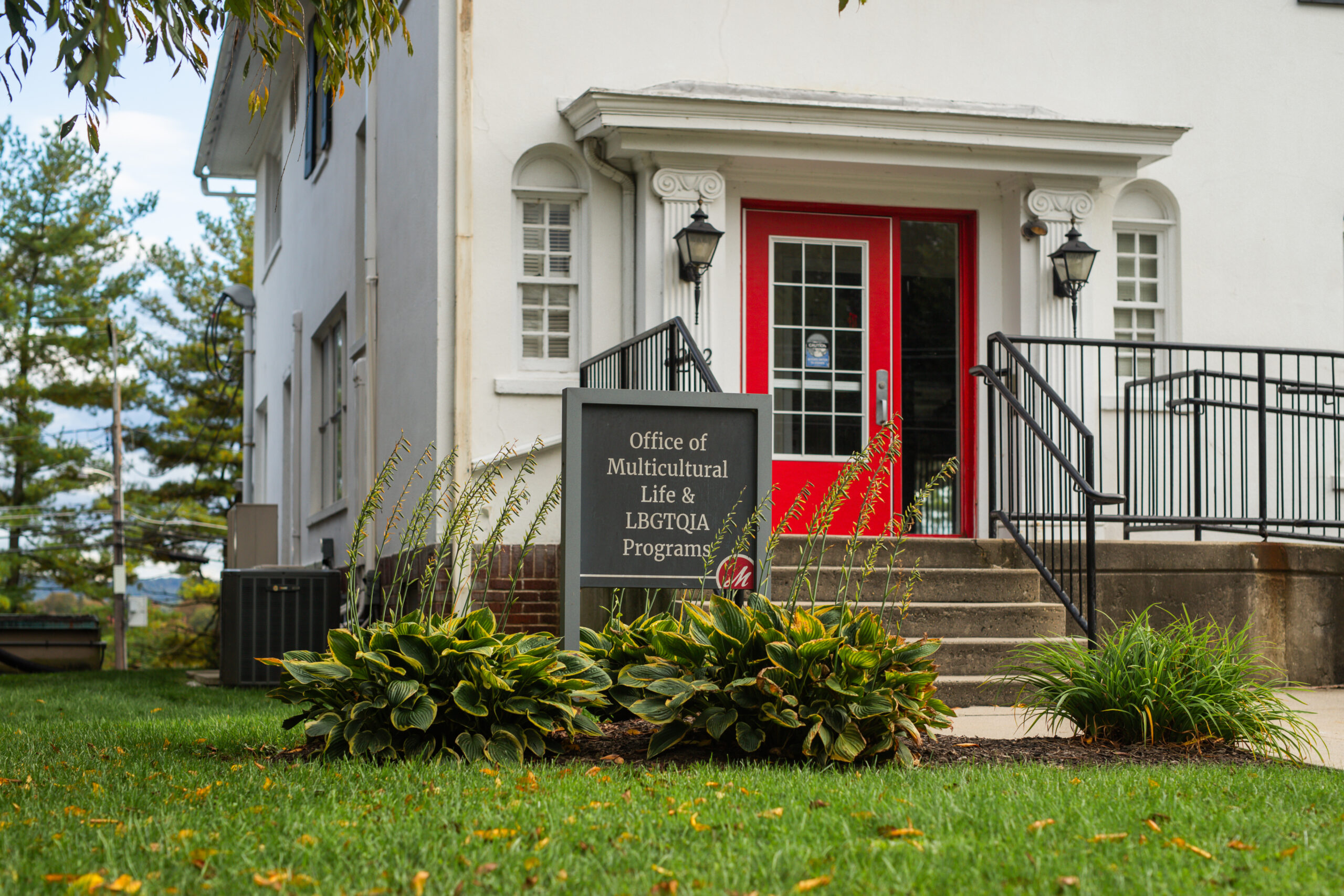
Robin Riley-Casey, associate dean of students and diversity initiatives and director of the Office of Multicultural Life, expressed the actions that they have taken to support students in the wake of uncertainty. “I spoke to all the leaders of the various multicultural councils, all the leaders of the affinity groups. I spoke to them, just to them, just to see where they’re at and making sure they feel welcome and safe and that their members have what they need.” Robin went on to more broadly express, “I think that one of the things is that this, this sort of move is to instill fear in people that they can’t navigate spaces as freely as they have been trying to.”
Dardani, as co-chair of the Curriculum Committee, shared what this may mean for the Muhlenberg curriculum, specifically looking at the Race and Power in the American Experience (RP) requirement. “It should still absolutely be a legal, permissible part of the curriculum.”
Statements of support from staff seem to be a common theme in the midst of uncertainty regarding the place of DEI in higher education. Beth Halpern, director of the Office of Community Engagement, gives her stance, saying, “It’s not specific offices or departments that are impacted, it’s our institution as a whole that would be impacted. Regardless of what this [‘Dear Colleague’ letter] says, we are here for students, and we will continue to support them.”
When asked how her role may be impacted by the “Dear Colleague” letter, Dean Stephens expressed, “My role remains the same as it always has – to advocate for our students, hear their concerns and provide support. It remains my personal and professional goal and mission to be one of the many support systems on campus that students know they have access to whenever they need it. We are so fortunate to have incredible faculty and staff who care deeply for our students and their wellbeing, and part of my job is to remind students of that and connect them to their resources.”
Riley-Casey also called for more faculty support for impacted students. “I’ve said to faculty, come out of the classrooms. Be public intellectuals. Share with the world your expertise on whether it’s politics or it’s on health, or on financial concerns. We need all of you. So I have encouraged faculty members to see themselves as such an essential part of this conversation in this work that will last us for a while, well beyond this administration.”
Riley-Casey shared a quote with me, that was originally shared with them, during our interview. “‘I’d rather die on my feet than live on my knees.’ And that’s exactly how I feel. I want to be strong enough not to bow and to stand on my values, and I’m hopeful for that.”

Amy Swartz ‘26 is an English & Creative Writing and Political Science double major. She has been part of The Weekly since her freshman year, and is thrilled to be Editor in Chief! Outside of the Weekly, you can always find her reading a new book, crafting, or rewatching an episode of her favorite sitcoms!