



















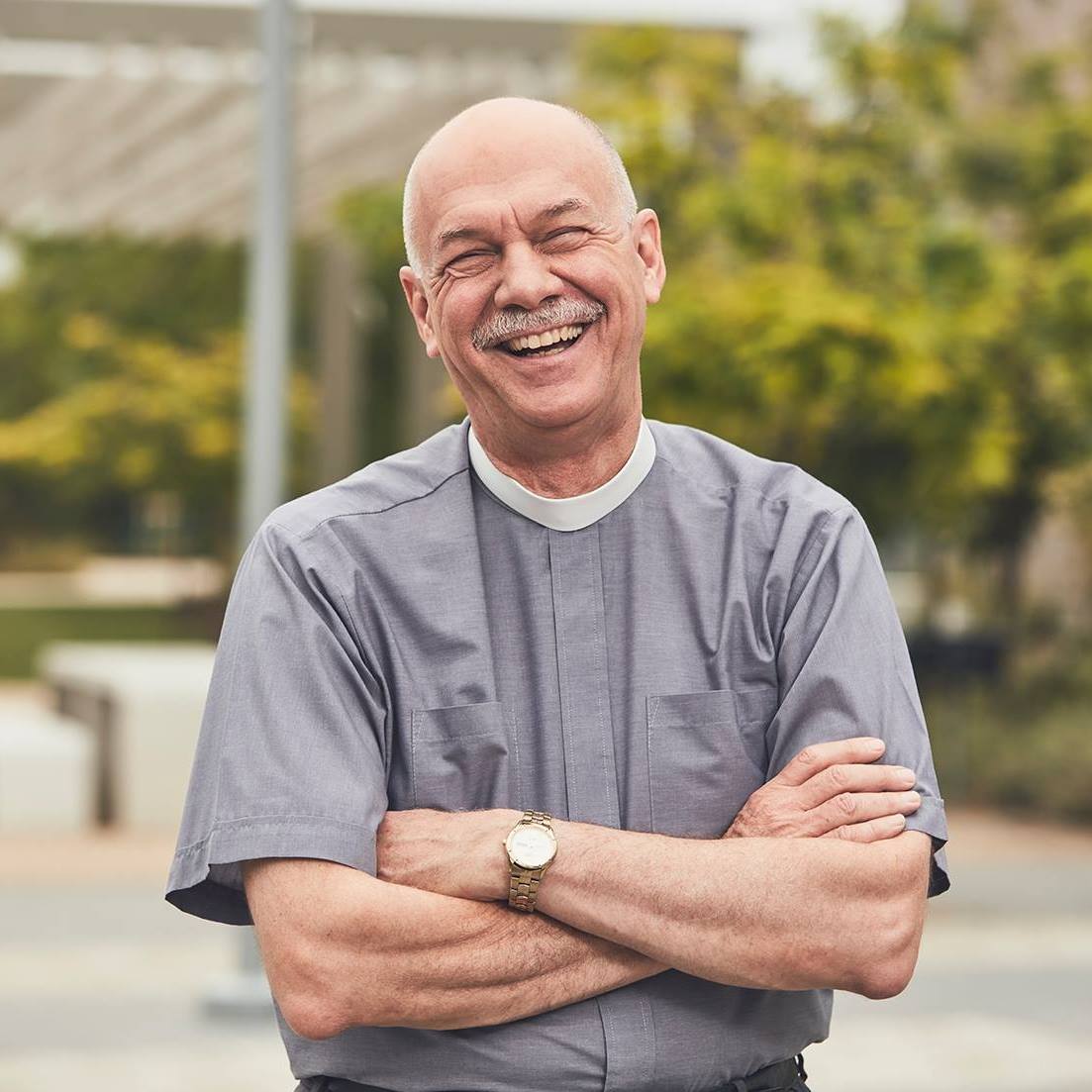
Among the many executive orders (EO) that President Donald Trump has signed in recent weeks, one in particular is hitting close to home for Muhlenberg Alum Eric Shafer ‘72. Shafer is an emeritus trustee of the College who currently works with Global Refuge. On Jan. 20, Trump announced an EO that immediately suspended the process for refugees to enter the country.
Global Refuge, formerly known as Lutheran Immigration and Refugee Service, is a nonprofit organization dedicated to refugee resettlement, along with welcome and respite services for asylum seekers. For the past 85 years, Global Refuge has helped over 800,000 individuals resettle in the United States. They provide support such as housing, food, English classes and job placement. Global Refuge is one of the ten agencies that are approved by the State Department and the United Nations to support approved refugees who come into the U.S. each year.
However, with the onslaught of anti-immigration EOs, Global Refuge is one of the many organizations that have come under attack by the Trump administration. Shafer works with Global Refuge as a pastor in residence and spoke to The Weekly about how the administration has halted the work they are doing to help refugees and its damaging effects.
Shafer expressed shock at the harm that Trump’s order has already caused. “There were people at airports with plane tickets in hand,” he explained. “There were families and congregations waiting to meet [the refugees] in the USA at airports, and they were banned from coming – about 6,000 refugees.” According to the CATO Institute, refugee admissions had sharply declined during the first Trump administration, from 84,995 in 2016 to a mere 11,841 in 2020. This new order brings the number of refugees entering the country to zero.
“He stopped people at the airport,” said Shafer. “That’s just cruel. We don’t know where those people are, and we have no way to reach them.”
President Trump’s EO is grounded in the idea that the U.S. “lacks the ability to absorb large numbers of migrants, and in particular, refugees, into its communities in a manner that does not compromise the availability of resources for Americans, that protects their safety and security, and that ensures the appropriate assimilation of refugees.”
Section four of the EO also states that the resumption of the U.S. Refugee Admissions Program (USRAP) will be re-evaluated every 90 days to determine whether “resumption of entry of refugees would be in the interests of the United States.”
Why 90 days? Why not just completely suspend USRAP? Brian Mello, professor of political science commented, “This is just a mechanism so that [Trump] can keep getting into the news about how tough he is on borders. It’s a mechanism to guarantee that on a regular basis, he’ll have to restate the need to keep our borders closed.”
“For the past 85 years, Global Refuge has helped over 800,000 individuals resettle in the United States. They provide support such as housing, food, English classes and job placement.”
On Jan. 27, Global Refuge was notified that they could no longer use the federal funds allocated for this year. Without funding, the agency will not be able to help the refugees who are already here in the U.S. Under Global Refuge, that’s about 6,000 refugees of roughly 20,000-30,000 refugees who were currently being helped by agencies across the country. “We get money from the federal government to give refugees a small stipend for their first three months – for food, clothing and housing,” Shafer explained. “And we were told, even though these funds were approved by Congress, that we could not spend them. This means that we’re creating a whole group of people who may become homeless or not have enough money to eat.”
Shafer spoke of the emotional impact this has had on the organizers at Global Refuge. “Our staff is just beside themselves. I mean, we have a lot of refugees on our staff and they’re concerned about their own safety too at this point. Will they lose their job? Will they not be able to help these people anymore? What’s going to happen to the people that we are called to serve? I myself have to stop thinking about it every so often because it’s just unbelievable. We have not seen this in this country ever that I’m aware of before, this kind of assault on basic rights and good things that the government has done.”
While this EO is troubling, it can potentially be adjusted if there is enough outcry from the public. Shafer outlined how students and community members can help refugee organizations like Global Refuge. “The first thing people can do is give money on our website at globalrefuge.org. Frankly, we need financial support. We’re trying to raise [enough money] that would take care of our refugees for [at least] one month. The second thing people can do is get the message out to our legislators, senators and Congress people that this is just wrong. The third thing is to stay informed. Of course, there’s a lot of bad information out there, but one way to keep informed is to go to our website and sign up for our newsletter. We send information out about immigration and refugee work, not just what we’re dealing with, but the immigration issue at large. And finally, prayer. We believe in prayer at Global Refuge and I’m praying for a change of heart in Washington.”
“The work of Global Refuge is more important in the last few weeks, in the last month, than it ever has been,” said Shafer. “I pray we’ll be successful and be able to get back to the work that we’ve been doing for 86 years.”

Keanna Peña '25 is the Editor-in-Chief of the Muhlenberg Weekly. She is an English and Creative Writing major with a minor in Dance. She is passionate about informing the student body and sharing her creative writing.