



















One hundred twenty-five lives were lost in Indonesia when an extremely violent outburst from fans occurred at a… soccer game?
On Oct. 1, 2022, Arema Football Club fell to Persebaya 3-2 in Indonesia’s Liga 1, but what followed was a horrific display of chaos. Fans of the home team, Arema, went on a rampage, throwing bottles and other objects, storming the field at Kanjuruhan Stadium, and eventually stampeding throughout the stands, injuring 580 other supporters. This disgusting display of dissent against the match result was because it was the first defeat Arema FC suffered against rivals Persebaya in 23 years.
Although this event has caused sadness to reverberate throughout the “footballing” world, research on methods to keep stadiums safe has informed clubs, leagues and organizations to review and update safety measures to prevent something like this from ever happening again.
In 2019, RAND Europe, a non-profit, non-partisan policy research organization, studied violent and antisocial behavior at soccer events and found numerous factors that may impact the safety of spectators at matches.
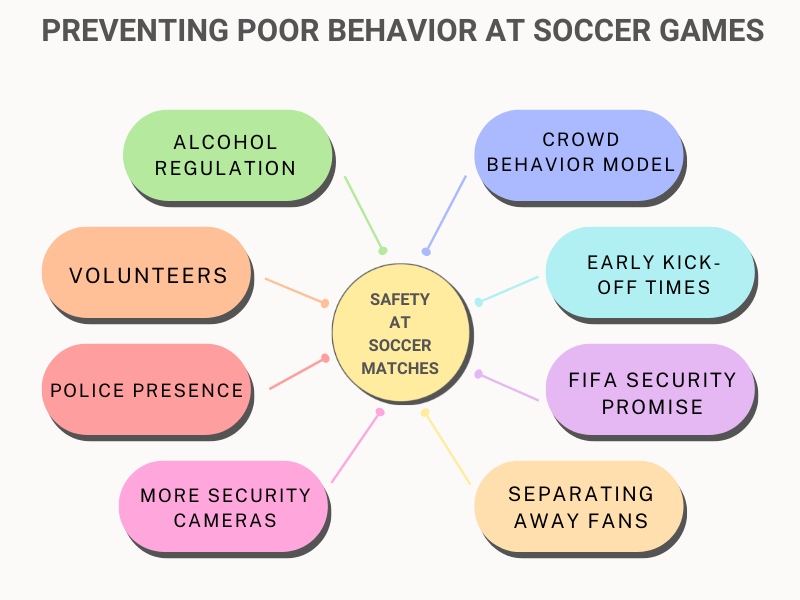
The first prominent factor is alcohol and its varying regulation at games all over the world. There are many cultural differences in attitudes towards alcohol, but regardless of venue, fans expect to be served at matches. The issue is not the beverage itself but unsanctioned distribution and drinking. To combat this, certain restrictions towards consumption and enforcement against unauthorized dispersion and indulgence can eliminate the risk of alcohol being the cause of a violent altercation.
Policing approaches that establish positive communication and peaceful interactions are another promising change to help avoid antisocial behavior at soccer matches. RAND’s study shows respectful interactions between law enforcement and fans were effective, but police need to be supplemented with a range of tactics and ample resources to be most efficient. In addition, more security cameras and designated opposing fan arrival and departure times significantly help control outbursts of violence and club repercussions for said behavior, deterring fans from committing repeat violations.
The first prominent factor is alcohol and its varying regulation at games all over the world.
Lastly, RAND examined how crowd behavior modeling (CBM) will support soccer clubs in preventing violent behavior by predicting how a crowd is likely to react and behave in distinct situations. Using the physical design of the stadium and pedestrian movement modeling software to examine and capture complex cultural and environmental discrepancies in mixed crowds, CBM can guess how people will move in specific spaces based on each unique stadium and crowd. This tool is invaluable in safety measures within stadiums and can be used all over the globe.
Leagues in many countries are updating their safety statements and pledges with great detail. England’s Premier League, the biggest soccer league in the world, made significant changes to its safety testimony, enhancing security measures and ensuring a safe matchday environment week in and week out. The importance of alterations like this is vital in creating a safer culture at soccer games, one where fans can enjoy the beauty of soccer without having to worry about their safety or that of their families or friends. Other soccer federations have also reinvigorated their safety commitments to their fans, giving a sense of hope to the global soccer community.
The biggest issue with these methods and actions is implementation by all soccer leagues and clubs. It should not have taken an event like this to force these transformations in safety, but FIFA, the world soccer governing body, is taking specific steps to ensure even the lesser-known leagues and clubs receive attention and funding to improve security in their stadiums, starting with Indonesia. FIFA President Gianni Infantino said the organization will bring in experts and investment to revamp soccer infrastructure across the country. Speaking to AP News, Infantino said, “What I can guarantee to the president, what I can guarantee to all the people of Indonesia, is FIFA is here with you,” a signal that things are going to move in the right direction for years to come.
Through pragmatic approaches to boosting security, soccer organizations doubling down on their commitment to improving and updating safety measures, and research continually examining the effectiveness of said action, it is clear there is an initiative being taken to reduce the probability of a horrific incident such as this from happening again.

Evan is a media and communication major minoring in creative writing and journalism with a passion for sports writing as well as soccer, being outdoors and spending time with close friends and family. He is eager to continue learning about and tinkering with writing while learning from the talented Weekly staff.