


















“I didn’t know they had a whale weight class.”
“Girl gotta hangover from hell.”
“When you’re 250 wrestling 285 it ain’t that hard.”
These are the comments that describe the stills of a woman’s wrestling match on TikTok.
Oh, and these comments were actually about me, a Division III athlete. It’s a bit alarming how many of them I get– very extreme assumptions about my weight, my athleticism and my body. My official weight class is 207 pounds or around 94 kilograms, not a bit above, if you were curious to know. However, it still seems a bit strange to talk about a random athlete and their body like that, and I’m not the only person who faces these types of comments.
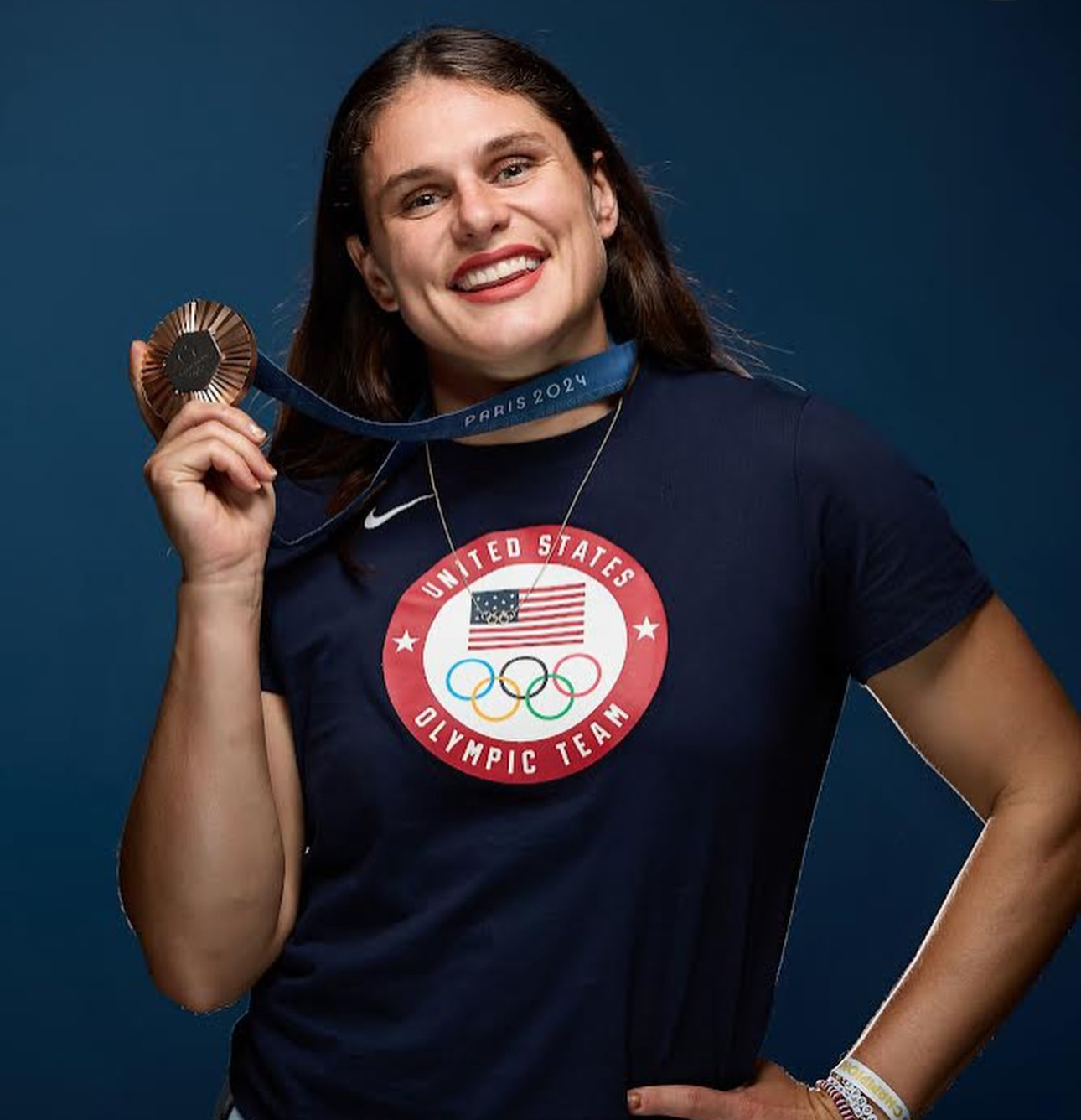
Ilona Maher is a famous example of a professional athlete under this type of criticism for her body– as in her body type. Maher is five feet 10 inches and 200 pounds– something that seems to challenge a lot of people’s views on what an athlete should weigh or look like. She was told that she was obese because of her Body Mass Index (BMI). However, she is an Olympic bronze medalist in rugby sevens, which requires a significant amount of athleticism and muscle.
There are many studies that point to female athletes having body image issues. 80% of elite female athletes are overly conscious about how their bodies look, and with college athletes, 68% of them have felt the pressure to be pretty, with 30% being afraid to look muscular. Why do these athletes feel this way? With the age of social media being so prevalent and everyone seeming to have it, there is a possibility that media and the way people interact with it are behind how we view women’s bodies. Social media already has a strong connection to body image issues.
The media tends to feel like female bodies are fair game for critique. “There was an article published in the New York Times about how women in fashion shows are like fashion models, high elite national models, and are going back to the hyperskinny ideals of the 1990s and early 2000s,” said Elizabeth Nathanson, professor of media and communication. “The push to have some notion of physical diversity in spaces of fashion has retreated, and there is now a sort of retrograde return to the hyper-skinny, which is not, you know, an athlete [body], and [in] accordance with [how] the musculature works.” Nathanson is referring to the fashion industry, which plays a large role in what we view as beauty standards. This, in turn, creates a conflict when talking about the standards people hold when it comes to athletes because they need muscle and body fat in order to maintain energy output.
There is another, deeper issue that can also be seen here. “I think to some degree this is just another historical iteration of folks perceiving that feminized bodies are to be looked at and thus to be controlled,” says Nathanson on the ease with which people comment on female athletes’ bodies. It plays into the patriarchal system and into misogyny itself. There is doubt that women can be what they want to be because of how uncomfortable people have become with women not conforming to “conventional” attractiveness. People feel that female athletes must conform to a twisted version of perfection because they are women. This idea has been prevalent for years, spanning the way back to the late 1990s and early 2000s. A particular article from 2008 that Nathanson brought to my attention argued that “gender hierarchies are threatened whenever women’s bodies are deemed to be excessive: ‘Too fat, too mouthy, too old, too dirty, too pregnant, too sexual (or not sexual enough) for the norms of conventional gender representation.” This is about control. This is about being uncomfortable with non-conformity.
This goes for even the slightest non-conformity, or even conformity itself. National Football League (NFL) cheerleaders are an example of these athletes who get comments about their bodies and are even sexually harassed by fans and spectators during events. They are unnecessarily objectified, just looked at for their bodies by both fans and a spotlight for insults by opponents’ fans. The NFL isn’t the only place this happens; it happens in college cheer too. Though cheerleaders have relatively “revealing” outfits, as do many other sports, this does not necessitate this type of behavior from people.
This body shaming even happens to people who are not wearing the most revealing uniforms. A couple of years ago, during a high school basketball game in Maine, two commentators for the girls’ game commented about how overweight and small the uniforms looked on a couple of the players. I have heard plenty of the same comments about many different female athletes, as I have worked and attended plenty of athletic events. The topic is always the same: the way the woman looks and not the way the woman performs.

