



















From the stands, it may just seem like another tackle when two players collide and the game continues, but watching closely, the impact is impossible to ignore. In a game like football, these hits are expected, sometimes even encouraged, but ending up on your back, staring up at teammates with blurred vision after everything briefly goes black, isn’t something any competitor wants to experience.
“Being seriously concussed is a scary experience, and it makes you more aware that protecting your head and brain is crucial and should be taken seriously,” Aidan Mack G‘27, Muhlenberg wide receiver, said, describing how quickly a routine hit on the field can turn into something much more serious.
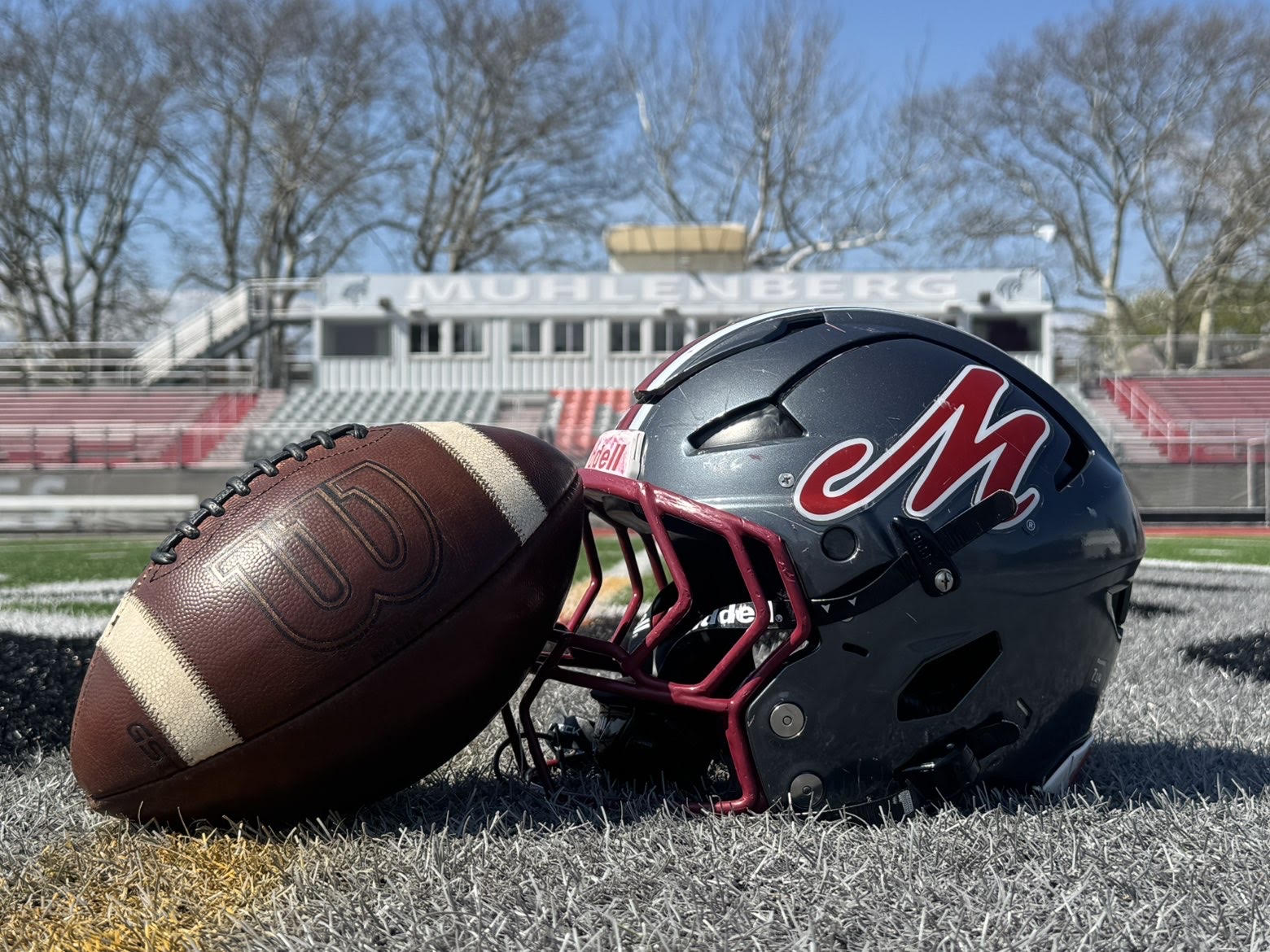
With growing concern over concussions and long-term brain injuries, the Muhlenberg football program has begun turning to new technology for head protection. In 2023, the team introduced the Riddell Axiom Helmet, a design engineered to better absorb impacts and reduce the chance of head trauma. In previous seasons, the team was limited to wearing only the Riddell SpeedFlex Helmet, introduced in 2014, with a flexible outer shell designed to soften hits from direct head-to-head contact. The SpeedFlex helmet can be priced between $400 and $550. In comparison, the Riddell Axiom helmet is priced at around $1,000, featuring several new advances in helmet technology, like a custom fit to the student-athletes’ heads. However, that high price tag creates challenges for smaller programs like Muhlenberg. Through budgetary support and fundraising efforts like Mule Madness, the program was able to acquire 40+ Axiom helmets, allowing players access to more advanced protective equipment. Due to the program’s continued efforts to invest in head protection, the question arises: Does this new technology actually reduce the risk of concussions, or is it just a more expensive upgrade?
Even with better equipment and new safety rules, concussions are still a major issue across football. According to the Centers for Disease Control and Prevention (CDC), in high school sports, more than two out of every three concussions come from collisions between players, with football making up a large portion of those injuries. At the professional level, the National Football League (NFL) reported 182 concussions during the 2024 season, a 17% decrease from the previous year, with improved equipment cited as one reason for the drop. There is some evidence that newer helmets help; a 2006 study from the University of Pittsburgh Medical Center Sports Concussion Program found that athletes wearing newer helmets had about a 31% lower risk of concussion than those wearing older ones. A more recent 2022 study in the Annals of Biomedical Engineering also found that helmet design can reduce the strain on the brain during impact. But even with those improvements, the protection has clear limits. Kathleen Bachynski, assistant professor of public health at Muhlenberg, explained that helmets are good at preventing some injuries, but not concussions. “Helmets are excellent at protecting against certain kinds of injuries, particularly skull fractures. But your brain is not attached to your skull; it sits in cerebrospinal fluid. So physically, it is very difficult for a piece of protective equipment placed around your skull to fully prevent the kinds of movements within the brain that can lead to a concussion.”
Before the 2023 season, when the Axiom helmets were first introduced to the Muhlenberg football program, upperclassmen were allowed to try them. During the fitting process, a representative from Riddell used 3D scanning technology to map each athlete’s head, creating a more precise and personalized fit than traditional helmets. “I felt safer wearing the Axiom because it was custom-sized to fit my head,” said former Muhlenberg running back Matthew Manning, who began wearing the helmet as soon as it became available.
In addition to its custom fit, the Riddell Axiom is designed to better manage collision forces and reduce rotational head movement, which is often associated with concussions. Players also pointed to the helmet’s padding and overall design as key differences. “The Axiom helmet is molded to my head, and it uses memory foam. There are also flexible pads on all sides of the helmet that absorb impact,” Luke Spang ’28 said. Spang’s decision was influenced by previous experience. “I was diagnosed with a concussion in my sophomore year of high school while wearing a SpeedFlex helmet. When I was allowed to get the helmet, I did it knowing my prior experience,” he said.
Mack had a similar feeling to Spang, saying, “I have had three prior concussions in the past, and that definitely influenced my decision to wear the Axiom.” While players report feeling more protected in the Axiom, it remains unclear whether those improvements actually translate into fewer concussions on the field.
To better understand how the Axiom fits into a larger approach to player safety, Muhlenberg Head Coach Nate Milne pointed to both on-field changes and new technology. “We have been using another product from Riddell called InSite Analytics. This product has allowed our coaching staff and, more importantly, our athletic training staff to be more aware of the contacts that have been happening in practice and in games,” Milne said. Milne emphasized that the reduction in concussions is not tied to one piece of equipment alone. “The reduction in concussions at Muhlenberg has been a multifaceted approach. We have changed the way we practice to reduce the number of contacts players have, we have invested in technology for player safety, and also changed the social norms around concussions,” he said. “I truly do believe the Axiom prevented me from having a concussion multiple times last year,” said Manning. His confidence reflects what many players feel when using newer helmet technology, especially after experiencing the game’s physical demands. But that sense of protection can also come with risks, potentially leading to overconfidence or changes in how players approach contact. “But even today, it’s quite possible that helmets can create a false sense of security, especially if wearers are not aware of their limitations,” said Bachynski. It is clear that the advances in helmet technology reflect progress, but they also highlight that the risk of head injuries in football remains inevitable.