


















The United States runs on a 24/7 economy, an around-the-clock system that began taking shape along with the rise of industrialization and has since expanded tremendously through the rise of technological advancement, automation and the constant demand for instant access driven by the digital age. Today, the expectation of constant availability is intertwined into nearly every industry. Convenience stores, transportation, public safety and even college campuses all rely on night shift workers to keep operations running smoothly and consumers satisfied while the rest of the world sleeps. Approximately 11 million adults perform night work in the U.S., reflecting how society has normalized around-the-clock activity. This matters because the convenience of a country that never sleeps comes at a hidden cost, affecting the well-being and health of those whose lives are spent working while others sleep.
To consumers, this easy and constant access to products and services is a luxury. However, the people behind the scenes who make it possible often suffer as a result. According to UCLA Health, night shift workers face disrupted sleep cycles, isolation from family and friends and an increased risk of health issues. Additionally, night shift workers are at a higher risk for developing chronic stress, high blood pressure and even cancer as a result of the disruption of their circadian rhythm. On college campuses around the country, campus safety officers, janitors and dining hall staff work throughout the night to keep the campus safe, clean and ready for the next day. These individuals’ quiet labor often goes unseen, yet it is the foundation that allows campus life to begin each morning.
For two Muhlenberg Campus Safety officers– Sergeant Kevin Kennedy, who worked nights for two and a half years, and Brenda Lakis, who spent 21 years on the night shift– the campus after dark is a world they know better than most.
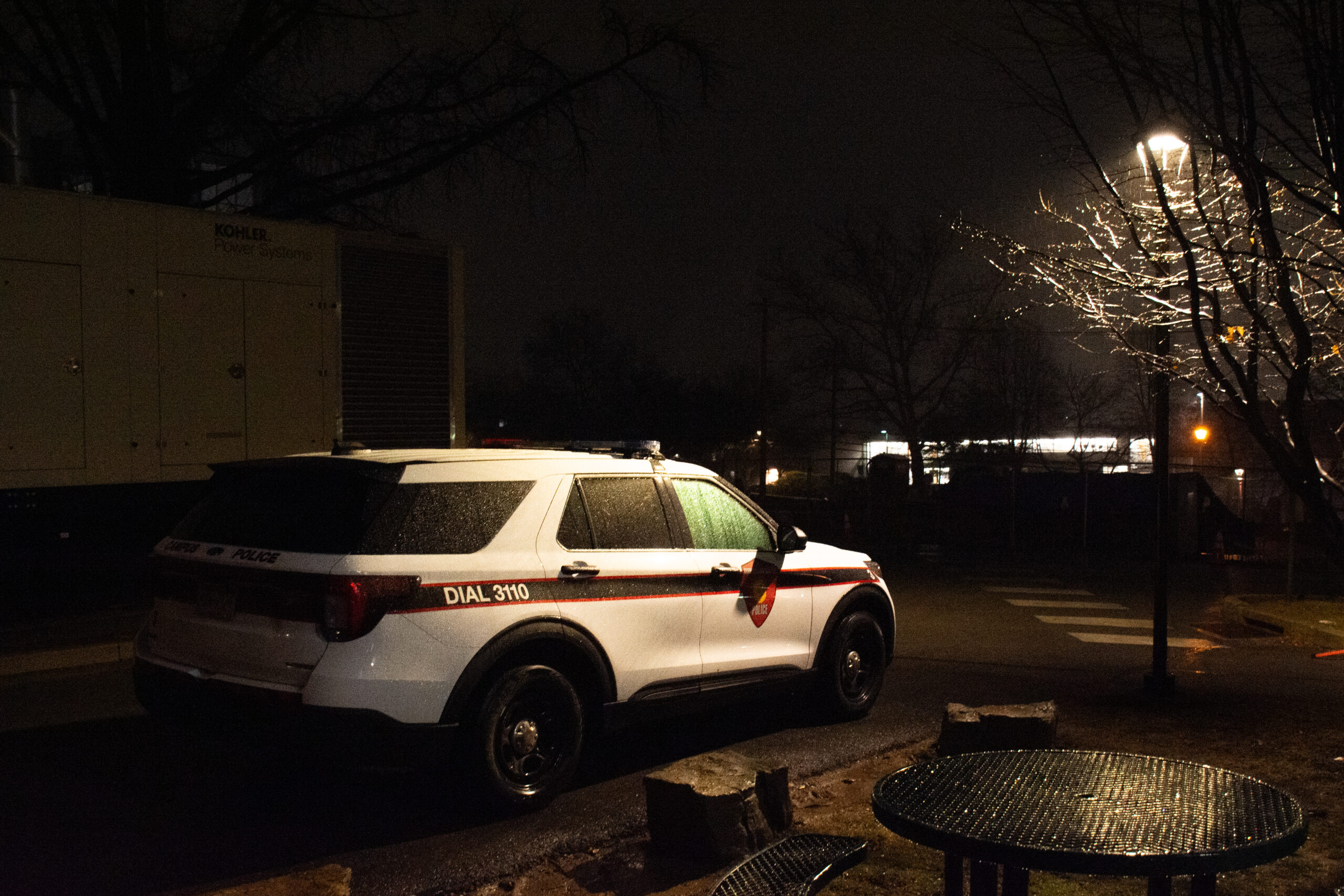
Night shifts begin before the campus is fully put to bed. Officers are expected to arrive around 9:00 p.m. and begin preparing for their long shift ahead of them. Uniforms are put on, equipment is strapped to their belts and gear is loaded into their vehicles. Much of their responsibilities are routine: buildings are locked, sweeps through buildings are conducted and anything left over from earlier shifts is taken care of. Sometimes it’s a student who has been locked out of their dorm room, or other times it’s a noise complaint. Sometimes there is nothing at all, just silence. Those are the hardest nights. Officers find themselves driving the same silent routes over and over, headlights sweeping over empty sidewalks as they wait for something to break the boredom.
While a Friday or Saturday night at Muhlenberg might not compare to the nightlife seen at larger colleges, officers are still kept fairly busy and focus their attention on places students hang out and party. However, once it hits the early hours of the morning, or less busy days of the week, students return to their rooms and the College empties out.
Kennedy says that once the early morning hours hit, the hardest part of the job is simply the silence. “You’re driving around on a night shift at 3:30 in the morning thinking what’s going on around here?” he said. “Even on a Friday or Saturday night, there’s nothing going on. It’s challenging to stay awake.”
Lakis nodded immediately. “Everybody on nights, through all the years I’ve worked, we all hit the wall,” she said. “At about 3:30, 4 o’clock in the morning, it didn’t matter how long I’d been on night shifts. You’re hitting the wall. It’s biology and it’s your body saying, ‘Hey, you’re not supposed to be awake at this time.’”
Lakis also touched on something that most people might not expect from someone working night shifts. “Once the sun starts coming up, you kind of get a second wind. It’s an odd transition.” The sun begins to come up, students make their way to class and the world around the officers begins to come alive. However, the brief second wind doesn’t mean relief for the officers, but rather the most difficult part of their shift. “You know you’re going home, and you have to wind down, which is a whole process in itself.” After 10 hours of fighting to stay awake, officers have to convince their bodies to immediately do the opposite, an unnatural shift that takes a toll on officers’ mood, health and energy. Officers are expected to go home to a family and muster the energy to be present, attending to responsibilities like preparing breakfast, getting kids ready for school or showing up for their loved ones despite running on fumes.
By 6:30 a.m., as the first light settles over Muhlenberg and students begin to wake, campus safety officers are finishing their overnight rounds before heading back to their families. Every locked door, every walkway patrolled and every dark corner checked is part of a rhythm that most of us never notice, yet one that ensures our safety and peace.

