



















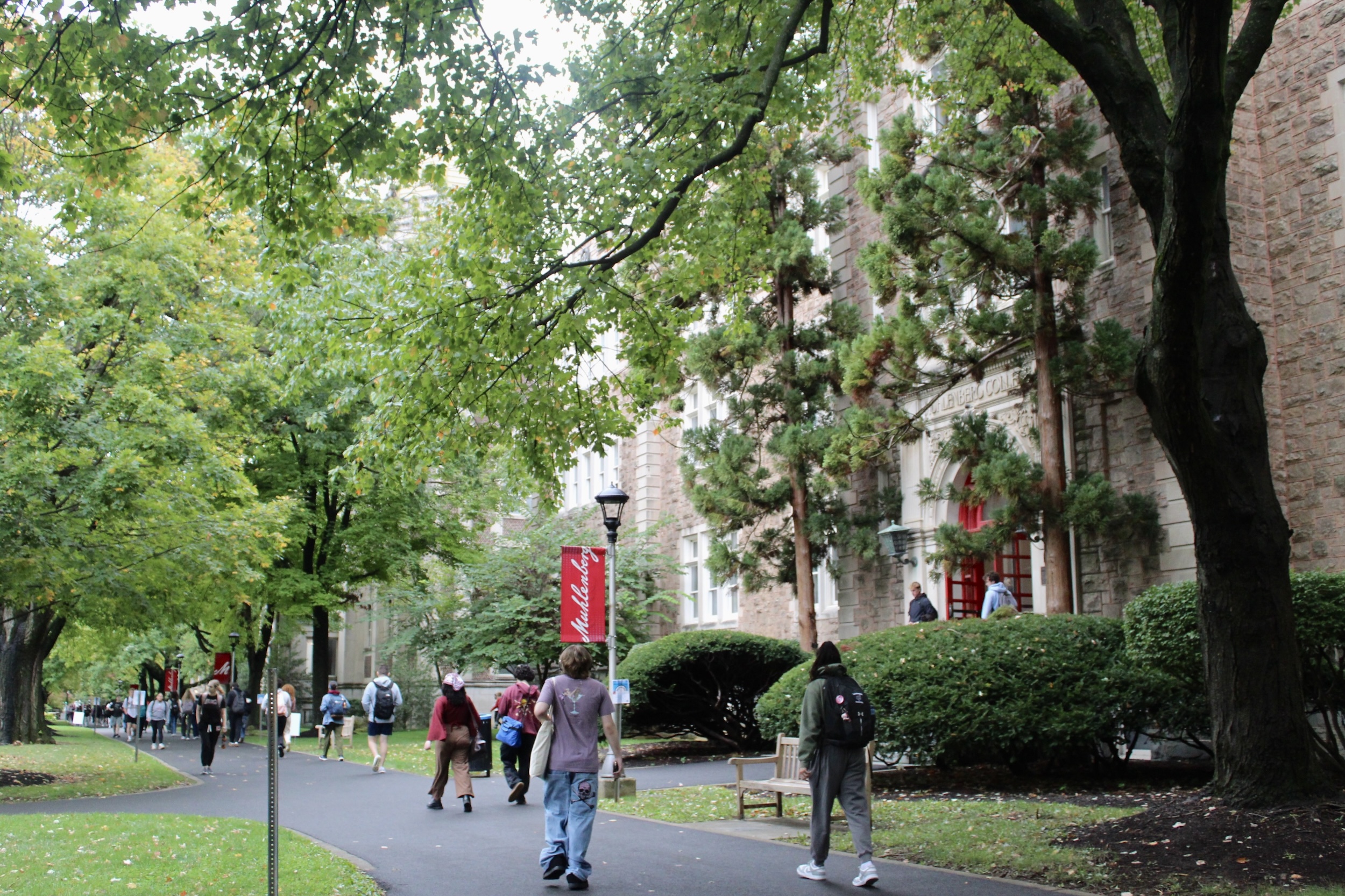
During a recent Mules for Transparency whiteboard event on Sept. 18, a concern was raised over a lack of student representation during faculty meetings that affect students, stating, “Why can’t students sit in on the faculty meetings that affect us?” In fact, several faculty committees covering all topics of student and faculty governance contain Student Government Association (SGA) representatives. When it comes to faculty meetings, student representatives who serve on the Academic Policy Committee (APC) and the Curriculum Committee (CC) are allowed to be in attendance. These committees each have two representatives from SGA where they are allowed voice, but not allowed to vote. The two representatives serving on APC from SGA this year are Laura Rojas ‘29 and Bella Alves ‘29. The representatives on CC are Amanda Growney ‘27 and Lola Olubowale ‘29.
The Academic Policy Committee (APC) is responsible for the shaping of academic requirements, the formation of the academic calendar, and the creation of departments, majors and minors, amongst other duties outlined in the faculty handbook. The makeup of the committee is, “seven voting members: five elected by the faculty, at least one from each division and two students elected by the Student Government Association. In addition to the provost, ex-officio members with voice but no vote include the registrar and dean of academic life.” The five faculty members consist of: Professor of political science Ross Dardani,Associate Professor of economics Lindsey Nagy, Professor of biology Erika Iyengar, Associate Professor of music Andrew Ardizzoia and Senior Lecturer for media & communication Sara Vigneri. Also part of the committee, although they are non-voting members, are Associate Provost for Student Success Gretchen Gotthard, Registrar Ginger Yavorski and Provost Laura Furge.
Rojas provides valuable student insight during committee meetings. She comments, “As a representative of APC, the roles and responsibilities during the meetings are primarily to provide student input on the topics being discussed. This can mean being specifically asked for student input or contributing my personal perspective when appropriate. This opinion comes from my position as an SGA representative and as a Muhlenberg student who prioritizes education and wants to advocate for students academically.” Serving on administrative committees offers student representatives a rare behind-the-scenes look at how university decisions are made. For Rojas, that perspective is essential to helping peers navigate their academic paths. “My role as an SGA representative has been helpful to the committee because it has made me more aware of how academic policy works as a whole at Muhlenberg,” Rojas shares.
One of the current topics the APC has been working towards addressing is the approval of Community Day, formally known as Recharge Day, where class is cancelled and the community is encouraged to explore organizations and recharge from the strain of classes. Rojas shared that the committee has been successful in the approval for the current year, but is working on getting it approved for the coming three years. Another topic being discussed by the committee is, according to Rojas, “Whether it would be feasible for certain majors to offer students the option of earning either a Bachelor of Science or a Bachelors of Arts while keeping the same major title regardless of the degree type.” This proposal comes with the most support from the departments within natural sciences, where it would allow students to have more technical depth within their chosen major field, potentially paving the way for students to have greater success further on in their careers or in continuing their education.
Additionally, the committee, as well as other faculty committees, have been working towards establishing processes for improved communication and transparency. Chair of APC Lindsey Nagy shares, “One process we are trying to normalize is regular reporting by elected faculty committees on the work they are doing as well as having committees formalize their major priorities for the year.” As much of the work done by the committee requires collaboration across different committees, establishing controls for regular reporting will allow for greater clarity between departments in order to streamline the work each accomplishes. Furthermore, in the current zeitgeist of administrative scrutiny, greater transparency will foster improved student trust and reception regarding faculty decisions made within committees.
While there are many responsibilities of the APC, one of their key responsibilities is the managing of the academic experience at Muhlenberg. “We spend time discussing what we want students to gain from our general curriculum and what is reflected by having a Muhlenberg degree. We then try to shape academic goals and policies to align with that,” Nagy explains. However, this work comes with its own limitations, as Nagy shares, “The committee does have to do this work under constraints whether that be the resources available, federal laws and/or guidelines to ensure we remain an accredited institution.” Regardless of the strenuous circumstances surrounding their mission, the APC remains committed to delivering clear communication on their actions to the campus community.
Braeden Skibicki '28 is a finance and accounting double major. When not writing for the weekly, he enjoys reading, playing guitar, and watching soccer.