


















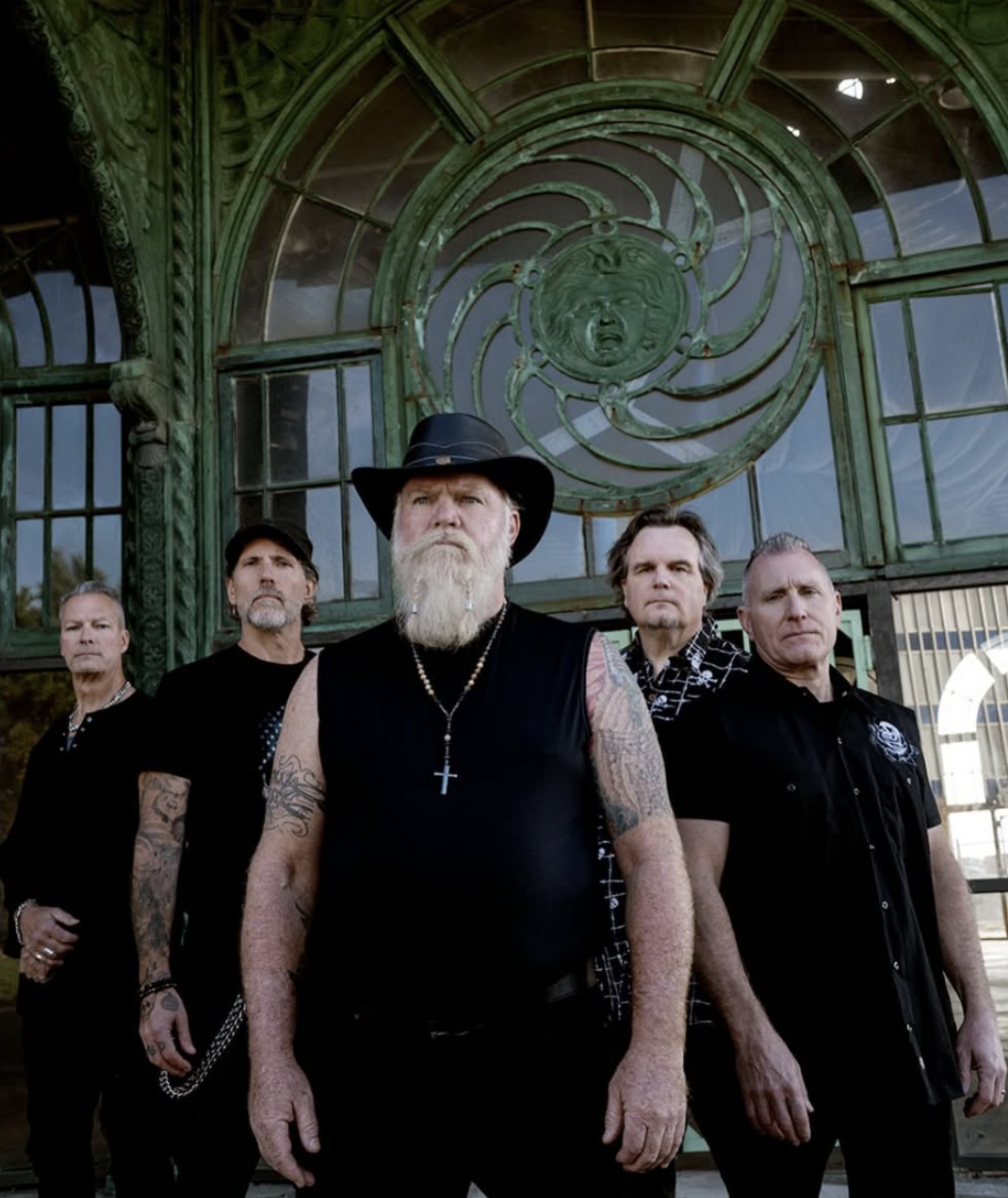
New Jersey hard rockers, Who On Earth, are poised to release a new album, “It Takes the Village,” on May 8. While my current residence may be Pennsylvania, you can take a girl out of New Jersey, but not the New Jersey out of a girl. So for this one, I’ll let my pride for my home state’s rich history in music take over, because I recently got the chance to sit down and talk with vocalists Coosh and Pete Rizzi of Who on Earth. They play in the genre of raising first-wave heavy metal acts from the dead and feeding them a steady diet of nineties-to-two thousands hard rock before releasing their riffs upon unsuspecting bystanders. They might be described as up-and-coming, though I’m hesitant to do so, because it certainly feels like they are already happening, though Rizzi himself doesn’t yet see it this way. “Where have we ended up? Because I think Coosh and I are looking at this, where we are right now, as a beginning. And you can see from the color of our beards, we’re not spring chickens, but I don’t know that we really look back a lot,” he shares. “I think we’ve been so focused on looking forward, and if anything, looking around at each other. We’re like, ‘this is cool. Seems like something might be happening, but let’s not jinx it, you know? Let’s just keep plowing ahead.’”
Coosh and Rizzi are the heart of the band, having remained the only two original members, as well as having been playing together for a decade. It was only in recent years that the two began writing and performing their own original music, a decision made with the ethos of why not? “At least we’d have this and we’d have it done, and our grandkids will listen to it, we’re leaving this mark. And then when people listened to it and they were like, ‘wow, this is great,’ all of a sudden we were like, ‘oh, maybe we’ve done something here and we can move forward at it.’ So it’s been kind of a natural progression to get here, and now we’re seeing that there’s a possibility of going further,” explains Coosh on his decision to pivot away from covers and towards making the kind of music he would actually want to listen to.
The Who on Earth project, while not necessarily trying to reinvent the wheel in terms of genre-bending or experimentation, intends to bring a bygone era back into the modern scene. They are inspired by the explosion of rock and metal that championed the ‘90s from Alice in Chains to Rage Against the Machine and redefined what it meant to write, to really write, a song, and how it felt to really listen. “That just stopped happening,” explains Rizzi. “And not that we think we’re going to be the next ones to make that happen, but at least we want to be the torch bearers of that kind of music, that style of music, that authenticity of that music, that realness.”
“Again, so many young kids are just doing the same thing as what everybody else is doing, and they’re just copycatting everybody, whereas just Pete’s making riffs and I’m making melodies, and we’re just doing what we like, and we’re not taking from anyone and going, ‘Oh, we need to write a song like this.’” This kind of authenticity is cultivating a unique fanbase for the band, who weren’t initially expecting to reach the wide-ranged age demographic actually attending their shows. Rather than just the Gen Xers who grew up on the same music as Who on Earth’s members, they have captivated their Gen Z children as well, an age group that seems to revel in ‘90s culture whether it be through the pop culture, style or even the return of physical media such as record collections and CDs. “The need for something real and tangible that you could touch and hold and look at is coming back, or maybe it never went away, but it’s becoming more desirable. And that is the same thing with the music. I think they want real–they’ve heard it,” says Rizzi. “This is why we started Who on Earth, the whole name of the band came from the question of ‘who.’ I mean, it sounds cheesy, but we’re like, ‘Who on earth is going to keep this stuff alive, this style, this realness, this authenticity’ that you said- ‘who’s going to keep it alive?’”
Honesty in the sonic sense may be Who on Earth’s pulse. It’s also their scripture. Lyrically, the band focuses on a myriad of lies and slights of hand inflicted on people by those with power, but not in a hopeless sense. “We know what you’re doing, but okay, what are we gonna do about it? We need to get together. We want to be a unifying band, a David versus Goliath kind of thing,” shares Rizzi. “Forget about your political party, your gender, your race, your color, forget about all that. That’s how the elite wants us to be distracted. That’s how they want to divide us, because then our attention isn’t on what they’re doing, it’s just on what we disagree on. And that’s stupid.”
Underneath the frustration, behind the deep grooves of riffs upon riffs, Who on Earth is honest about the situation we’re all in, but they’re not defeatist. It’s a sort of BS-free positivity that guides their path, the kind that makes them look you in the eye and say, “Tell us we can’t do it. Because now we’re going to do it.”

