


















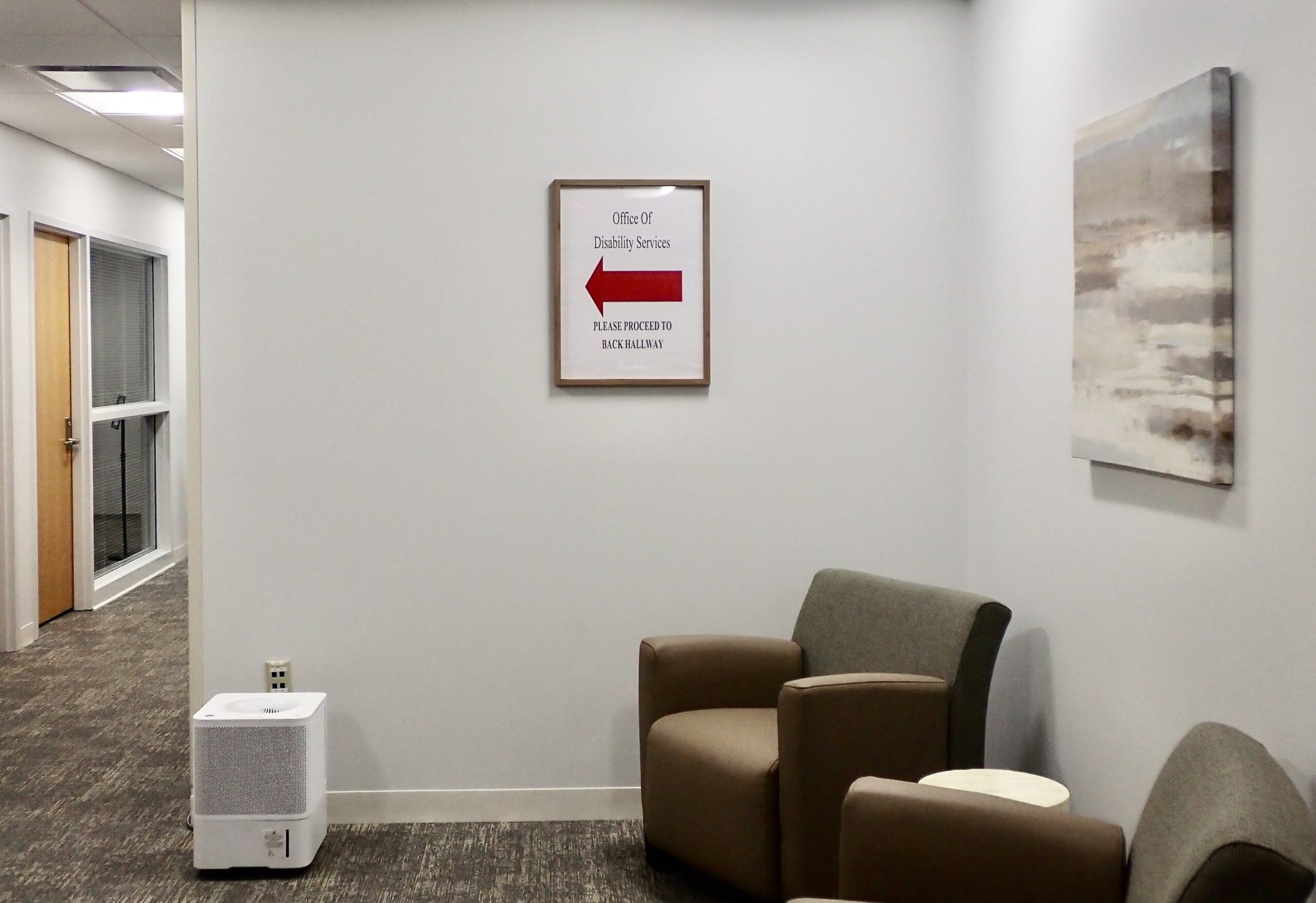
To put it simply, Muhlenberg needs to do a better job of supporting their disabled students. We’re struggling, and no one seems to notice or even care. I have spoken to students who have come to Muhlenberg specifically for the accommodations and support that is offered, but once we arrive, we have not had the experience that was advertised. I know that, when compared to other schools, we’re doing a good job, but it’s not good enough.
This semester I have truly begun to see the scope of the disregard for disabled students on this campus. It seems that many people aren’t aware, but there is a college policy that transportation will be provided for freshmen needing to go to medical appointments, but this option is not afforded to any upperclassmen. The reasoning behind this is that there isn’t enough staff and that upperclassmen can have cars. Oh! And there’s the LANtaBus system, have we tried that?
Well, I have a few things to say to that. One, I don’t have, nor can I afford to buy, a car. Two, the bus doesn’t take me where I need to go. And even if it did, that would mean building hours of extra time into my schedule because the buses run so infrequently. Three, what about students who can’t drive because of their medical conditions? Four, now freshmen can have cars, so this reasoning is becoming increasingly flimsy.
I’ve brought these concerns to Office of Disability Services (ODS)and administration, and there seems to be a general consensus of “oh well.” There has been so much apathy, and the people who have cared don’t have the resources to help. I think that one of the biggest issues is that people genuinely don’t understand the amount of time and energy being disabled takes. I go to physical therapy twice a week, so that’s already two hours of my time that I’m not getting back anytime soon. It’s not for an injury that will be better in a few months, but a constant commitment of my time.
And then there’s the money aspect. I do have friends who offer to drive me to my appointments, but there are times that they’re in class, or something comes up last minute. So, when I have to take a ride-share service, that’s a minimum of $20 down the drain on top of my copay for the visits, all for a five-minute drive. I’ve been told by some people, “Well, isn’t it close enough that you could walk?” I know that there are good intentions behind the sentiment, but walking would only make the chronic pain that I’m going to physical therapy for worse. And this is all just when it comes to my weekly appointments, not picking up prescriptions or appointments I have less frequently but further away.
These are the things that I think might be easy for the non-disabled community to understand, to see reason in. But I also think that it’s important for us to acknowledge the strain that being disabled can put on relationships. Every time I ask a friend to take time out of their day to drive me, even though I know it’s not a far drive, I feel guilty. I know that my friends are willing to drive me, or they wouldn’t offer, but that doesn’t change how I feel. Being disabled already creates the feeling of being a burden, and this just adds to it. It doesn’t matter that the people around me are willing to help; this is one area where they shouldn’t have to.
I wonder what this experience has been for athletes. In my conversations with dancers and athletes I have learned that they have access, though somewhat limited, to trainers and physical therapists. I know that these opportunities are not the full scope of what may be needed to recover from an injury, but it’s something. I have also heard that athletes, regardless of class year, are given transportation to medical appointments off campus, if they were injured playing their sport. I understand that this is because the school is technically liable for these injuries, hence why athletes get more support. However, it almost feels as if I am being punished because my condition is chronic and not acute. I used to be a dancer, and I wish, so badly, that I was still able to do that. I want to be able to move my body in a way where I only need to see a physical therapist every once in a while. But that’s just not my reality. I don’t think that it’s fair for me to receive less equitable treatment from the College because I can’t make our athletics or dance program look good.
There’s a lot more I could say about being a disabled student at this college, especially one with an invisible disability, but I think that this is the place we need to start. Obviously, I don’t speak for all disabled students at Muhlenberg; I can only speak for myself. But I do think that it’s telling that a few weeks ago, when I mentioned my transportation issue in a group of eight students, four of us were having the same issue. This is not an isolated problem; it’s one that is affecting a lot of students. We just don’t know how to go about solving it. That’s why I want to bring it to everyone’s attention and open up this conversation that needs to be had.
We might be doing equally well, or better, than other schools when it comes to support for disabled students, but that says absolutely nothing about how equitable our policies are. When Muhlenberg says that they support the student experience, that should apply to all students. They shouldn’t abandon us when our needs become something that requires effort or money to solve. In an ideal world, the College would expand access to transportation to all students. Or, even give students who are not athletes the opportunity to receive treatment from the trainers and physical therapists. I think we could afford to mow the lawn less often if it means actually supporting the student experience in a tangible way. And I think if other students knew we were facing this problem, they would agree.

