


















In 1963, Rev. Dr. Martin Luther King Jr. wrote from a Birmingham Jail, “Injustice anywhere is a threat to peace everywhere.” While the context differs, this quote has stayed with me since Charlie Kirk was assassinated on Sept. 10 in Orem, Utah. Kirk likely would not appreciate this comparison, since he once called King “Awful.” Still, the message holds: when hate and violence root themselves, they can only spread.
Violence in American politics is not new. According to PBS, the mainstream political violence seen during President Donald Trump’s administration had not occurred since the Jim Crow Era.
With the recent assassination of Minnesota Democratic Rep. Melissa Hortan, the burning of Pa. Gov. Josh Shapiro’s home over his support of Israel, two assassination attempts on Trump and the Jan. 6 riot– it is clear that people across the political spectrum have abandoned civil discourse for open assault, assassination and hate speech. Charlie Kirk’s death is one more symptom of the fever of hate that our country is slowly dying from.
With Kirk’s assassination, most of us have seen how this American disease has made something as unconscionable as murder nothing more than a political talking point for people on podcasts to scream about. Meanwhile, it is discouraging to see some young, chronically online democrats portray a lack of remorse over someone’s murder, and by extension, the murder of free speech in this country. Meanwhile, the right-wing White House hails Kirk as a martyr, putting more fuel to the fire of hate and political separation.
The White House has made clear efforts to appeal to Christian nationalists. Stephen Miller, deputy chief of staff, said, “The day that Charlie died, angels wept, but those tears have been turned into fire in our hearts,” and, “Our enemies cannot comprehend our strength.” Miller’s words deepen America’s divide, establishing an “us versus them” mentality. He also portrays Kirk as a revolutionary or saint. Robert F. Kennedy Jr. echoed this sentiment at Kirk’s memorial, comparing Kirk to Jesus– one of the boldest claims from someone who denies the COVID-19 pandemic.
As we have all watched the political theater, I find that most politicians miss a central thesis that seems absent from all sides: Charlie Kirk was a man who died. I disagree with almost everything Kirk said, but that shouldn’t mean that he doesn’t deserve the dignity of grief.
While I was preparing to write this piece, I wanted to take a pulse of how people on campus felt after they heard of Kirk’s death. However, most people, naturally, either didn’t want their name associated with such a controversial topic or didn’t have any comment on the matter. The people I spoke to, I found, illuminated an issue at the core of this political divide: people are often kinder up close. In many of the conversations I had, students spoke of the tragedy of Kirk’s death, and not as a means to political ends. Even those I spoke to who openly disliked Kirk’s content still acknowledged that this wasn’t a solution to the root of the issue. What I found as the general throughline across campus was confusion, citizens of a country that has a leader more focused on vengeance and division than unity—a political culture of hate and prejudice. Unfortunately, you can’t kill prejudice in a day.
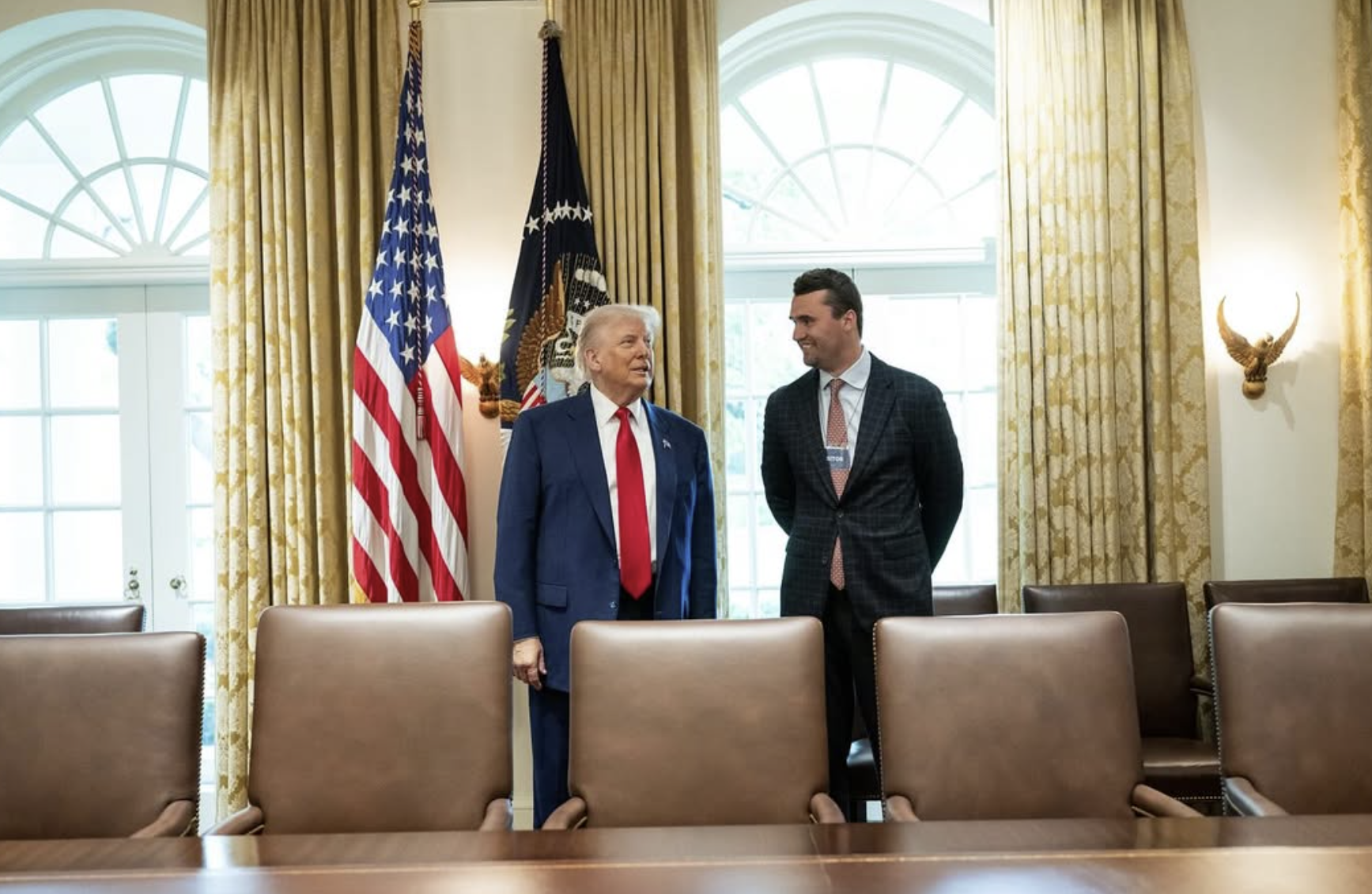
Photo from @charliekirk on Instagram.

