



















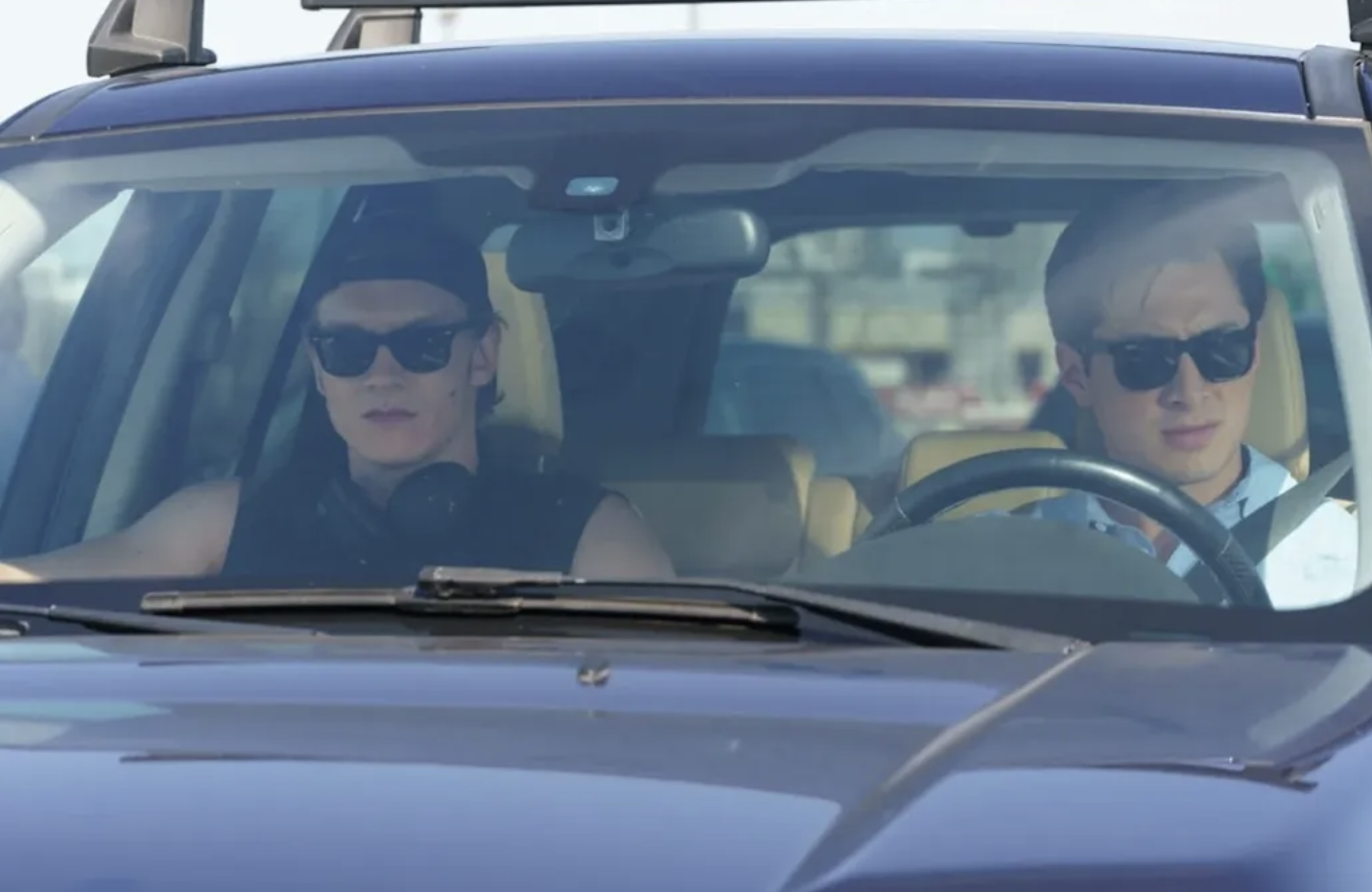
“You think it’s going to end badly…but then it doesn’t. They go to the cottage…and everything is okay,” Visiting Assistant Professor of Psychology Gene Kelly explained at a panel regarding the popular show “Heated Rivalry” this past Thursday, March 19, in Miller Forum. Kelly, joined by Assistant Professor of English Joshua Barszewski and Professor of Media & Communication Elizabeth Nathanson, were asked questions by Professor of Psychology and Director of Women’s and Gender Studies Kate Richmond regarding the show’s portrayal of desire and sexuality, along with queer identity, female gaze, masculinity and the range of power dynamics that drive the central rivalry that builds in the plot. The conversation formulated brought thought provoking answers from faculty and led to interesting ideas behind the phenomenon of the TV show that has gathered 10.6 million U.S. viewers per episode since its debut in November of 2025.
For those not familiar with the show “Heated Rivalry,” the six-episode series based off a book series by Rachel Reid focuses on the relationship between Ilya Rozanov and Shane Hollander, two hockey players who are the best in their league, and are pinned against each other as the biggest rivals in their sport. Though off screen, the two players have secretly formed a romantic relationship with one another over the years, or “situationship,” colloquially. The show also has a plot focused on characters Scott Hunter and Kip Grady, a hockey player and smoothie barista who end up also forming a secret relationship with one another, and by the end of the show, make their relationship public. The show has been known for its heated scenes of slow burn romance while also focusing on the queer joy that those in the community have experienced when falling in love with one another.
Richmond opened the conversation with a question regarding the popularity of “Heated Rivalry” and why it has taken such speed among watchers, specifically certain audiences, such as “white suburban women,” as she put it. “Narratively, it’s quite interesting,” Nathanson responded, noting the ways in which audience members know romance to be something predictable, with a sense of security that the “two lovers will hopefully rise above odds and end together” by the finale of the series. For those women that “Heated Rivalry” attracts, the show subverts the norms of toxic masculinity that they may be used to. Romance, Nathanson explained, is for those who may have “dissatisfying love,” meaning that for many, “Heated Rivalry” can be seen as fantasy, or a community outside of patriarchy, where they can see a man loving man relationship without traces of typical patriarchy they are used to in their man loving woman relationships. For at least forty minutes, these women can escape to some kind of fantasy place. Kelly added to this point, mentioning that at the same time the actors in the show are conventionally attractive men and have their bodies shown, making it even more of a show other women want to watch. In many ways, this is how the show is partly made for the female gaze, the faculty notes. The second book, which the show is mainly based on, is the “most sexually charged,” Kelly further explained. With women being more sexually empowered in recent years, that’s also partly what makes the show intriguing to them. Hopefully in the future, Kelly added, these types of stories can be told without relying on conventional beauty standards to help a show succeed.
When asked about the show dismantling the idea of tragic queer stories, Barsczewski explained how “Heated Rivalry” “doesn’t hinge on an enemy on the outside,” and “doesn’t need homophobia” for its plot to progress or be relevant. What is unique about the show, he explained, is that it creates a world “without tangible homophobia,” but rather focuses on the individual struggles of each character’s own personal acceptance, rather than having them “subjected to harsh homophobia from outside forces in the show.” That is what makes it an enjoyable show for those to watch, and while it may not accurately portray a gay relationship, or was even made to do so, it does allow for queer joy and happiness to be at the forefront of the plot.
Kelly added to Barsczewski point, mentioning the show “Heartstopper” and his initial fear of watching it, waiting for the moment of “things going wrong,” only to be pleasantly surprised when it doesn’t end badly. It’s important to note the way in which “Heated Rivalry” has its characters end up with each other without something insanely tragic destroying the relationship. “The show, for the most part, doesn’t judge the characters for being in the closet,” Nathanson added, noting that while the show gains traction for its sexually charged content, we end up seeing less and less of sex scenes and rather get to see the build of little moments and acceptance within its characters that make the relationship so special. “This goes against the stereotype that gay men must be promiscuous,” Kelly explained, as the show lets the relationships grow beyond a “hookup culture.”
Richmond then moved the conversation to questions regarding the enemies to lovers trope and how it may counter other tropes and shows itself in “Heated Rivalry.” Barsczewski light-heartedly mentioned how he thinks the show may be “badly written” in this sense, because as audience members we don’t see much of actual hockey and how the two are enemies. Though in the same breath that is part of the show’s point, that Shane and Ilya aren’t meant to be enemies, but rather are shielded with the world’s opinion that they are rivals, allowing them to hide their relationship from the public. The conversation then moved to the idea of homoeroticism in sports, with Kelly and Nathanson expanding on the ways in which the music and visuals of the men either working out or participating in their sport is what builds the tension between their relational dynamic.
As the panel reached an end, ideas regarding the female characters in “Heated Rivalry” were addressed, and the fact that for the most part, these characters were “somewhat one dimensional,” Richmond noted, with the women in the story “having to do so much emotional labor,” a common trope that can be damaging for other women to watch on their screen. What counters this is the fact that some of these women were not victims in their relationship with the men in the story, but still end up doing lots of work in guiding the relationship between both Ilya and Shane, and Scott and Kip.
“The conversation was candid and I really appreciate how the panel spoke openly about their experiences that shaped how the show felt to watch,” Riley Younger-Walker ‘29 reflected when asked their thoughts on how they felt the panel went. “I was most interested by the conversation surrounding audience, who benefits from the presentation of gay sex in media and what it means for youth now,” she added, noting the moments when the conversation focused on who the intented audience of “Heated Rivalry” is, whether it be more focused for the female gaze, despite the one dimensional women characters, or on ideas of queer joy.
Alex McCauley ‘26 said that, “I still don’t feel like the show is for me, but I wasn’t going to the talk to be convinced to watch it. I loved how the professors spoke and gave clear answers and related them back to real life LGBT stories/struggles. Even though I felt like an outsider it was nice to be with peers in an academic discussion, even if I didn’t participate.” Nora Elkhyati ‘27 added that she thought it was “cool to see the show in an academic lens and examine it from all aspects of what it’s worth, not just what the mainstream has said about it.”
Overall, much discourse was shared regarding the shows strengths of diverging from classic tropes of tragedy in queer media, and the ways in which “Heated Rivalry” takes into consideration the audience they want to attract, proving itself to be, as Barsczewski put it, “smarter than it looks.”

Emily Nally ‘27 is an English and Creative Writing major with a Women and Gender Studies minor. She is editor of the Campus Voices section and is so excited to be a part of such an immersive organization on campus. Outside of the Weekly, you can find Emily rereading “Little Women,” binge watching “Gilmore Girls,” or being really cool practicing her flute and guitar.