



















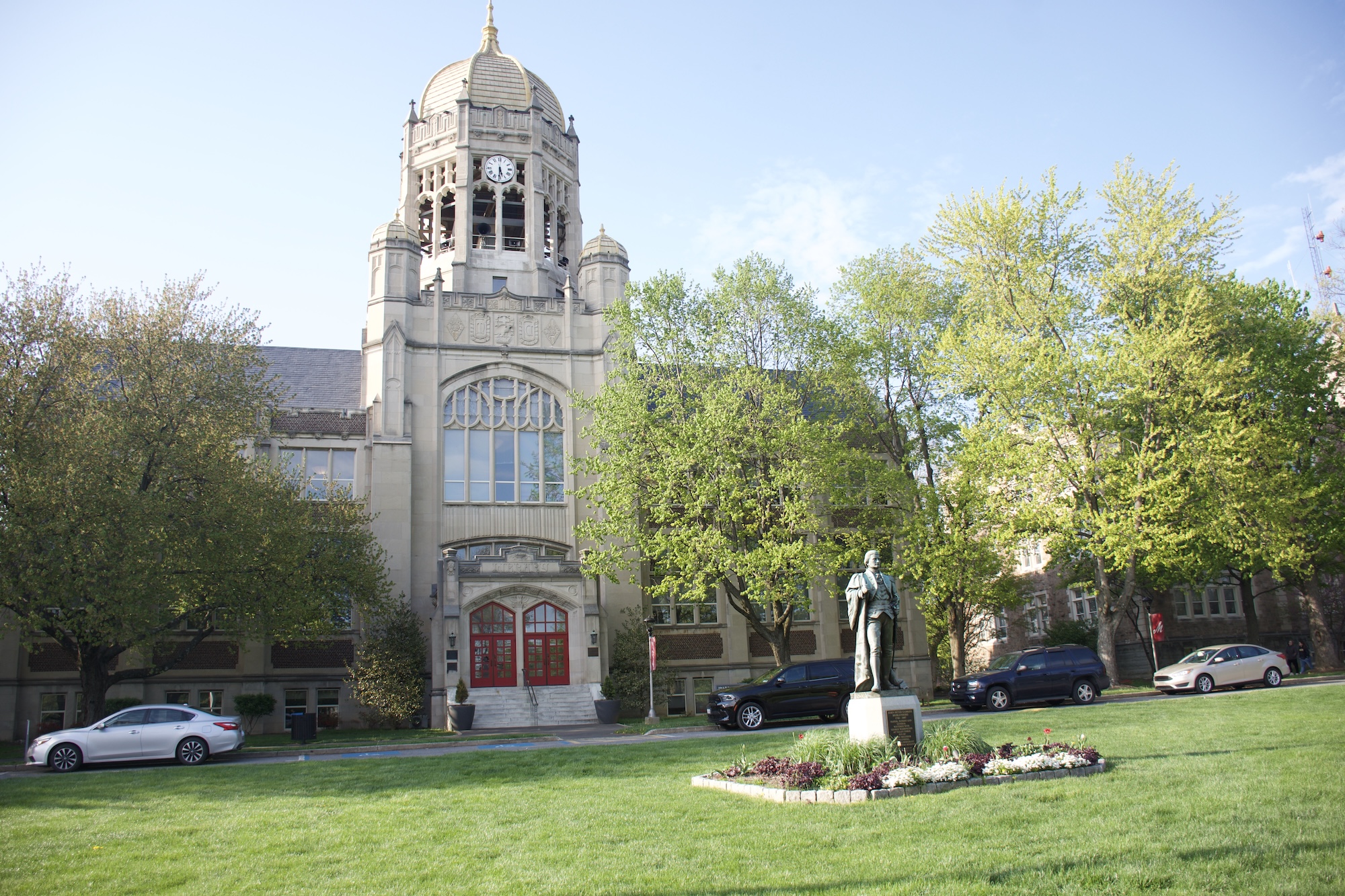
The Muhlenberg College Board of Trustees is entrusted with guiding the institution’s long-term strategy for current and future students, faculty, staff and alumni. Composed largely of accomplished alumni, the board of trustees is a blend of leaders from national security, healthcare and finance. Together, Muhlenberg’s Board of Trustees reflects a wide spectrum of professional experience and leadership, positioning the College to navigate the changing higher education landscape.
Among them is Board Chair Lance Richard Bruck ‘89 P‘21, who has led the board since 2011. After Muhlenberg, he attended New York Medical College. He currently serves as a professor and executive vice chair for clinical affairs and strategic development at Montefiore Health System. Bruck said he was inspired to serve on the board by “a deep belief in the power of a liberal arts education to develop critical thinking, intellectual curiosity and ethical leadership– and a strong sense of responsibility to sustain that mission for future generations. Serving on the Board is an opportunity to support a close-knit academic community and help guide the institution through a complex and rapidly changing higher education landscape.”
That sense of responsibility to the College is shared among many trustees. Many describe their roles as a continuation of their own Muhlenberg experiences. Lauren C. Anderson ‘79, a former FBI national security expert, traces her commitment back to her time as a student. “My decision to serve on the Board of Trustees is really an extension of my commitment to Muhlenberg, which began when I was a student,” she explained, pointing to her years of involvement in student government, co-founding the women’s softball team, alumni leadership and mentorship. She continued, “Serving on the board felt like a great way to continue to contribute at a higher level and to help ensure that our students, both now and in the future, have access to the same kind of transformative experience that I had.”
The sentiment of Muhlenberg as a transformative place is further emphasized by Sandra L. Smith Bodnyk ‘73, who brings more than 35 years of banking and risk management experience after receiving a degree in economics from Muhlenberg. Now retired, she was a banker at Branch Banking and Trust Company (BB&T) and Wells Fargo. She emphasized that while her economics and accounting courses built a foundation, it was the liberal arts experience that allowed her to engage analytically in different environments. Beyond thinking critically, Bodnyk stressed the meaningful relationships that Muhlenberg provided and continues to provide. “What I hope remains the same are the relationships among students, relationships of students with faculty and focus on the broader community,” she said. “I made friends at Muhlenberg who remain my very closest friends 50 years later, despite geography, careers and family. I developed a sense of empathy and understanding of the community at large and the need for us all to give back in many ways and hope our students continue to leave with those values.”
Similarly, Michael J. Doyle Jr. ‘94, a communications executive, serving as a board member at GLAAD since March 2020, pointed to the human connection Muhlenberg provided, both inside and outside the classroom. He recalled how professors, administrators and other Muhlenberg students made him feel “seen,” and made him know that he mattered. He carries that lesson into his own professional experiences, ensuring anyone he interacts with “feels they matter, knows that their perspective is relevant and worthy of attention.” Doyle continued, emphasizing how that meaningfulness applies academically, “Today, there is such an incredible intentionality in pursuing such well-rounded, multi-layered majors and curricula. I love that the College hasn’t just embraced that kind of learning, it’s operationalized it. The College has always valued hard work, kindness, generosity and inclusion in all its forms. May that never end.”
Despite the trustees highlighting the strengths of the College, they were honest about the challenges facing both Muhlenberg and higher education more broadly. Anderson pointed out, “Higher education is facing a number of significant challenges, including demographic shifts, rising costs and increasing questions about the value and accessibility of a college degree.” Doyle added, “College-bound high school students today have more choices in front of them, fueled by more messages and content than we ever thought possible, through digital and communications channels that are almost inconceivably rapid and tailored to our own consumption choices and biases.” James Galgano ‘78 P‘08, the product development manager at Dealerweb since June 2005, pitched in, saying, “These include less college age students (the demographic cliff), increasing skepticism about the value of higher education, the high sticker price of a college education and political attacks on academic freedom.”
Anderson emphasizes, “Muhlenberg is not immune to these broader dynamics, and we have to navigate them thoughtfully while continuing to deliver a high-quality educational experience.” Bodnyk states, “The Board, given their fiduciary responsibility, is analyzing available school data, studying operating models and comparative data, working with management and college constituents in attempting to develop budgets that provide for both long-term sustainability and future investment.” Galgano added, “Muhlenberg has seen significant drops in both enrollment and net tuition revenue, leading to operating deficits. The board is right-sizing our operating model to reflect the smaller student body and lower tuition revenue while continuing to invest in marketing and admissions. At the same time, the Boundless Campaign increased endowed scholarships and professorships that help alleviate some of these financial pressures. Growing the endowment increases the annual draw distribution, increasing operating revenues. We also continue to develop ways to differentiate a Muhlenberg education to make us more distinctive to prospective students.”
David P. Jenkins ‘83, a retired audit partner from the Hartford office of PricewaterhouseCoopers (PwC), emphasized, “We must protect both operating health (short term), such as funding faculty, student services, financial aid and campus life, with the health of the College’s long-term assets: endowment growth, campus facilities and debt management.” These decisions often involve difficult trade-offs, balancing short-term issues with long-term issues.
The board is looking for success for both of these issues. They argue that it cannot be measured solely by rankings or enrollment numbers, but also by the lived experiences of the students. “To me, it’s not about rankings or lists… Our success will be about our ability to navigate this highly-charged, volatile time in society while providing the world’s most ambitious, curious thinkers with an environment where they can be themselves, know they matter and earn a world-class education,” explains Doyle. Miles builds upon this, saying, “I would define success as future Muhlenberg students being able to say they’ve had ‘the Muhlenberg experience.’ That includes meaningful engagement with faculty, rigorous coursework and the development of lifelong friendships.”

Amanda Growney ‘28 is a history major on the pre-law track. She is absolutely thrilled to be a copy editor for The Muhlenberg Weekly. When she's not attending classes or club meetings, you’ll find her rewatching “How I Met Your Mother,” watching a sports game, socializing with friends, or sleeping.