


















There is a goal post flying through the air. It isn’t moving very fast, but it is going along at a steady pace. The Goodman Stadium goal post ended up in a river. It started back at the stadium, more than four miles away from the river where it was found. On the heels of a 38-14 victory over Lafayette College back in November of 2024, the students of Lehigh University tore down the goal post from the stadium and surfed it on the backs of hundreds of students as it was carried through the streets of the Southside Historic District. When it arrives at the Fahy Bridge, it is ceremoniously heaved over the side, where it crashes down into the river below. This is huge. Teams and students who take down goal posts do so for unbelievably shocking upsets or massive championship victories. However, the game this goal post is from is none of those things. This game is a regular-season game between a 6-5 team and a 7-3 team at the time. The only difference? They’re bitter rivals.
As a Muhlenberg student, it is difficult to imagine a reaction of this caliber in a Berg-related sporting event. We don’t tend to celebrate wins with massive celebrations and over-the-top displays of excitement. This is in large part because of the lack of rivalries that Muhlenberg has with other schools. On the surface, not having a rival doesn’t seem like such a big thing. After all, as a Division III school, how much would a rival even impact the ability of the general student body to care about sports? The answer might be more than you think.
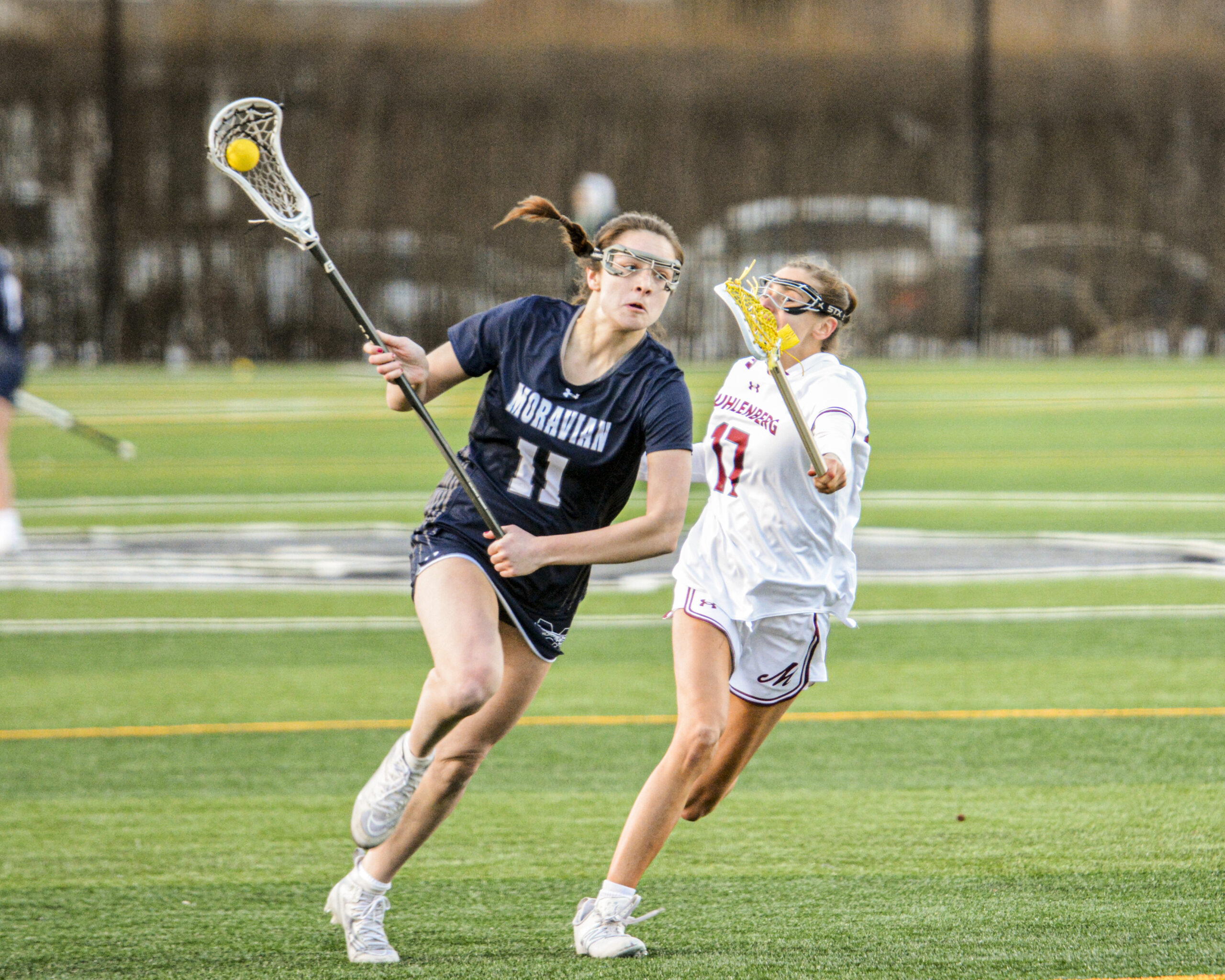
Starting with what makes a rival, there can be two different primary factors. It either has to do with the distance that the schools are located from one another– the closer the better, so students can support their teams at away games– or the competitiveness of the matchups in the recent past. As Nate Hoskins ‘28, a backup quarterback on the football team, made sure to point out, this is well shown through the Muhlenberg football team’s two biggest rivals. “For football specifically, it’s pretty much [Johns] Hopkins every year. Outside of our conference, since Hopkins is in our conference, probably Moravian,” says Hoskins. As of 2025, we have beaten Moravian University in our last 12 football games dating back to 2012, and the school is only 15 minutes down the road, which should make it a prime spot for students to go and support their school on the road. Yet, attendance at away games, even to Moravian, is sparse. And while Johns Hopkins may be a two and a half hour drive, it more than makes up for what Moravian lacks in competitiveness, with Muhlenberg going 2-10 against them in our last twelve meetings. Yet again, sparse attendance.
Attendance rates tend to soar in rivalry games. For example, the University of Southern Florida (USF) recorded their second-highest attendance ever since the stadium opened in 2012 in a home loss to their rival University of Central Florida (UCF). The only time that was higher? Their first game after the arena opened, which also happened to be against UCF. While the specific attendance numbers are not fully known since Muhlenberg doesn’t charge for attendance, “The turnout rate against Hopkins shows that [they’re our rival] too,” says Hoskins. “Whether we go there or they come here, the number of fans jumps.”
Yet despite this bump in attendance, there is still a struggle to have someone who is considered a staple rival, the kind that really gets students excited to support their team. As two professors from the University of Kentucky point out on the school’s podcast, a good rival can stir up such intense emotions to keep fans engaged. A rivalry can help people feel like they are more connected and part of a group as they are able to cheer on a common ally and root against a common foe. It can also offer a form of high drama and unpredictability that is so rare to get elsewhere that people will cling to it tightly and become deeply invested.
The struggle may come from Muhlenberg’s status as a Division III school, making it harder for them to play in nationally recognized games. Think March Madness or the College Football Playoffs. But even if the public doesn’t perceive smaller conference games as exciting competition, these games still matter to the athletes who are playing them. “I think our athletes are just as passionate. [These games] mean just as much to us as the rivalries in Division I,” explains Mike Falk, the sports information director at Muhlenberg for the last 30 years.
Falk talks about how in the past, Muhlenberg has been able to draw up a crowd in important games against good opponents, showing that there is a world where this school can get engaged in its sports community. “In 1995, we played Franklin & Marshall here. At the time, they were ranked number one in the conference. And Memorial Hall was packed. We did charge admission for that game because it was a playoff game, and there were people lined up down Liberty Street waiting to get tickets,” said Falk. The Mules would go on to win that conference championship game against an undefeated Franklin & Marshall team in a David versus Goliath type of victory that ended 88-86, securing Muhlenberg’s first-ever Centennial Conference Championship.
Those days are certainly in the past for Muhlenberg sports, but it doesn’t mean that there aren’t attempts to rekindle some of the rivalries of old. Muhlenberg and Moravian used to play each other in an all-sports competition for something called the Matte Award. The two schools would play each other in every sport they shared, and whoever won more games would win the award. Muhlenberg won the award 11 straight times between 2004 and 2013 before it was finally taken back by Moravian in 2014, only the Mules took it back in 2015. While it was discontinued in 2015, Falk mentioned that there are currently some attempts to rekindle the tradition and build more hype around the event as a whole. Whether or not the Matte Award officially returns, the effort to revive this storied rivalry speaks to the enduring spirit of competition and community between the two schools.

