


















“Seventy to eighty-five percent of jobs are obtained through networking.” This statistic, found on the event description on Handshake, framed Muhlenberg’s annual Connections Conference, held Friday, Sept. 19, from 12:30 to 7 p.m., where students had the chance to turn casual conversations into potential career opportunities.
The morning sessions, which kicked off the full-day event, gave students the option to join in on “Navigating Majority Workspaces” for a discussion about identity in the workplace. Other students, a majority of whom were athletes, sat in on the lunch session with Muhlenberg alumni who were involved in athletics during their time in college, allowing them to explore how leadership on the field translates into career-ready skills. These conversations reminded students that professional success isn’t only about résumés, it’s also about self-awareness and storytelling.
By the afternoon, students relocated to Moyer Hall for the Recruiter Panel. Industry professionals shared practical advice on everything from writing cover letters to standing out in interviews. For Sue McNeilly, executive director of the Career Center, the key was intentional design. “Our goal was to make sure every Muhlenberg student sees a few professionals who connect to what they’re interested in doing after college,” she explained. “We partnered with Athletics and [Muhlenberg Office for Student Access, Inclusiveness and Community (MOSAIC)] to source names of folks who could come in and speak on those topics.”
That spirit of inclusivity extended into the 3 to 5 p.m. Industry Roundtables, where fields as varied as law, education, media, STEM, health and the arts were represented. The small-group format allowed for direct engagement that felt less like a lecture and more like an ongoing conversation. “This is actually the third iteration of the conference, but the first time we’ve done it this way with panels and roundtables,” McNeilly said. “It was a very intentional shift, giving students the chance to practice networking in more structured but still personal ways.”
For students like Bina Klein ‘27, that structure made a difference. Klein reflected on how her perspective shifted during the event. “One of my big takeaways was that you don’t need to directly speak to someone who is within your passion or career,” she said. “I realized that a lot of people are approachable just to talk to about skills and strengths you need in order to get comfortable within the field itself. My thought process changed when I realized it’s not about the direct relationship, rather a connection to another connection.”
Klein admitted she initially felt unsure whether the event would offer her relevant contacts. “Networking is the number one way to get further connections and future jobs,” she said. “Even if the networking itself won’t get you an actual connection because it’s you and yourself that needs to make the effort, the experience of dressing up and looking presentable is crucial for further success.”
That theme of paying attention to the process resonated with alumni as well. Kristina Koppeser ‘08, now brand manager at KYW Newsradio, returned to Muhlenberg with a clear purpose. “I was a presidential assistant for the Career Center my senior year and have been a huge champion of that office ever since,” she explained. “I received a lot of kindness from alumni when I was getting my start out in the working world, so I always figure the least I can do is pay that time and kindness back to the next generation.”
Koppeser emphasized the importance of broadening horizons. “I too often see students have tunnel vision for one role, or one industry, never considering what they might not know exists in the working world,” she said. “Knowing what you don’t know is powerful. There’s no such thing as a perfect job, so say yes, apply to everything you feel even 50% qualified for, and be open to learning about new roles and industries.”
Behind the scenes, the conference owes much of its evolution to Jennifer Sarnitsky ‘93, director of employer and alumni engagement. Sarnitsky has been instrumental in shaping the program since its early days. “The conference was first held during Alumni Week in the spring of 2023,” she explained. “It was originally two days with a keynote speaker and a series of small panels. We’ve since shortened it to one afternoon and shifted from panels to roundtables to encourage a more comfortable back-and-forth discussion.”
Sarnitsky sees the event as not just an opportunity but a challenge. “Making sure a diverse array of careers are represented so that there is something for everyone is one of the biggest hurdles,” she said. “So far we’ve had a pretty great turnout, but I would like to have more students take advantage of an opportunity like this. This event is for them.”
She’s also encouraged by the feedback. “Seeing students step out of their comfort zones and make great connections in real time was incredibly gratifying,” she reflected. “Many students and professionals told me they appreciated the more intimate and meaningful discussions that emerged at the small tables.”
As the day wound down, the networking reception brought energy and closure. Alumni and employers spoke with students in one-on-one conversations that were equal parts advice and possibility. McNeilly noted how meaningful this exchange can be, concluding, “Not every alum can give back financially, but giving their time creates real pipelines for students; whether that’s jobs, internships or shadowing opportunities.”
In the end, the Connections Conference lived up to its name not just by facilitating professional introductions, but by creating space for mentorship, exploration and self-reflection. Together, students, alumni and organizers proved that while résumés may get you the interview, it’s conversations, and the courage to have them, that build careers.
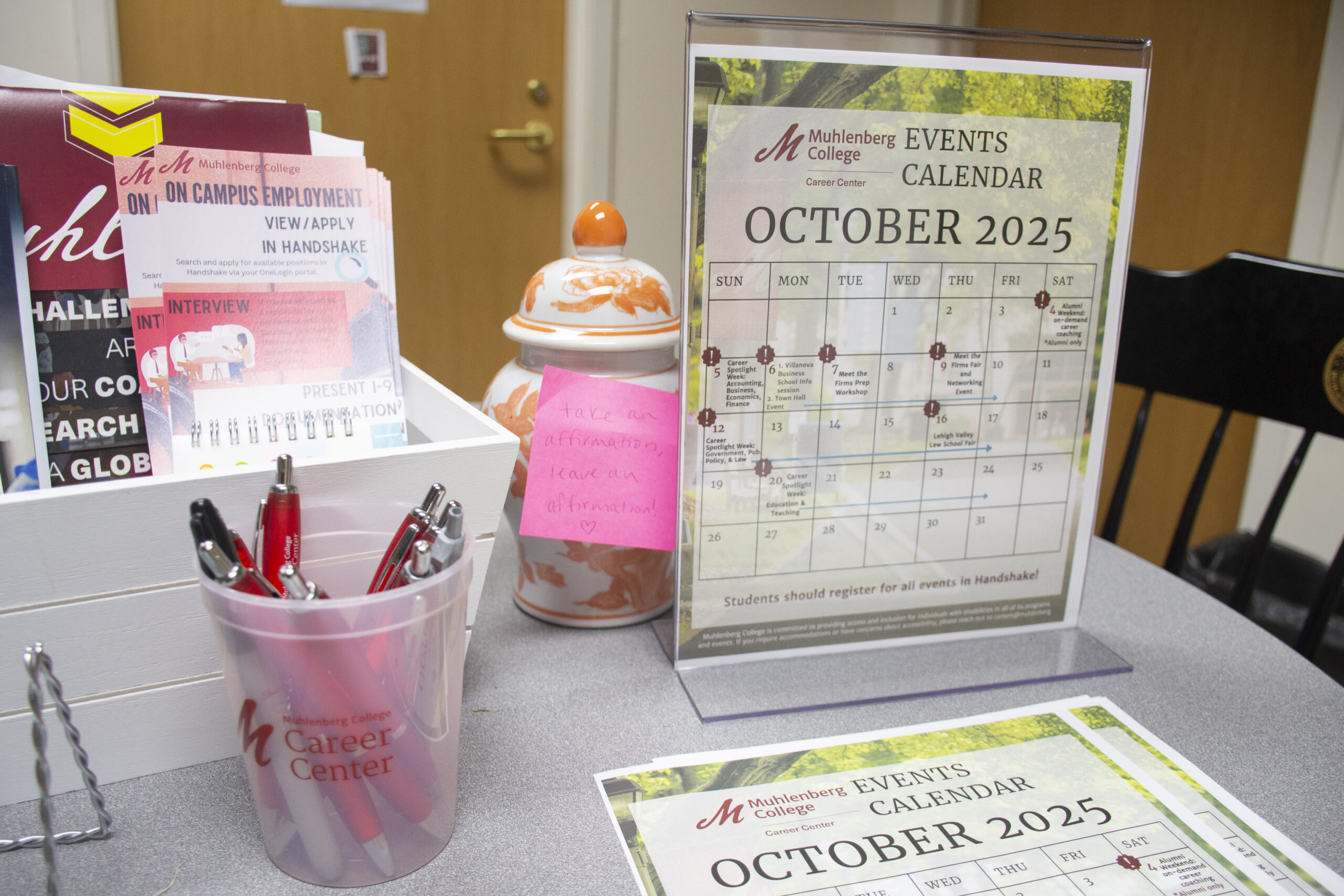
Photo by Sierra Addy ’27.

