



















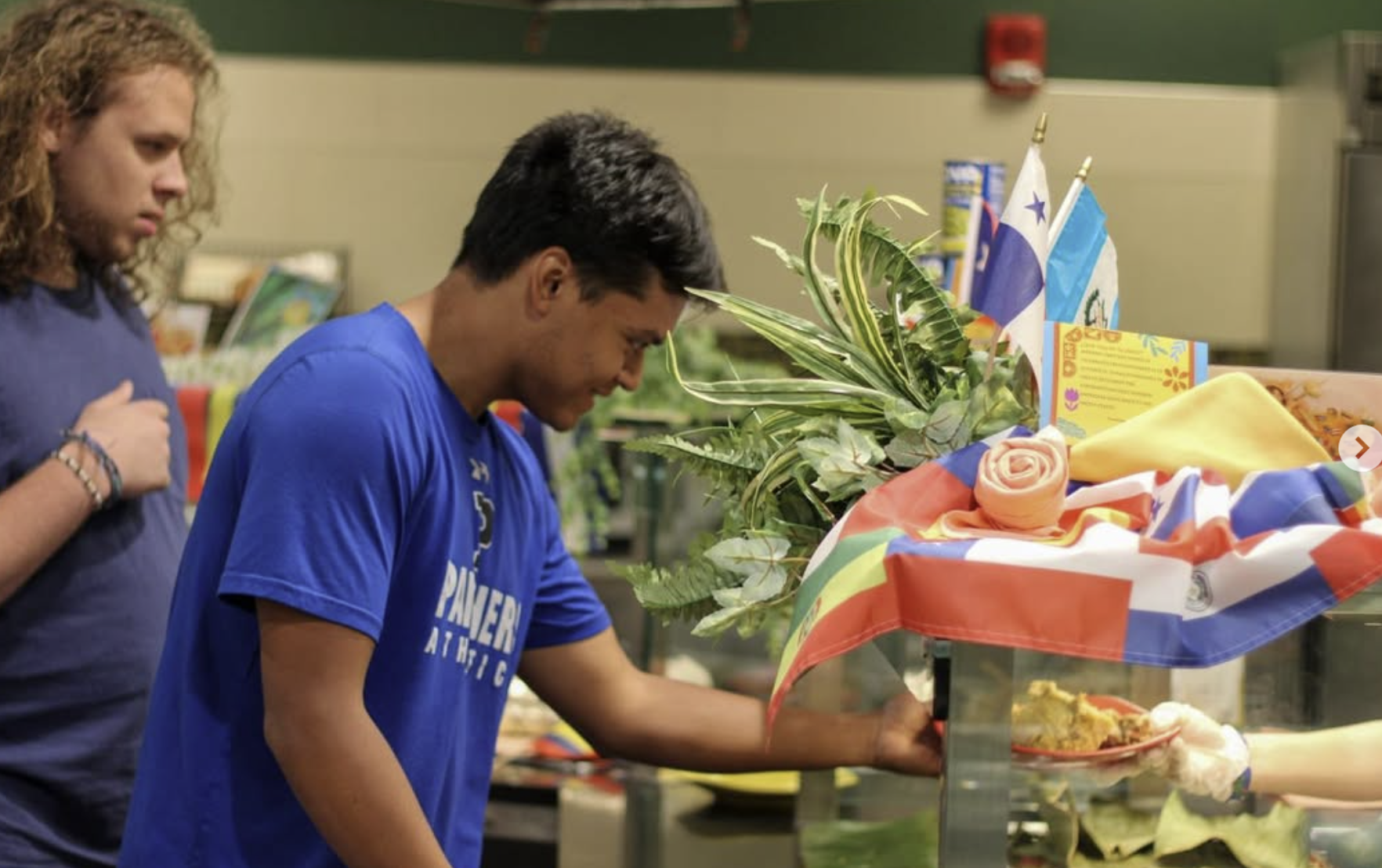
At Muhlenberg’s Wood Dining Commons, there has been a dining series this semester known as “Around the World in 16 Meals.” This series was an opportunity for the dining hall to highlight food from various cultures. This event was initiated by Sophie Tomov ‘26 who saw the opportunity for more diversity in the dining hall menu. Michael Brack, the executive chef, recalls, “[Tomov] approached us last spring with the concept of offering more culturally-inspired meals in the Wood Dining Commons. We met several times to lay out the logistics, focus and parameters of what we hoped could evolve into an ongoing series at Muhlenberg.”
This series’ first featured meal was Moroccan cuisine. The dishes served were chicken tagine with preserved lemons and pomegranate, mushroom couscous, khobz (Moroccan Bread) and M’hanca (“Snake Cake”).
The next featured meals were Hispanic dishes. These dishes were arroz con gandules (rice with pigeon peas), pastelon de pollo (lasagna made with plantains and chicken), chicharron (fried pork belly) and tres leches (three-milk sponge cake). This was a collaboration with Comunidad, the affinity group for Latine students and allies.
Similarly, the South Asian Student Association also suggested South Asian dishes for the following week. Some of the dishes were gobi pakora (cauliflower fritters), vegetable biryani (basmati rice with herbs and spices) and chocolate burfi (milk powder dessert). Tomov wanted this series to be an opportunity where, “Students are invited to propose a menu which represents their culture, write about the cultural significance of these meals and help prepare/serve the meal.”
Students appreciated being able to see their culture represented in the food they were served. Suri Martinez Gallegos ‘28 commented, “[It was nice to have] a diverse group of cooks that seem to know what they’re doing. I personally enjoyed the tres leches and it reminded me of home!”
This series also celebrated culture through decorations. Brack said that when the students are able to represent their culture through decoration, “it certainly enhances the event. We have also used music of the represented culture to elevate the ambiance.”
There was a lot of respect and intent put into this project. Tomov was inspired to reach out to Lexy Widi ‘26 because of her recently launched Hìtëkw project, which sought to honor the history of the Lenape people on the land Muhlenberg currently occupies. This project’s values of education and cultural appreciation go hand-in-hand with the goals of this 16 meals series. After reaching out to Widi about putting together a menu, Tomov said they “met together with Brack and had a long talk about which recipes to use, if the food should be decolonized and what it meant to make food accurate to the Anishinaabe culture.” It was important to everybody involved that the food was created accurately and treated with respect.
“Sharing food can be an incredible medium to bring people together and make them want to learn about something or someplace new” – Sophie Tomov ‘26
Some indigenous dishes served were wild rice pilaf with mushrooms and chestnuts, three sisters mash, cedar braised bison and Indian fry bread with cranberry compote.
There were other cultures represented beyond the dishes already mentioned, but this is not the end, as Brack expressed, “we will be looking to do nine more in this spring.”
This is fantastic for appreciative students like Kayla Joseph-George ‘28, who said she “liked seeing proper representation and being able to try new foods I haven’t been familiar with.” Many students expressed the same appreciation for this series. As Tomov said, “Sharing food can be an incredible medium to bring people together and make them want to learn about something or someplace new.”
This series has been equally beneficial to the kitchen staff. Brack said, “As food service people, our greatest gratification comes from pleasing our guests and customers. The ‘Around the World in 16 Meals’ program not only delivers on what our customers have asked for, but also offers us and the student body an educational experience as it potentially exposes us to ingredients, flavors, techniques and cultures we may not have otherwise experienced.”
It’s important to remember food has connections to cultural heritage. As Brack explains, “Food teaches about what ingredients could be farmed, hunted, grown or foraged from these regions. It also teaches us about the economies, religions and traditions of the people living in different places around the world.” Brack and Tomov are in the process of forming a Student Culinary Council, consisting of students and staff, to continue bringing proper representation in meals at Muhlenberg College.

Gabriela Mendez ‘28 plans to major in English with a minor in Spanish. She is very excited and honored to be joining the Weekly staff! Outside of writing, she loves to read, be one with nature, and watch new movies.