


















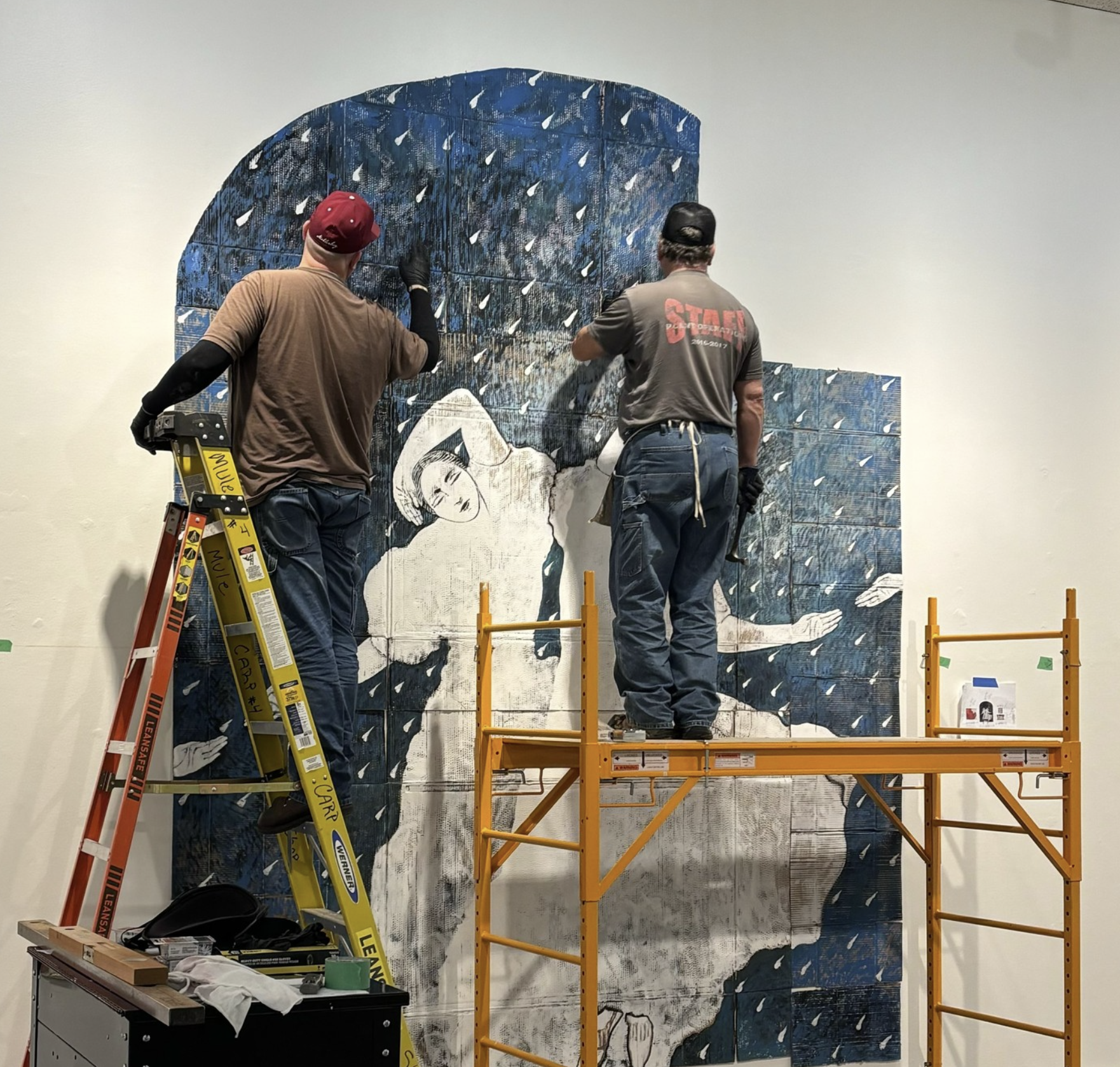
On Oct. 19, Muhlenberg’s Martin Art Gallery opened its door to invite attendees to not only view but engage with Sofia Cacciapaglia’s transformative exhibition, “Nuovo.” The opening reception and walkthrough, held by Martin Art Gallery Director Jessica L. Ambler Ph.D., offered an insightful opportunity to observe Cacciapaglia’s work and also explore the personal themes that influenced her creative artistic vision. Cacciapaglia’s installations are depicted through monumental-sized canvases that involve either dream-like gardens or “larger than life female entities suspended in ethereal spaces,” which are heavily rooted in themes of regeneration and renewal.
Cacciapaglia, born in Ponte dell’Olio of Northern Italy and of Spanish descent, studied fine arts in Milano at the Accademia di Belle Arti di Brera and graduated in 2006. She continued to host her first solo show in New York at Industria SuperStudio in 2007, and since then has become the youngest artist to be invited to the International Art Exhibition La Biennale di Venezia. The “Nuovo” exhibition at Martin Art Gallery is a collaboration with Cacciapaglia Gallery which is located at Sapar Contemporary, N.Y.
In “Nuovo,” Cacciapaglia’s innovative use of materials is noteworthy in regards to reflecting on the current state of our consumerist culture. She scavenges for cardboard boxes from the city streets and transforms them into canvases she can reuse and give more purpose to. This approach to materiality not only emphasizes the need for sustainability but manages to transform what is simply viewed as unnecessary waste into forms of art. By transforming discarded objects into visually appealing and compelling artworks, Cacciapaglia manages to address overproduction and consumerism. This calls the viewers of her work to consider their own personal relationships with waste production. “Nuovo,” meaning “New” in Italian, establishes the regenerative usage within her artwork, as she ascribes new purpose to objects that would otherwise remain cast aside as useless to others.
“Intertwined in what I see as a rainstorm…It’s peaceful, I like it, I appreciate the sense of union and fun of dance between them.” – Haven Moore’ 28
Furthermore, the exhibition continues to feature traditions and inspirations from Italian tradition and art history. These are most exemplified through her usage of the “Fresco” painting style, which has been most notably seen in Renaissance chapels and Roman homes. By definition, Fresco painting is a practice of art in which a painter applies pigment to “wet plaster.” Thus, the artwork in Cacciapaglia’s exhibits all lack the application of primer onto the already raw cardboard canvases. This choice creates a raw and textured aesthetic but also allows the original qualities of the cardboard, from ragged edges and imperfections, to shine through and most importantly remain visible to the thoughtful eye. These physical imperfections only further reinstate Cacciapaglia’s theme of renewal, as her paintings aren’t protected on special expensive canvases or by preventive protective measures. By doing this, Cacciapaglia acknowledges that her artistic works will eventually disintegrate and become “part of the earth” once again. She takes inspiration from the “Arte Povera” movement that took place in Italy in the 1960s. Artists within this movement used “humble” resources to create their art, challenging overproduction and consumption. Cacciapaglia personalizes this movement into her own artwork and creates new ways to exemplify Arte Povera into individual expression.
A particular source of inspiration for Cacciapaglia comes from her time spent in the Sicilian countryside, where she spends her summers at her family’s home. Sicily is known for being the “island of gardens” and is often brimming with life through unconstrained flowers. This theme of untamed untouched nature can be viewed in Cacciapaglia’s pieces “Affresco su Cartone: Blue Garden Diptych” and “Affresco su Cartone: Marzo.” She incorporates her own personal preferences by creating maximalist 2-D landscapes instead of prioritizing realism. In doing so, she depicts nature as it is– wild and emotionally free instead of simply being generic and dimmed down for audiences to perceive and consume.
Cacciapaglia’s subjects within her paintings often differ, yet there’s a common theme of larger-than-life depictions of female entities. These figures are often in groups of other fellow women that are suspended in ethereal spaces For instance, in her work “Affresco su Cartone: Pink Skirts Triptych,” groups of women are linked through their hands, and create a sense of harmonious feminine unity in the air space they immerse themselves in. Her other artworks, such as “Affresco su Cartone: Mask”, also involve solitary female figures that provoke personal contemplations in viewers. While this work in particular represents a sense of isolation, it creates another type of personal unity for the viewer regarding themes of female experience and encapsulates what Cacciapaglia means to provoke.
Attendees of the exhibition admired the art for both its aesthetics and profoundness. WIth Haven Moore ‘28 specifically commenting on her favorite piece Alfresco Con Arco “Intertwined in what I see as a rainstorm.. It’s peaceful, I like it, I appreciate the sense of union and fun of dance between them”
“Nuovo” offers a unique form of art style that Sofia Cacciapaglia has innovatively established as her own within contemporary artwork. The exhibition provides a profound space to engage and reflect on the state of current consumerism and how an individual can take accountability through counteracting against this culture. Visitors can visit and experience this thought-provoking collection at Muhlenberg’s Martin Art Gallery until Dec. 31.

